
Notes from north of 49ºN
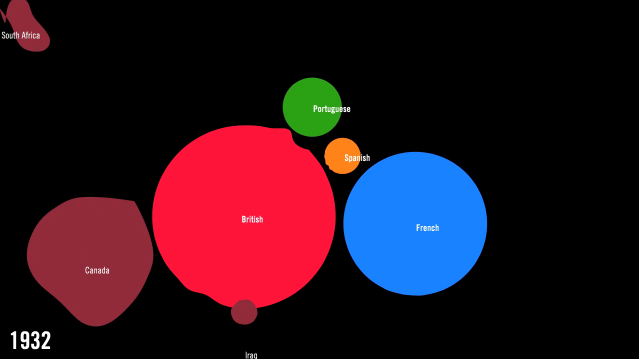
José’s post from late November, Exploding Empires, got me thinking about Canada’s postcolonial experience. While the remnants of the British empire linger with political structures {including the viceregal Governor General} and the Queen on the money, before 1663 most of Canada was a part of New France. If the Battle of the Plains of Abraham and the siege of Québec City went differently, it would have been interesting to see the trajectory of Canada, if New France stayed under French control or if there was a long protracted war with Britain. That’s neither here nor there, but the reality is that Canada does have the legacy of being a part of the British empire, while arguably subjugating the First Nations and francophone Québec, which I’ll come back to later.

So, in 1867, Canada became a Dominion in the British Commonwealth with its own Prime Minister, Sir John A. MacDonald {who is on the $10 bill}. This was a trend with its “white settler” colonies. In 1931, The Statute of Westminster made the Canadian Parliament independent of British control and Canada ceased being a colony. Nevertheless, there were and are ties to Britain. In fact, during WWII, many of the archives for Canada were destroyed in the Battle of Britain, which were housed in London, England, not Ottawa.

The relationship between Canada and Britain has shaped Canada’s character. The obvious way to characterize the relationship is one of parent and child, but how to characterize it further? Canada as the abused Cinderella? Benign neglect? For decades, the British sought to assert imperial authority and reduce the influence of popular control of the government, which was viewed as a precursor to the American revolution [1]. Once British control began to wane, the rapid industrialization of the United States resulted in a dominant cultural and economic power at Canada’s doorstep. Many argue that Canada traded one hegemon for another. Many Canadian writers, including Margaret Atwood, saw this pattern and sought to “decolonize” Canada, but what exactly does that entail? What does a decolonized Canada look like? Is a strong national identity required?
The simmering legacy of the ghost of an old colonialism, i.e., New France, along with First Nations and immigrant communities, serve to further complicate matters by generating tensions from within. Québec, a province with about 23.9% of the population where 40% of its residents support some form of sovereignty for Québec. Urbanist Jane Jacobs around 1979-80 even went as far to say::
“Montréal cannot afford to behave like other Canadian regional cities without doing great damage to the economic well-being of the Québécois. It must instead become a creative economic centre in its own right… Yet there is probably no chance of this happening if Québec remains a province.” [2]
Despite hundreds of years passing since the Battle of the Plains of Abraham, there is definitely a strong francophone cultural identity in Québec and a resurgence of separatist politics enabled by the Quiet Revolution/Révolution Tranquille of the 1960s.
Add to the mix, globalization and the resultant Appaduraian flows of financial capital, human migration, media, ideologies [3, 4], and brands [5].
I feel all of these four factors::
- Historical trajectory of British colonialism
- Proximity to US cultural {media} and economic forces
- The subjugation of francophone culture under a trajectory of British colonialism
- Current state of globalization with flows of people, media, capital, ideologies and brands
serve to strongly decentre the very concept of Canada and Canadian identity, i.e., Canada as an “imagined community” in the Benedict Anderson sense [6]. Extending Anderson’s ideas about print capitalism being critical in defining the concept of nation, I would argue that Canadian identity is being undermined because of the dominance of US media, particularly film, television, and Internet content. I’ve argued for increased funding of the CBC and I feel it can and should play a role in defining nation. This post isn’t meant to be an accusation or to sound an alarm, but open up a dialogue about the future trajectory of Canada.
If Canadian identity is indeed decentred, doesn’t this imply a fuzziness in people’s meaning systems regarding Canada and does this fuzziness lead to less resistance of hegemonic forces? Does any of this even matter? Aren’t these just market forces in action? Antonio Gramsci says hegemony requires acquiescence [7], but as global consumers, aren’t we all willing to submit to hegemony if it strikes our fancy? Sweet, glorious hegemony. Hasn’t China proven that global consumers are willing to purchase in ways that are detrimental to their own economies?
I think national identity matters, as does resistance to hegemonic forces. Identity matters, as a shared sense of communitas and comradeship should guide policy and everyday actions. Citizens should derive meaning from the institution and social construction of nation. Resistance to hegemony matters, as this allows for culture to remain dynamic by allowing its redefinition, rather than continually self-replicating in the same fashion in the style created by the powers that be, i.e., the corporation and the state.
My next blog post will extend these ideas to Canadian politics.
Twitterversion:: Thoughts about “postcolonial” Canada given its relationships with Britain, USA, & Quebec. Interplay b/t media & identity. http://url.ie/4q9t @Prof_K
Song:: Weakerthans-“One Great City”
References
[1] Smith, Simon (1998). British Imperialism 1750-1970. Cambridge University Press. ISBN 052159930X.
[2] Philpot, R. (2006) “She Stayed Creative Until the End: The Rich Life of Jane Jacobs” counterpunch.org, retrieved 21 January 2010, from http://www.counterpunch.org/philpot04262006.html
[3] Appadurai, A. (1996) Modernity at Large. Cambridge, MA: University of Minnesota Press.
[4] Appadurai, A. (1990) “Disjuncture and Difference in the Global Cultural Economy” Retrieved 21 January 2010, http://www.intcul.tohoku.ac.jp/~holden/MediatedSociety/Readings/2003_04/Appadurai.html
[5] Sherry, J.F. (1998) ‘The Soul of the Company Store: Nike Town Chicago and the Emplaced Brandscape’, in J.F. Sherry (ed.) ServiceScapes: The Concept of Place in Contemporary Markets, pp. 305–36. Chicago: NTC Business Books.
[6] Anderson, Benedict (1983) Imagined Communities. Verso. http://books.google.com/books?id=4mmoZFtCpuoC&dq=benedict+anderson+imagined+communities&printsec=frontcover&source=bn&hl=en&ei=cZ9YS–eFcLO8QaZq-jKAw&sa=X&oi=book_result&ct=result&resnum=5&ved=0CCgQ6AEwBA#v=onepage&q=&f=false
[7] Gramsci, A. (1971) Selections from the Prison Notebooks, Lawrence and Wishart.