
poverty

Planned Parenthood's Spanish-language website.
Planned Parenthood’s Spanish-language website.

Originally posted June 29, 2016

In early September 2015, Blanca Borrego, an undocumented Latina immigrant accompanied by her two daughters, arrived at a women’s health clinic in Texas for a routine gynecological exam. Sitting in the waiting room for nearly two hours, Blanca’s anxiety and impatience grew to the point where she almost walked out of the office. Eventually, Blanca was met by local law enforcement officials who escorted her out of the clinic in handcuffs for allegedly using a forged driver’s license during patient intake. Blanca’s eight-year-old daughter watched in tears while her mother was taken away and a deputy told Blanca’s eldest daughter that their mother would face deportation. Blanca remains in county jail on a $35,000 bond.

Scenarios like Blanca’s – highlighting the impact of race, class, and immigration status on reproductive rights – are not always brought to the fore. Although reproductive rights activists say they advocate for all women, difficulties faced by white, middle-class, heterosexual women get more attention than those experienced by women of color, immigrant or transgender women, or those with disabilities. However, a movement for reproductive justice has emerged by and for women of color that offers new possibilities to bring previously neglected issues to light. Key challenges include tackling the reproductive experiences of Latinas – and looking for ways to do more to address their needs in reproductive health care and policy.

Latina Realities

Understanding Latinas’ reproductive lives requires understanding how many forms of disadvantage intersect and create reinforcing disadvantages. more...
USDA Photo by Bob Nichols

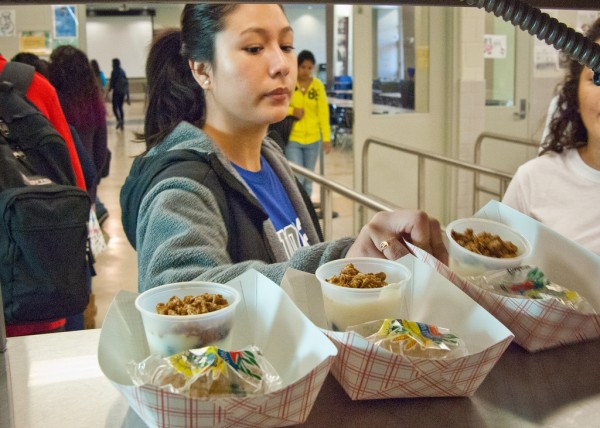
Education beyond high school is increasingly necessary for a good job, and so growing numbers of people are paying ever-rising prices to attend college. Yet many are not completing degrees. Food insecurity should be added to the list of factors contributing to this shortfall. Our work suggests that too many undergraduates are struggling to afford sufficient nutritious food – and current policies provide insufficient support. An expansion of the National School Lunch Program to help college students could help many more complete their degrees. more...

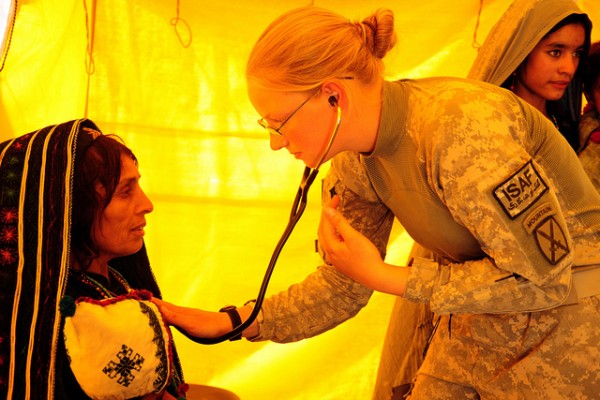
Spc. Margie Huelskamp checks up on a patient at the Ghormach Clinic, Afghanistan. US Army.

Around the world we see encouraging declines in the number of people newly infected with the virus that causes AIDS (as the acquired immunodeficiency syndrome is called). But hard-won gains in preventing and treating this “disease that changed everything” are not equally distributed across places and groups of people. The AIDS crisis has, in fact, widened inequalities in health and wellbeing the world over. In poor nations, AIDS remains a leading factor contributing to health declines, because more than 95% of the 33.2 million individuals infected with the human immunodeficiency virus (or HIV) that causes AIDS reside in such countries. The spread of HIV/AIDS has been especially detrimental to women in poor nations. The number of women infected with HIV has increased dramatically in recent years, and young women in less developed nations are about twice as likely as men to become infected. Strikingly, AIDS is the leading cause of death among women of reproductive age.

How can we understand women’s special vulnerability to AIDS, especially in poorer countries? Theories of gender inequality provide clear insights by highlighting the ways in which women have fewer resources and less control than men over decisions about sex and health practices. In particular, women in less developed nations face many barriers in getting needed access to vital educational and health resources, including schools and contraceptives.

If gender inequalities, poverty, and low levels of education and access to health care make for a deadly brew that undermines the wellbeing of women across the less developed world, these harmful forces can be exacerbated by events and trends that further social disorder. In many poor countries, civil wars and violence obviously undermine the health and longevity of women (as well as men). In addition, the spread of AIDS can be spurred by environmental crises and degradation – exacerbated in many places by global warming. So far, the potential impact of environmental degradation on the spread of HIV/AIDS has received insufficient scholarly attention. Drawing insights from eco-feminist perspectives, our work takes a step in the direction of correcting this deficit. more...

Via Flickr
New GED regulations have significantly reduced the number of successful applicants. Photo by rik-shaw, Flickr.

Americans think of themselves as highly educated, yet more than 37 million adults – more than one in ten – have not earned high school diplomas. This has dramatic implications for individual lives. Less than half of all adults without high school degrees have jobs, compared to 64% of those with such degrees and 88% of adults with college degrees. Even with prior work experience, many employers require proof of a high school diploma for even the most basic positions, even more so since the recent recession. Adults without high school diplomas who are fortunate enough to have jobs can expect to earn nearly $10,000 less per year than those with a high school degree, and are much more likely to live in poverty, experience poor health, and end up in prison.

Any way one looks at the social realities, chances to obtain a high school equivalency degree are critical for adults who did not graduate from high school, if they are to flourish in life. For more than sixty years, the General Education Degree – popularly known as the “GED” – has offered such a chance. But current strategies of education reform are handing the GED program to profit-making corporations, and the effect has been to create new educational obstacles for the predominately low-income Americans who have not graduated from high school.

more...

Steven Depolo, Flickr Creative Commons

In early June 2015, the Missouri state legislature voted to remove thousands of families, including 6,400 children, from the state’s cash assistance program for the poor. The new law reduces the state lifetime limit for Temporary Assistance for Needy Families from 60 to 45 months, cuts cash benefits in half for those who do not work, and redirects a significant portion of welfare funds toward programs that encourage marriage and alternatives to abortion.

Why has Missouri made these changes now? Since the U.S. Congress acted in 1996 to change welfare funding rules and give states greater discretion, many states have taken steps similar to Missouri. My research suggests that racial dynamics drive these cutbacks – but not in ways many suppose. Demography and attitudes are insufficient explanations; the political context matters.

Race and Welfare Policymaking

Why have some states imposed welfare restrictions in recent years while others have retained more generous programs? Previous studies reveal a clear pattern: the higher the proportion of African Americans receiving cash welfare benefits, the more likely states are to adopt restrictive welfare policies. But not all racially diverse states have adopted punitive reforms and some predominantly white states have taken very restrictive approaches to welfare. Race clearly influences welfare politics, but how?

To answer this question, I examined the policy decisions that state legislatures made immediately after the 1996 national reforms transformed American anti-poverty policy. That law imposed new time limits, work requirements, and penalties on recipients of welfare benefits. After Congress gave states new flexibility to design their own programs, some states adopted the most generous policies allowed by federal law, while others imposed far more restrictive policies. To understand the decision-making processes better, I closely examined a number of states which had large minority populations at the time.

What I found was surprising: Legislators’ decisions about welfare policy were heavily influenced by the political debates simultaneously raging in their states. When these other debates were rife with racial tensions, legislators enacted punitive welfare reforms. But when coterminous debates were not racialized, lawmakers tended to adopt more generous welfare programs. In other words, lawmakers used restrictive welfare changes as a strategy to appease white voters who felt threatened by other racial conflicts happening in the same period. more...

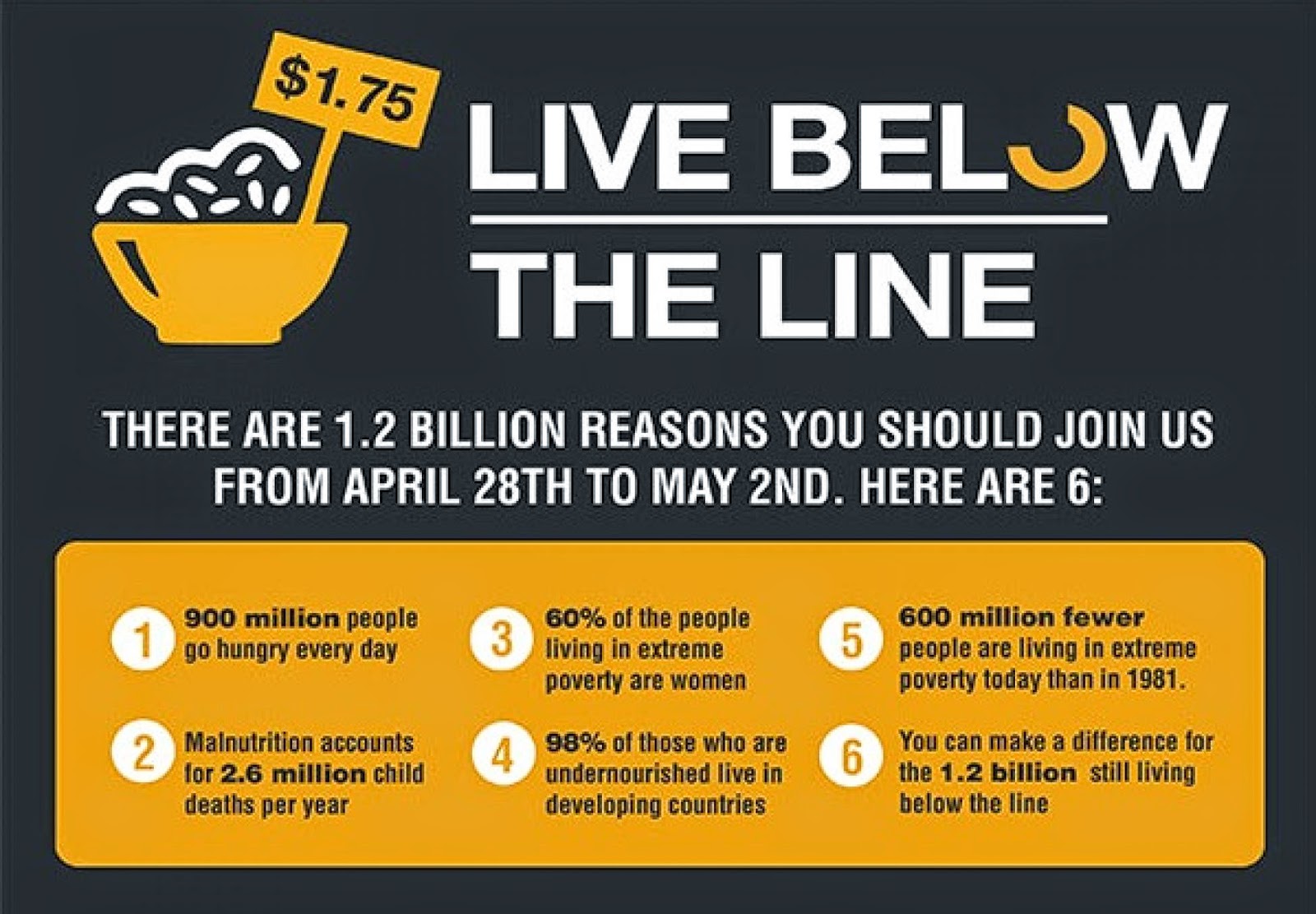
The Live Below the Line Campaign encourages people around the world to try to live on a poverty-level wage.


Poverty is commonly explained as a matter of joblessness, while work for wages is viewed as a pathway out of poverty and toward upward mobility. Indeed, since the end of open-ended welfare benefits in 1996, U.S. public assistance presumes that creating incentives for poor adults, including mothers, to enter the paid labor force is the best way to reduce poverty and dependence on government. Yet many citizens do not understand that most poor adults already work. In fact, by some accounts the so-called working poor outnumber the non-working poor in the U.S. Effectively reducing poverty therefore requires addressing the problems of those who work yet remain poor. more...

Nearly a quarter of all babies born in the United States are now Hispanics, yet many of these newborns start life’s race behind the starting line, poor and disadvantaged.  This issue might seem relevant only to longstanding metropolitan gateways for new immigrants, such as San Diego, New York, Chicago, and Miami. But today it matters for rural areas and small towns as well, because new immigrants have spread out all over the United States. Hispanics account for more than half of all the nonmetropolitan population growth in the 2000s, and in many parts of rural America from Alabama to Nebraska, growing numbers of Hispanics provide a demographic lifeline to dying small towns. Yet disproportionate and growing numbers of immigrant Hispanic children are born into poverty, and the difficult circumstances they face from before birth through childhood profoundly influence their adult contributions to American society. more...

Ask Americans to draw a mental map of who lives where, and they will likely say that immigrants and the poor live in large cities such as New York, Chicago, Los Angeles, and San Francisco, while middle-class whites make their homes in the surrounding suburbs. But these mental maps are often inaccurate. Today, more poor people live in suburbs than in central cities, and more than half of all metropolitan-area immigrants reside in suburbs. Immigration, job growth, and residential choices are making our nation’s suburbs more economically and culturally diverse. more...

Half a century ago, President Lyndon Johnson launched America’s War on Poverty; yet by the 1980s President Ronald Reagan famously declared that “we waged a war on poverty and poverty won.” To back up this claim, conservatives point to official U.S. statistics showing that the percentage of Americans living in poverty, around 15%, has changed very little over the decades.

But the official poverty measure is outdated – so I teamed up with several colleagues to produce estimates using a more accurate one. When we use the improved measure, it turns out that U.S. social programs and taxes have had a powerful effect on reducing poverty since the mid-1960s. Back then, government programs did little to alleviate poverty, but today public programs and taxes cut the percentage of people living in poverty by almost half, from the 28.7% it would be without government efforts to 16% after public programs are included. Far too many Americans continue to have inadequate incomes, but U.S. policies have helped millions avoid poverty.

The Need for a More Comprehensive Poverty Measure

America’s longstanding official poverty measure is outdated, because it is not adjusted appropriately for the needs of different types of individuals and households and it fails to take into account the full range of income and expenses that individuals and households face. In particular, it does not calculate the income effects of the full range of government programs whose aim it is to reduce poverty in the United States. Because of these and other failings, researchers cannot simply track official poverty measurements if they want an accurate picture of trends in poverty or the role of government policies in alleviating it.

Along with Liana Fox, Irv Garfinkel, Neeraj Kaushal, and Christopher Wimer, I re-analyzed trends in poverty using an improved measure – called the supplemental poverty measure – that includes near-cash benefits, in-kind benefits, and tax credits that go to various individuals and families. This supplemental measure also adjusts income calculations for taxes paid and for unavoidable child care, work-related, and medical expenses.

Since 2009, the U.S. Census Bureau has estimated annual poverty levels using both the traditional and the supplemental poverty measure, but it has not estimated historical trends using the revised measure. My colleagues and I have taken this extra step, estimating trends in poverty since 1967 using two new measures, one similar to the supplemental poverty measure in which the poverty threshold is calculated for each year using contemporary living standards, and another using an “anchored supplemental poverty” measure, in which we take today’s supplemental threshold and carry it back historically. The second approach is the one we use here in this brief. Data on incomes over the years come from the Annual Social and Economic Supplement to the Current Population Survey.

When we use the supplemental poverty measure to track the percentages of Americans under the poverty line, a different picture emerges. The traditional poverty measure says that 14% were poor in 1967 and 15% in 2012, but the anchored supplemental measure shows the percentage living in poverty falling by more than 40%.

A New Perspective on U.S. Anti-Poverty Efforts

Our estimates also provide new insights as to the role of government programs. Using the supplemental measure anchored to 2012, we tracked the percentages of the U.S. population that would have been in poverty with and without including income from taxes and government social benefits. The green line shows poverty without taxes and benefits, and the blue line shows how much poverty has been reduced by taxes and social benefits.

Government benefits include food and nutrition programs such as Food Stamps, school lunches, and programs for pregnant women and infants; cash welfare benefits of various kinds; housing subsidies; and Social Security, unemployment benefits, workers’ compensation, and public pensions. Taxes include both those that reduce income (payroll taxes, federal and state income taxes) and those that boost incomes (like the Earned Income Tax Credit and other tax credits). Clearly, U.S. taxes and benefit programs have greatly reduced the percentage of Americans living below the poverty line. If we only counted incomes and expenses in the private market, poverty would have increased slightly over the past half century. But when taxes and social benefits are included, poverty sharply declines.

These results underline a key point: if we want to properly assess the progress the United States has made in fighting poverty, we must include all income and expenses. Properly measured, poverty has fallen substantially since the War on Poverty was declared. The war is far from over, but hard-won ground has been gained – and millions of Americans would suffer if anti-poverty efforts cease now or suffer major reverses.

Jane Waldfogel carries out research on a range of topics including the measurement of poverty, food insecurity, work-family policies, the effects of the Great Recession on parents and children, and inequality in school readiness and school achievement, both within the United States and across countries.

Is it possible for people to live on $2 a day? This is a question most think applies to bygone centuries or impoverished Third World nations. But it turns out to matter for the 21st century United States as well. The U.S. welfare reform enacted in 1996 ended rights to cash assistance for poor families with children. Instead, welfare in America now gives cash assistance for a limited time only. Able-bodied people who apply for welfare must quickly try to find paid employment and participate in activities directly related to preparing for work. In the new system, extra benefits and tax credits go to low-income people with jobs. But what happens to those who cannot find employment – especially during prolonged periods of joblessness like the aftermath of the recent Great Recession?

To find out, we used data from the U.S. Census Bureau from 1996 to 2011 to study U.S. households with children getting by with a daily income of $2 or less, per person – adapting the poverty indicator used across the globe by the World Bank. more...