Tag Archives: modern/primitive

Color Photos of the U.S., 1939-1943

Months ago, Abby Kinchy,  Eden H., Aydrea of The Oreo Experience, and Dmitriy T.M. all sent in a link to a striking set of Great Depression and World War II era photos posted at the Denver Post. Unlike most of the photos many of us are familiar with that depicted life during that time, most of which were black and white, these were taken in color. Here are just a few of the 70 photos; I highly suggest you go look at the Denver Post site, where the photos are much larger.

[Children gathering potatoes on a large farm. Vicinity of Caribou, Aroostook County, Maine, October 1940. Reproduction from color slide. Photo by Jack Delano. Prints and Photographs Division, Library of Congress.]

[Children in the tenement district. Brockton, Massachusetts, December 1940. Reproduction from color slide. Photo by Jack Delano. Prints and Photographs Division, Library of Congress.]

[Chopping cotton on rented land near White Plains. White Plains, Greene County, Georgia, June 1941. Reproduction from color slide. Photo by Jack Delano. Prints and Photographs Division, Library of Congress.]

[African American's tenant's home beside the Mississippi River levee. Near Lake Providence, Louisiana, June 1940. Reproduction from color slide. Photo by Marion Post Wolcott. Prints and Photographs Division, Library of Congress.]

This one struck me because the two individuals in the photo are identified as “migrant workers,” and yet they seem so young:

[African American migratory workers by a "juke joint". Belle Glade, Florida, February 1941. Reproduction from color slide. Photo by Marion Post Wolcott. Prints and Photographs Division, Library of Congress.]

[Women workers employed as wipers in the roundhouse having lunch in their rest room, Chicago and Northwest Railway Company. Clinton, Iowa, April 1943. Reproduction from color slide. Photo by Jack Delano. Prints and Photographs Division, Library of Congress.]

[Shasta dam under construction. California, June 1942. Reproduction from color slide. Photo by Russell Lee. Prints and Photographs Division, Library of Congress.]

I was trying to decide why the images were so fascinating, and I think Dmitriy hits on part of it:

What strikes me the most (besides awesome pictures) was how much my perception of the depression years was filtered by only viewing it through the black and white (aka dreary) pics. When I see these color pictures, not only does it seem less depressing and dreary, but the people seem to be more like me (and not just an image from a long, lost era).

The full set includes a range of topics, set both in rural and urban areas, including both images of poverty and of industrial productivity. Quite fascinating.

New Barbie Dolls Put the Japanese Back in Time

There is a tendency in Western culture to envision white people are more modern and progressive than people of color who are seen as more traditional, even tied to ancient ways of life (see this post and its links).  This tendency is illustrated in Mattel’s new Japanese Ken and Barbie dolls, released this year:

When was the last time you saw a Japanese person dressed like this?  Regarding Ken, Dolls of Color put it:

Right, because an Asian Ken can’t be wearing jeans and a tshirt? Or a tuxedo if one must get fancy? An Asian Ken must be some kind of exotic fantasy and not just that cool dude next door? Right.

We’ll know that we respect people of color as people when we start portraying them as people instead of exotic objects or historical artifacts.

UPDATE: Of course, as several commenters have pointed out, these costumes aren’t at all historically accurate.  Instead they exoticize a stereotyped notion of the traditional Japanese person.

Via Racialicious.

—————————

Lisa Wade is a professor of sociology at Occidental College. You can follow her on Twitter and Facebook.

Romanticizing Ancient Chinese Wisdom

This 40-second commercial for HSBC bank, sent in by Michelle F., is an excellent example of the way that non-white and non-Western people are often portrayed as more deeply cultural, connected to the past, and closer to nature than their white, Western counterparts.  Sometimes this is done in order to demonize a culture as “barbaric,” other times it is used to infantilize them as “primitive.” In this case, it romanticizes.

Running on both English and Chinese language channels, the commercial contrasts the wise Chinese man with the young, white man.  The music, the boats, their clothing and hats, and their fishing methods all suggest that the Chinese are more connected to their own long-standing  (ancient?) cultural traditions, ones that offered them an intimate and cooperative relationship to nature. Simultaneously, it erases Chinese modernity, fixing China somewhere back in time.

Other posts on the modernity/traditional binary:

Caveman Courtship

The White Woman’s Burden
De-Racializing the Modernity/Tradition Binary

Africans as Props for White Femininity
Women’s Bodies and the Modernity/Tradition Binary

Which Images Represent India?
The Unseen Middle East

The Primitive and the Modern in Kanye’s Love Lockdown
Our review of Avatar, the Movie
Porn Producer with a Heart of Gold

What Counts as Indian Art?
Whites can Reconquer the America’s with Kahlua

Primitive Child Offers Cures for Modern Ills

Or browse our tag on the false modern/primitive binary.

—————————

Lisa Wade is a professor of sociology at Occidental College. You can follow her on Twitter and Facebook.

“The Potawatomis Didn’t Have a Word for Global Business Center”?

I was waiting for my connecting flight at Chicago O’Hare, and spotted this advertisement on the opposite side of our gate. Close up on the text:

It reads:

“Chicago is the Potawatomi word for onion field. Apparently, the Potawatomis didn’t have a word for global business center.”

This is an example of the use of Indigenous language and imagery that many people wouldn’t think twice about, or find any inherent issues with. But let’s look at this a little deeper:

  • The use of past tense. It’s not “The Potawatomis don’t have a word for…” it’s “The Potawatomis didn’t…” Implying that the Potawatomi no longer exist or are using their language.
  • The implication that “Indians” and “Global Business Center” aren’t in congruence. Which is assuming that Natives are static, unchanging, and unable to be modern and contemporary. “Potawatomi” and “Onion Field” are fine together, because American society associates Indians with the natural world, plants, animals, etc. But there is definitely not an association between “Potawatomi” and “Global Business”.

But, in reality, of course Potawotomis still exist today, are still speaking their language, and do have a word for Global Business Center (or multiple words…).

Language is constantly evolving, adapting to new technology (remember when google wasn’t a verb?) and community changes.  I remember reading a long time ago in one of my Native studies classes about the Navajo Nation convening a committee to discuss how one would say things like “computer” or “ipod” in Navajo language, in an effort to preserve language and culture and promote the use of Navajo language among the younger generation.

In fact, here’s an awesome video of a guy describing his ipod in Navajo, complete with concepts like “downloading” (there are subtitles/translations):

To imply that Native peoples wouldn’t have the ability to describe a “Global Business Center” reeks of a colonialist perspective (we must “civilize” the savage! show him the ways of capitalism and personal property, for they know not of society!). Native peoples have been trading and communicating “globally” for centuries, long before the arrival of Europeans.

Thanks, Chicago, for giving me one more reason to strongly dislike your airport, because all the canceled flights, lost luggage, overnights in airport hotels, and 10 hour delays (all true stories) weren’t enough.

(Thanks to Hillary for taking the picture, since my sidekick pales in comparison to the iphone)

—————————

Adrienne Keene is a Cherokee doctoral candidate at the Harvard University Graduate School of Education, where she studies access to higher education for Native (American Indian, Alaska Native, and Native Hawaiian) students, as well as the role of sovereignty and self-determination in Native education. In her free time, she blogs about cultural appropriation and use of Indigenous cultures, traditions, languages, and images in popular culture, advertising, and everyday life at Native Appropriations.

If you would like to write a post for Sociological Images, please see our Guidelines for Guest Bloggers.
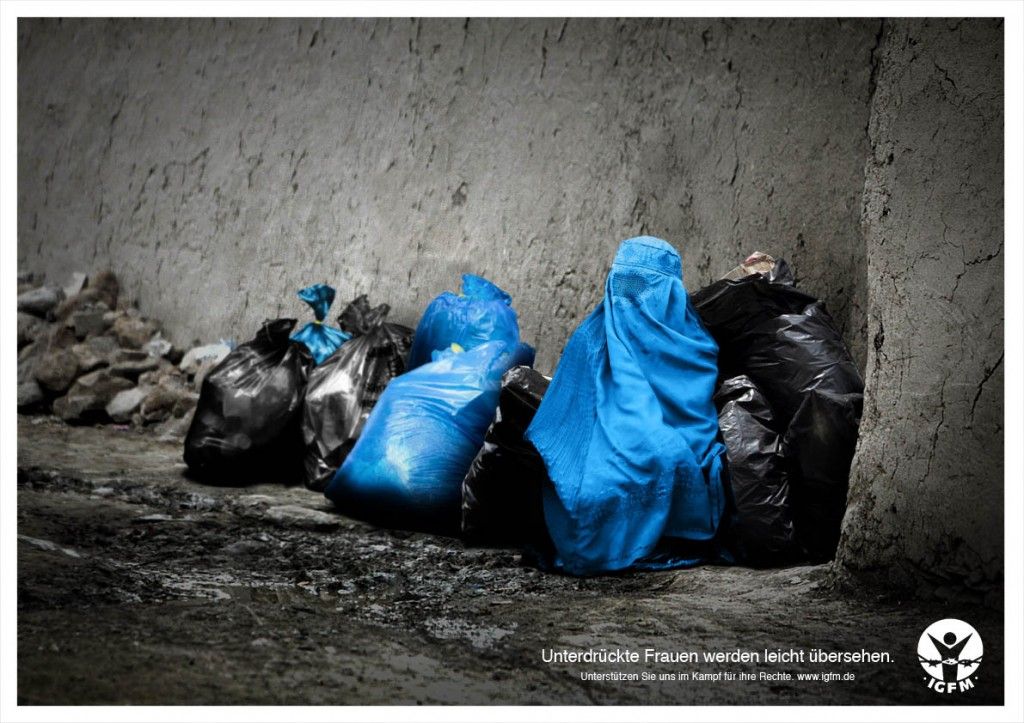
People‘s Depiction of Bullock’s New Baby

Lindsey H. sent in the most recent cover of People magazine and some thoughts about its cover, featuring Sandra Bullock and a child she just adopted.

Putting aside the whole fashion of celebrities collecting multicultural families through adoption (and Bullock’s most recent white-savior role), Lindsey questioned why the child was naked but for some colorful, organic-looking beads.

[It] instantly evoked notions of this child being tribal and foreign and, extending the stereotype, primitive. Based on the cover, I assumed Sandra Bullock had made her “secret” trip to some random country in the Global South where such dark and beaded people are made so she could rescue one of its many poor or sick or whatever other version of the simplified “happy ending” story that the American public tends to eat up.

But here’s the interesting part. The article summary stated that this baby was adopted from New Orleans. He’s not from one of those mysterious, alien, primitive places that are found in, say, Africa. He’s American, just like me and, I presume, the majority of People readers. So why the necklace, the nakedness? Why the subtle references to a tribal background to which this child doubtfully has any direct connection? Is it because People knows that that’s what its audience expects to see? Would the cover have been as eye-catching or interesting to readers if the baby were dressed? And if Sandra Bullock had adopted a white baby from New Orleans, or from anywhere really, would they have represented him in such a way — naked save for a colorful bead necklace?

Good questions, Lindsey. Readers, what say you?

UPDATE:Readers have noted that the necklace was made by the baby’s step-sister (thanks for the info all!). Whether or not this makes the reading of the image ridiculous not continues to be hotly debated in the comments thread…

—————————

Lisa Wade is a professor of sociology at Occidental College. You can follow her on Twitter and Facebook.

Who Is Primitive?

Charlotte alerted us to a make-up brand called Primitive that makes and sells natural lips sticks, glosses, and pencils.  Describing their company, they write:

The company is drawing on familiar associations of primitiveness with naturalness.  We were natural “for centuries,” but have now somehow graduated from naturalness, such that we need to make a special effort to recapture the simple, intelligent, real, and honest beauty of our foremothers.

So, Primitive romanticizes our primitive past while making a questionable assertion about the relationship between time and naturalness.  In addition, the names of their products locate primitiveness in some parts of the (modern) globe and not others:

The products are named after places that are, almost exclusively, in Africa, Latin America, Asia, and the South Pacific.  In a previous post I introduced the idea of “anachronistic space.”  I wrote: “Catherine MacKinnon coined the term ‘anachronistic space’ to refer to the idea that different parts of the globe represent different historical periods.”  In this case, Primitive is counting on our associating a (romanticized) primitiveness with only some places and not others.  It’s 2010 in Mali and Morocco.  They don’t represent our own past, they represent unique modernities.  And the places left out of these product names — largely North America and Europe — don’t represent the future.  They are not wholly modern societies that have shed their primitive past; they, just like all societies, are a mixture of old and new stitched together to form the present.

For more instances in which anachronistic space appears, see our posts on representing the fashion of the Surma and Mursi tribes and Wild African Cream.

And for more on the social construction of the modern and the primitive, see these posts: “Africans” as props for white femininity, Union Carbide brings modernity to the world, primitive Australia cures modern ills, women as carries of tradition and progress, representing the Middle East, equating modernity with permissiveness, and civilizing the Pueblos.

—————————

Lisa Wade is a professor of sociology at Occidental College. You can follow her on Twitter and Facebook.

Peru’s Government Apologizes for Stereotypes; Newspaper Uses Them

Martin M. pointed out some ironic happenings in Peru that illustrate the complexities of trying to deal with long-term stereotypes and prejudice. Back in November 2009, the Peruvian government officially apologized for discrimination against AfroPeruvians. So far so good–a step toward acknowledging that AfroPeruvians have suffered both economically and socially because of social attitudes and government policies.

But, of course, long-held stereotypes aren’t that easy to change. Peruvians of African descent have often been portrayed as backward, uncivilized, and possibly cannibalistic.

Just a few days after the government’s apology and declaration that poor treatment and negative stereotypes of this ethnic group needed to end, the newspaper El Comercio began advertising their new section on healthy eating with a TV commercial that draws on all the old stereotypes. The video is in Spanish, but I’m pretty sure you’ll get the gist of it, and I describe it below:

El comercio- Los canibales from Pao Ugaz on Vimeo.

What’s going on here? The mother is mad, not because her younger son ate someone, but because he ate someone who was too fat, and thus not good for them to eat. They need to eat less fattening people to improve their health. She warns him about his cholesterol. The caption says, “You eat healthy, you are healthy.”

According to Reportaje al Perú, the newspaper pulled the spot after receiving complaints and apologized for it.

As with any society with a history of widespread, blatantly racist stereotypes and discrimination, attempting to heal racial wounds will be a very long, painful, and difficult process. It’s one thing to officially apologize. It’s another to convince citizens that prejudice and discrimination are unacceptable and that everyone must play a part in ending them.

See also: El Correo ridicules Quechua speakers in government.

“Shall the Pueblos Be Civilized?”

Larry of The Daily Mirror sent in an article that ran in the Los Angeles Times on January 26, 1920. Here are some screencaps of the most interesting sections:

Not surprisingly, civilization means only one thing: assimilation into Anglo culture. The other option? Extinction. How do we know a tribe isn’t civilized? They still live like their “forefathers” did. It’s a theme we see a lot in terms of Native Americans: in order to be authentic (which in this case means “uncivilized”), they must not change any cultural practices. There is an expectation that “real” Indians are culturally frozen in time, as though their cultural practices and lifestyles had not changed throughout history just like every other group’s has.

And also, I’m pretty sure lots of groups have combined elements of two or more religions “without any difficulty or embarrassment,” but whatever.

I’m sure they were, indeed, of immense interest to artists, scientists, and writers (also, physiognomists). And since they are of interest to them, that should definitely be taken into account when we decide what to do with them. Taos still loves Indian art.

Here we learn that civilization spoils American Indians as useful subjects for artistic and scientific study, and also, Indian art is “well worth preserving”:

The “he” referenced in this next part was Cato Sells, Commissioner of Indian Affairs:

So Native American cultural customs are acceptable only to the degree they are compatible with assimilation. And learning to read and write, use a stove or a sewing machine, mean giving up “the Indian life.” Again, modernity cannot be combined with existing cultural practices.

It’s a great example of how Whites felt entirely comfortable discussing what the future of American Indians should be, either romanticizing them as noble savages or insisting on their cultural backwardness, without any sense that Indians themselves might have any ideas on the issue worth paying attention to.