Tag Archives: leisure

When Classes Collide: Workers and Guests at High End Hotels

Cross-posted at BlogHer and The Huffington Post.

This PostSecret confession breaks my heart:

1

Most hospitality workers — especially those at high end hotels — routinely interact with people with significantly more economic resources than they.  This is an interesting point of contact analyzed exquisitely by Rachel Sherman in her book, Class Acts: Service and Inequality in Luxury Hotels (review here).

Sherman observes that workers and guests often minimized the class differences between them, even as enacting relationships strongly structured by their relative privilege.  Instead of obsessing about the wealth and privilege of the guests or ranting about the injustice of class inequality, though, they “normalized” it such that it was mostly invisible:

Unequal entitlements and responsibilities were not obscured, because they were perfectly obvious and well-known to interactive workers. Nor were they explicitly legitimated, since workers rarely talked about them as such. Rather, they simply became a feature of the everyday landscape of the hotel. Conflicts over unequal entitlement were couched in individual rather than collective terms and in the language of complaint rather than critique (p. 17).

Interestingly, this confession bucks the trend, which makes me wonder: if normalizing becomes habitual, what upsets it?  What knocks class consciousness back into full view?  In this case, it might have been the personal nature of the question.  When the guest expresses worry about the safety of the worker’s own neighborhood, questioning whether “someone like her” should go “somewhere like that,” perhaps it is to direct of a contrast to ignore.

Also inspired by Class Acts, see Employee “Empowerment” and Corporate Culture.

Lisa Wade is a professor of sociology at Occidental College. You can follow her on Twitter and Facebook.

Variation and Universality in Children’s Play

UBC Sociology student Pat Louie tweeted us a touching set of photographs by artist Gabriele Galimberti.  Each image is a child with his or her favorite toys.

1

Chiwa – Mchinji, Malawi

2

Stella – Montecchio, Italy

3

Pavel – Kiev, Ukraine

The photographs reveal a universality — pride in favorite toys and the love of play — but, writes Ben Machell at Galimberti’s website, “how they play can reveal a lot.”  The children’s life experiences influenced their imaginative play:

…the girl from an affluent Mumbai family loves Monopoly, because she likes the idea of building houses and hotels, while the boy from rural Mexico loves trucks, because he sees them rumbling through his village to the nearby sugar plantation every day.

9

Watcharapom – Bangkok, Thailand

4

Arafa & Aisha – Bububu, Zanzibar

7

Orly – Brownsville,Texas

Galimberti, interviewed by Machell, also observed class differences in entitlement to ownership:

The richest children were more possessive. At the beginning, they wouldn’t want me to touch their toys, and I would need more time before they would let me play with them. In poor countries, it was much easier. Even if they only had two or three toys, they didn’t really care. In Africa, the kids would mostly play with their friends outside.

10

Julia – Tirana, Albania

8

Botlhe – Maun, Botswana

5

Cun Zi Yi – Chongqing, China

These photographs are reminiscent of another wonderful photography project featuring kids and their toys.  JeonMee Yoon photographed boys with all their blue stuff and girls with all their pink stuff.  The results are striking.  Likewise, there’s a wonderful set of photographs by James Mollison, counterposing portraits with children’s sleeping arrangements across cultures.  These are all wonderful projects that powerfully illustrate global and class difference and inequality.

Images borrowed from Feature Shoot.

Lisa Wade is a professor of sociology at Occidental College. You can follow her on Twitter and Facebook.

The Rise of the Flapper

Originally posted in 2009. Re-posted in honor of Women’s History Month; cross-posted at Mental Floss.

Several factors were in play in the 1920s for the emergence of what came to be known as flappers, teenagers and young women who flaunted convention and spent their time pursuing fun instead of settling down to raise children in the prime of their lives. Many entered college or the workforce and felt entitled to make their own decisions about how to live their lives.

4502flappers

A lot of young men did not return home from World War I, which left an entire cohort of women without enough husbands to go around. The horror of the war (and the Spanish flu pandemic of 1918) also impressed young people with the knowledge that life is short and could end at any moment. Instead of staying home preparing to marry a man who might never come, young women wanted to spend what time they had enjoying all that life had to offer.

450thomasbrooks

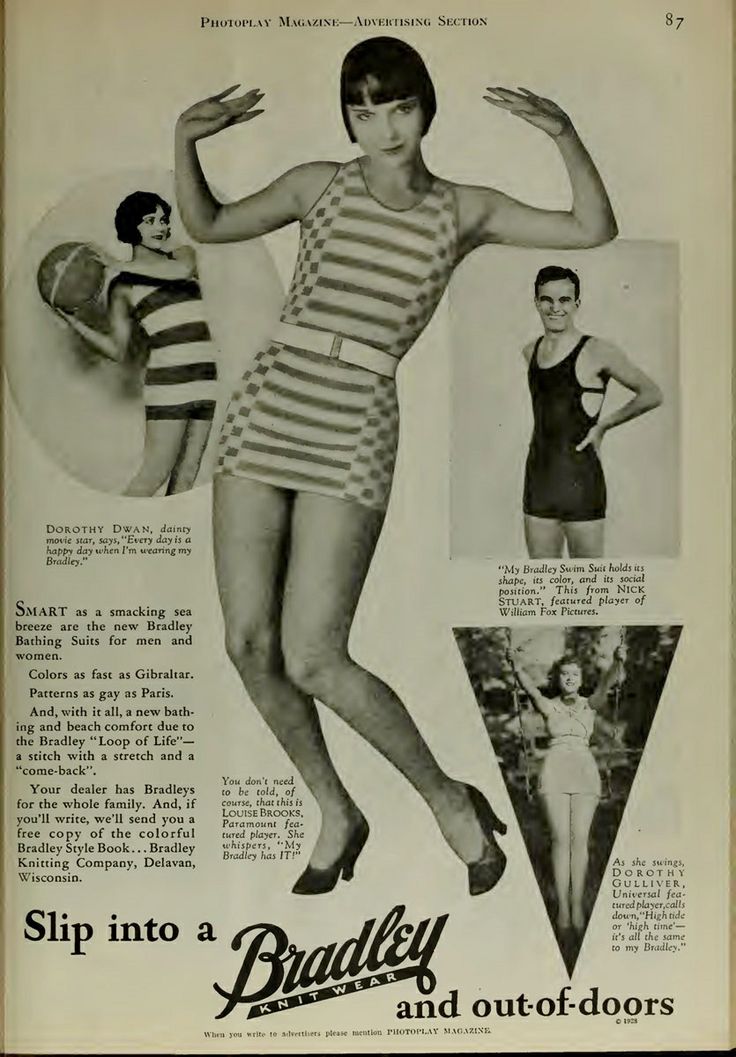
Movies popularized the image of the fun-loving and free-thinking woman throughout the US and Europe. The 1920 movie The Flapper introduced the term in the United States. The title character, Ginger, was a wayward girl who flouted the rules of society. Played by Olive Thomas, a former Ziegfeld Girl (left), Ginger had so much fun that a generation of lonely young women wanted to be like her. Another role model was stage and screen actress Louise Brooks (right), who also modeled for artists and fashion designers. She was the inspiration for the flapper comic strip Dixie Dugan.


450clarabow

Clara Bow wasn’t the first flapper on screen, but she was certainly a role model for young women of the era. She didn’t play by the rules, and was tabloid fodder for years for her sexual escapades with the biggest movie stars of the time. Bow’s first film was in 1922 and her career peaked in 1927 with the film It. “It” was defined as the sexual allure some girls have and others don’t. Bow’s fans wanted “it”, so they copied her look and behavior.

450twentiescar

The rise of the automobile was another factor in the rise of flapper culture. Cars meant a woman could come and go as she pleased, travel to speakeasys and other entertainment venues, and use the large vehicles of the day for heavy petting or even sex.

450flappertoon

These young women had plenty of opportunities for fun. Although Prohibition drove alcohol underground, that only added to its allure. Postwar prosperity allowed for leisure time and the means to spend that time drinking, dancing, and hanging out with free thinkers.

425flapperfashion

Being a flapper wasn’t all about fashion. It was about rebellion. In this article from 1922, a would-be flapper (but still a “nice girl”) explains her lifestyle choices to her parents. Flappers did what society did not expect from young women. They danced to Jazz Age music, they smoked, they wore makeup, they spoke their own language, and they lived for the moment. Flapper fashion followed the lifestyle. Skirts became shorter to make dancing easier. Corsets were discarded in favor of brassieres that bound their breasts, again to make dancing easier. The straight shapeless dresses were easy to make and blurred the line between the rich and everyone else. The look became fashionable because of the lifestyle. The short hair? That was pure rebellion against the older generation’s veneration of long feminine locks.

450loneflapper

The party stopped when the economy crashed and the Great Depression curtailed the night life. Although the flapper lifestyle died along with the Roaring Twenties, the freedoms women tasted in that era weren’t easily given up. They may have gone back to marriage and long hours of toil for little pay, but hemlines stayed above the ankle, and the corset never went back to everyday status. And we’ve been driving cars ever since.

Miss Cellania is a newlywed mother of four, full-time blogger, former radio announcer, and worst of all, a Baby Boomer. In addition to mental_floss, she posts at Neatorama, YesButNoButYes, Geeks Are Sexy, and Miss Cellania. Miss C considers herself an expert on no particular subject at all.

The Marketing Tactics of Firearm Manufacturers

Cross-posted at iVoter.

Studying up on the literature on gun marketing for a recent interview with the New York Times, I found a 2004 article on the topic with some really interesting findings.

The study — by public health scholar Elizabeth Saylor and two colleagues — asked what tactics marketers use to sell guns in a single month of advertising.  In contrast to what you might imagine, only a small minority of gun ads emphasized self-protection (3%) or a Western cowboy lifestyle (5%). Zero percent mentioned protecting one’s family. Only 15% of gun ads linked ownership to patriotism.  The most common substantive theme was hunting, but even that was a theme in only 20% of ads.

So what are gun advertisers highlighting in their ads?  Technical attributes.  The majority of gun ads (91%) emphasize the things that make one gun different from the next.  For example, they discuss the quality of the gun (61%), its accuracy (38%) and reliability (35%), and its innovative features (27%) and uniqueness (21%).

Why are gun manufacturers using this marketing strategy?

Here’s where the statistics get really interesting.  At the time of the study, 44 million Americans owned firearms.  Three-quarters of these owned more than one gun. In fact, 20% of gun owners are in possession of 55% of all guns (excluding law enforcement and military).

In other words, guns are not evenly distributed across the U.S. population, they are concentrated in the hands of a minority.  Most people that don’t own a gun are never going to buy one, so the best strategy for gun manufacturers is to convince people that they need lots of guns.  Differentiating the technical attributes of one from another is their way of telling the buyer that any given gun will do something different for them than the guns they already have, enticing the gun owner to own a range of guns instead of just one.

Lisa Wade is a professor of sociology at Occidental College. You can follow her on Twitter and Facebook.

The Bachelor Pad: Myth and Reality

For the last week of December, we’re re-posting some of our favorite posts from 2012. Originally cross-posted at Inequality by Interior Design.

There is not actually a great deal of literature on “man caves,” “man dens,” and the like–save for some anthropological and archeological work using the term a bit differently.  There is, however, a substantial body of literature dealing with bachelor pads.  The “bachelor pad” is a term that emerged in the 1960s.  It was a style of masculinizing domestic spaces heavily influenced by “gentlemen’s” magazines like Esquire and Playboy.  Originally referred to as “bachelor apartments,” “bachelor pad” was coined in an article in the Chicago Tribune, and by 1964 it appeared in the New York Times and Playboy as well.

It’s somewhat ironic that the “bachelor pad” came into the American cultural consciousness at a time when the median age at first marriage was at a historic low (20.3 for women and 22.8 for men).  So, the term came into usage at a time when heterosexual marriage was in vogue.  Why then?  Another ironic twist is that while the term has only become more popular since it was introduced, “bachelorette pad” never took off–despite the interesting finding that women live alone in larger numbers than do men.  I think these two paradoxes substantiate a fundamental truth about the bachelor pad–it has always been more myth than reality (see herehereherehere, and here).

The gendering of domestic space had been a persistent dilemma since the spheres were separated in the first place.  Few men were ever able to afford the lavish, futuristic and hedonistic “pads” advertised in Esquireand Playboy.  But they did want to look at them in magazines.

A small body of literature on bachelor pads finds that they played a significant role in producing a new masculinity over the course of the 21st century.  As Bill Ogersby puts it, “A place where men could luxuriate in a milieu of hedonistic pleasure, the bachelor pad was the spatial manifestation of a consuming masculine subject that became increasingly pervasive amid the consumer boom of the 1950s and 1960s” (here).  The really interesting thing is that few men were actually able to luxuriate in these environments.  Yet Playboy – along with a host of copycat magazines — spent a great deal of money, time, and effort perpetuating a lifestyle in which few men engaged.  Indeed, outside of James Bond movies and the Playboy Mansion, I wonder how many actual bachelor pads exist or ever existed.

In the 1950s — despite a transition into consumer culture — consumption was regarded as a feminine practice and pursuit.  Bachelor pads — and the magazines that sold the images of these domestic spaces to men around the country — helped men bridge this gap.  More than a few have noted the importance of Playboy’s (hetero)sexual content in helping to sell consumption to American men.  Barbara Ehrenreich said it this way: “The breasts and bottoms were necessary not just to sell the magazine, but to protect it” (here).  Additionally, the masculinization of domestic space took many forms in early depictions of bachelor pads with ostentatious gadgetry of all types, beds with enough compartments and features to be comparable to Swiss Army knives, and each room designed in anticipation of heterosexual conquest at a moment’s notice.

Paradoxically, bachelor pads seem to have been produced to sell men thehistorically “feminized” activity of consumption.

I’m guessing that many of the “man caves” I’ll see in my research wouldn’t necessarily fit the image most of us conjure in our minds.  But the ways men with caves talk about them are replete with images not yet fully realized by men who are most often economically incapable of architecturally articulating domestic spaces without which they may never feel “at home.”

———————

Tristan Bridges is a sociologist of gender and sexuality.  He starts as an Assistant Professor of Sociology at the College at Brockport (SUNY) in the fall of 2012.  He is currently studying heterosexual couples with “man caves” in their homes.  Tristan blogs about some of this research and more at Inequality by (Interior) Design.  You can follow him on twitter @tristanbphd.

Lisa Wade is a professor of sociology at Occidental College. You can follow her on Twitter and Facebook.

Colonial Circus: The Case of “Giraffe-Necked Women”

***TRIGGER WARNING for racism and enslavement***

Last month I posted about the human zoo captives popular during the 1800s and early 1900s in Europe and America.  Today I discovered an archive documenting the capture and display of members of a Burmese ethnic minority, the Kayan (also called Padaung), who have historically practiced neck-lengthening.

The archive, at Sideshow World, includes posters from the Hagenbeck-Wallace Circus and the Ringling Bros. and Barnum and Bailey Circus, as well as promotional photographs of the captives.  This material typically referred to the women as “giraffe-necked.”

Promotional posters:

Promotional photograph:
Kayan women with circus performers:


This political cartoon reveals the degree to which the “giraffe-necked woman” had become a well-known icon in the U.S.:

These women and the many others from various parts of the colonized world were typically kidnapped from their communities and put on display.  Many died young, exposed to diseases their bodies were not prepared to fight.  In some cases their remains — sometimes preserved as “freakish” samples — are still being repatriated.

Lisa Wade is a professor of sociology at Occidental College. You can follow her on Twitter and Facebook.

College, Fun, and Pluralistic Ignorance

This week on PostSecret I stumbled across the following confession: 

The idea that certain beliefs about college may not be true reminded me of the concept of pluralistic ignorance.  The phrase refers to a phenomenon in which a large proportion of a population misunderstands reality.

For example, while many college students think that lots of people hook up a lot, 80% of college students hook up less than once a semester, on average.  About 40% of those hook ups involve intercourse, while a strong third just involve getting horizontal and making out.  Students, for what it’s worth, also tend to consistently overestimate how much drugs and alcohol other students are consuming.

So, while “everyone thinks” that “everyone has fun during their freshman year.”  In fact, the person who wrote this confession may be a lot less alone than s/he thinks, even if most people think that everyone does, in fact, have fun.

Lisa Wade is a professor of sociology at Occidental College. You can follow her on Twitter and Facebook.

Vacation in International Perspective

Cross-posted at Montclair SocioBlog.

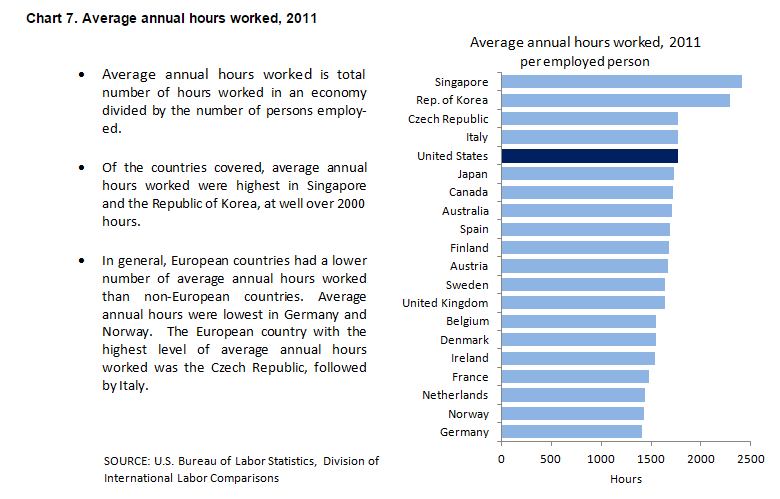
As I speculated years ago (here and here), it may be hard for Americans to imagine a world where the law guarantees them at least 20 paid vacation days per year.  But such a world exists.  It’s called Europe.*

Americans are the lucky ones.  As Mitt Romney has warned us “European-style benefits” would   “poison the very spirit of America.”  Niall Ferguson, who weighs in frequently on history and economics, contrasts America’s “Protestant work ethic” with what you find in Europe – an “atheist sloth ethic.”

The graph is a bit misleading. It shows only what the law requires of employers.  Americans do get vacations.  But here in America, how much vacation you get, or whether you get any at all, and whether it’s paid – that all depends on what you can negotiate with your employer.

Since American vacations depend on what the boss will grant, some people get more paid vacation, some get less, and some get none.  So it might be useful to ask which sectors of our economy are beehives of the work ethic and which are sloughs of sloth.  (Ferguson’s employer, for example, Harvard University, probably gives him three months off in the summer, plus a week or two or more in the winter between semesters, plus spring break, and maybe a few other days.  I wonder how he would react if Harvard did away with these sloth-inducing policies.)

The Wall Street Journal recently (here) published a graph of BLS data on access to paid vacations; they break it up by industry near the bottom.

Those people who are cleaning your hotel room and serving your meals while you’re on vacation — only about one in four can get any paid vacation days.  And at the other end, which economic sector is most indulgent of sloth among its workforce?  Wall Street.  Four out of five there get paid vacation.

How much paid vacation do we get?  That depends on sector, but it also depends on length of service.  As the Journal says,

Europeans also get more time off: usually a bare minimum of four weeks off a year. Most Americans have to stay in a job for 20 years to get that much, according to BLS data.

—————————

* The graph is from five years ago, but I doubt things have changed much. The US still has no federal or state laws requiring any paid vacation days.