Author Archives: jl2109

Steelers vs. Cowboys: Which is America’s Football Team?

An expanded version of this post is cross-posted at Montclair SocioBlog.

Six years ago, I wrote that the Pittsburgh Steelers had become “America’s Team,” a title once claimed, perhaps legitimately, by the Dallas Cowboys.

Now Ben Blatt at The Harvard College Sports Analysis Collective concludes that it’s still the Cowboys:

…based on their huge fan base and ability to remain the most popular team coast-to-coast, I think the Dallas Cowboys have earned the right to use the nickname  ‘America’s Team’.

To get data, Blatt posed as an advertiser and euchred Facebook into giving him some data from 155 million Facebook users, about half of the US population.  Blatt counted the “likes” for each NFL team:

It’s Superbowls X, XIII, and XXX all over again – Steelers vs. Cowboys.  And the Cowboys have a slight edge.  But does that make them “America’s Team”? It should be easy to get more likes when you play to a metro area like Dallas that has twice as many people as Pittsburgh.  If the question is about “America’s Team,” we’re not interested in local support.  Just the opposite: if you want to know who America’s team is, you should find out how many fans it has outside its local area.

Unfortunately, Blatt doesn’t provide that information. So for a rough estimate, I took the number of Facebook likes and subtracted the metro area population.  Most teams came out on the negative side. The Patriots, for example, had 2.5 million likes. but they are in a media market of over 4 million people.  The Cowboys too wound up in the red  3.7 million likes in a metro area of 5.4 million people.

Likes outnumbered population for only five teams.  The clear winner was the Steelers.

Jay Livingston is the chair of the Sociology Department at Montclair State University. You can follow him at Montclair SocioBlog or on Twitter.
Liberals: Can’t Get No Satisfaction

Cross-posted at Montclair SocioBlog.

Liberal women want more sex.

Controversial sociologist Mark Regnerus has been fooling around with the New Family Structures Survey.  Back in June, Regnerus used the NFSS data to conclude that gay parents are bad for children.  Now, he runs the regressions and finds that liberalism leaves women sexually dissatisfied.

Question:“Are you content with the amount of sex you’re having?”

The possible answers:

  • Yes
  • No, I’d prefer more
  • No, I’d prefer less

The differences were clear.

Those liberal women, they try and they try and they try; they can’t get no… satisfaction. Hey, hey, hey — that’s what they say.

The differences held even with controls for how much sex the woman had had recently.  Nor did adding other possible explanatory variables dampen the effect:

[T]he measure of political liberalism remains significantly associated with the odds of wanting more sex even after controlling for the frequency of actual intercourse over the past two weeks, their age, marital status, education level, whether they’ve masturbated recently, their anxiety level, sexual orientation, race/ethnicity, depressive symptoms, and porn use.

Regnerus says he was puzzled and asked an economist friend for her explanation.  She, like Regnerus, is a serious Christian, and saw it as a matter of seeking “transcendence.”  Liberal women want to have more sex because they feel the lack of sufficient transcendence in life and seek it in sex.  Conservative women find transcendence in the seemingly mundane — “sanctifying daily life” — so they do not need sex for transcendence.  Or as Regnerus puts it, “Basically, liberal women substitute sex for religion.”

To test this idea, Regnerus controlled for religious attendance.  When he did,  “political liberalism finally went silent as a predictor.”  Churchgoing liberals were no more insatiable than were their sexually content conservative co-worshipers.

So here’s the scenario.  All women want transcendence.  Since liberal women are not religious, they seek transcendence in sex and don’t find it.  They’re dissatisfied, but they cling to the idea that sex will bring them transcendence if only they have more of it.   So they keep looking for transcendence in all the wrong places.  Conservative women seek transcendence in religion and in everyday activities.  And that works.

Conclusion: Religion is deeply satisfying; sex, not so much.

This explanation, with its attribution of psychological-spiritual longing, makes some huge assumptions about what’s going on inside women’s heads.

I can offer a contrasting sociological explanation for Regnerus’ findings.  It looks not to deep inner longings for transcendence but to social norms, beliefs, and values.  It rests on the assumption that people’s desires are shaped by external forces, especially the culture of the social world they live in.  In some groups, sex for women is good, so it’s OK for them to want more sex.  In other social worlds, sex for women has a lower place on the scale of values.  It is less of a “focal concern.”

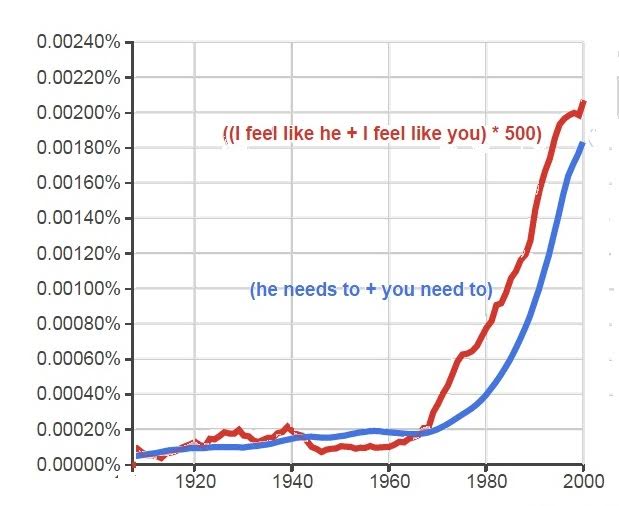
These differences make for differences in who is content with what — a liberal, East Coast man and a WASP woman from the Midwest, for example:

Can we really say that the difference here is about spiritual transcendence?

In some social worlds, a woman can never be too thin or too rich.  In those worlds, women diet and exercise in a way we might find obsessive.  But that’s what their culture rewards.  Some cultures hold that sex is a good thing — certainly more pleasurable than dieting and exercising — therefore,  more is better.  In some social worlds, that’s the way some people feel about money.  Are these desires really about transcendence, or they about cultural values?

Oh, and on the sexual discontent matter, there are two other possibilities that may not to have occurred to Regnerus: (1) maybe conservative men are better lovers; they satisfy their conservative bedmates in ways liberals can only dream of.   Or (2) conservative men are so bad at sex that when you ask their partners if they want more, the answer is, “No thanks.”

—————————

Jay Livingston is the chair of the Sociology Department at Montclair State University.  You can follow him at Montclair SocioBlog or on Twitter.
Jay Livingston is the chair of the Sociology Department at Montclair State University. You can follow him at Montclair SocioBlog or on Twitter.

What Happened to the Oldsmobile?

Cross-posted at Montclair Socioblog.

Try not to think about an Oldsmobile.

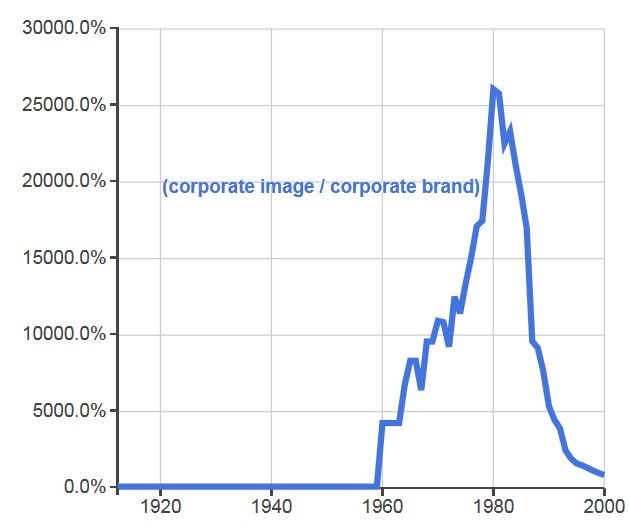
I’ve been thinking about Oldsmobile.  I mentioned it in passing in the previous post, and since then I’ve been wondering about “Not Your Father’s Oldsmobile” – the brand’s swan song.  Matthew Yglesias at Slate thinks that the campaign alienated the regular customers, the ones who bought a new Olds every few years, saying to them in effect, “You’re a geezer, an Oldster, and have been for a while – sans youth, sans sex, sans taste, sans everything except your crummy car.”

The tag that completed the famous set-up line was, “The new generation of Olds.”

The target of the campaign was to attract young car buyers, but it missed badly.  Why?  My guess is the futility of negation.  Saying what something is not doesn’t give people a clear picture of what that something actually is.  But that’s not the problem here.  The message was clear, especially with that tag about generations.

The problem is that direct negation can reinforce the idea you are trying to deny – as in the paradoxical command to not think about an elephant. “I am not a crook,” said Richard Nixon in his televised address about Watergate.  It’s his most remembered line, and when he spoke it, the TV screen might as well have had an overlay flashing the words “Game Over.”

If the denial contradicts general perceptions (i.e., the brand), people might not hear it at all, or worse, they might hear the opposite.  Ever since fact-checking went public in a big way a few years ago, we’ve seen corrections to the lies that politicians have told about one another.  But as Brendan Nyhan and Jason Reifler have shown, corrections can boomerang, especially when they clash with ideas the reader already has.

Can these false or unsubstantiated beliefs about politics be corrected? … Results indicate that corrections frequently fail to reduce misperceptions among the targeted ideological group. We also document several instances of a “backfire effect” in which corrections actually increase misperceptions among the group in question.

By insisting that they weren’t old after all, Oldsmobile might have done more harm than good.

—————————

Jay Livingston is the chair of the Sociology Department at Montclair State University.  You can follow him at Montclair SocioBlog or on Twitter.
Durkheim at the Parade

Cross-posted at Montclair SocioBlog.

Emile Durkheim, founding father of sociology and author of The Elementary Forms of Religious Life, would love  the Macy’s Thanksgiving Day Parade. Consider this excerpt from a British observer, Jonathan Raban, who watched the parade twenty years ago from a window on Central Park West. The parade, he said, was…

…the secular, American descendant of the European Catholic Easter procession in which all the icons and saints’ bones are removed from the churches and carried ceremonially around the town. The baseball hero, the gaseous, rubbery Mickey Mouse, the Mayflower pilgrims were the totems and treasure relics of a culture, as the New Orleans jazz and Sousa marches were its solemn music.

Had a serious-minded Martian been standing at the window, he would have learned a good deal by studying the parade’s idyllic version of American history. [guns, refugees, rebels]… The imaginative life of children was honored to a degree unknown on Mars — which was, perhaps, why matters of fact and matters of fiction were so confusingly jumbled up here, with Santa Claus and George Washington and Superman and Abraham Lincoln all stirred into the same pot.

He would be struck by the extraordinarily mythopoeic character of life in this strange country. People made myths and lived by them with an ease and fertility that would have been the envy of any tribe of Pacific islanders. Sometimes there were big myths that took possession of the whole society, sometimes little ones, casually manufactured, then trusted absolutely.

In my class, when we read about religion, Durkheim mostly, I have students write a paper about a secular ritual. One goal of the assignment is to get them to see that, from a functional perspective, a ritual is a way to generate and distribute the energy for binding the members of a society together.  It doesn’t really matter whether the ritual is officially secular or religious. In fact, if you’re a complete stranger to the culture, you probably couldn’t tell the difference.

No student has ever chosen the Macy’s parade. I wonder why not. Raban, who is from England, not Mars, senses the religious aura of the parade with its many gods. Had there been a Macy’s in ancient Greece, the parade would no doubt have had balloon representations of Demeter (god of the harvest), Poseidon (god of the sea), Aphrodite (god of beauty), Hermes (god of silk scarves), and of course in the U.S., Hebe (goddess of youth). And all the rest. We’re not Athenians. Instead, we throng the streets for icons like Snoopy and Spiderman, Pikachu, Bullwinkle, and Spongebob, but the idea is the same. They are our totems, our gods.

I imagine Durkheim on Central Park West, watching the children and grown-ups that have come together here to look up to these huge embodiments of our cultural ideals. Durkheim feels a frisson, a shiver of recognition. What better way to symbolize the idea about the binding power of ritual social energy?

Durkheim smiles.

Photos from the Macy’s Thanksgiving Day Parade website.

—————————

Jay Livingston is the chair of the Sociology Department at Montclair State University.  You can follow him at Montclair SocioBlog or on Twitter.

Jay Livingston is the chair of the Sociology Department at Montclair State University. You can follow him at Montclair SocioBlog or on Twitter.
Congressional Races and the Manipulation of Districts

Cross-posted at Montclair SocioBlog.

In a democracy, all votes are created equal — one person, one vote -– but apparently some votes are more equal than others.  Obama won the electoral college vote 62% – 38%, though his margin in the popular vote was much smaller: 51% – 48%.

A similar discrepancy happened in the vote for Congressional representatives.  The Republicans control the House of Representatives, where they have 54% of the seats. But if you add up all the votes for those seats, the Democrats come out slightly ahead (by about 500,000 votes).  More votes but fewer seats.

That discrepancy arises from the distribution of Democrats and Republicans in a state’s Congressional districts.  Take a hypothetical state with four districts, each with 200 people.  The popular vote splits evenly –- 400 Democrats, 400 Republicans. Here are the election results:

The Republicans have 50% of the popular vote but get 75% of the seats.
Less hypothetically, in North Carolina, Democratic candidates outpolled Republicans 2.22 million to 2.14 million.  But Republicans won 10 of the 14 seats.  The Democratic votes were crowded into four districts.  In three of those four districts, the Democrats won big – by an average of 133,000 votes.  (If the 7th district, where Democrats now have a slim lead, goes Republican, that average margin will be 177,000.)  Had some of the Democrats from one of those districts been mapped into the neighboring district, they might have won both, though by smaller margins.  The Republican districts had secure but smaller majorities.  Republican winning margins averaged 50,000 votes, less than half the margin where Democrats won.

My first thought was that this was pure Gerrymandering.  State legislatures get to draw the maps of their Congressional districts.  And many more state legislatures are controlled by Republicans.  In fact, some of the North Carolina districts have unusual shapes.  The NC-12, the thin blue line along Interstate 85 stretching nearly to the border, was created as a “majority-minority” district so that Black votes would not be diluted.  The downside for Democrats is that it packs those votes into that narrow corridor.  So the Democrats take that district by over 180,000 votes.  The Republicans with the neighboring districts but by much smaller margins – 23,000, 25,000, and 53,000.  In those four districts, the Democrats got 53% of the vote, but Republicans took three of the four seats.

The Democratic district snaking down through the middle of the state is the 4th, which contains “the Triangle” to the north, but now has that tail stretching down.  Democrats carried the district  by 170,000 votes.  Surrounding it is the 2nd (in pink), which Republicans carried by only 45,000 votes.

Similar differences crop up in Ohio and Pennsylvania. The popular vote is close, and in two of these states it goes to the Democrats.  But Republicans get most of the seats.  Republicans win their seats by less than half the margin of Democratic winners.  Here is a graph of the actual returns from Ohio, Pennsylvania, and North Carolina. (The Ohio total does not include the vote from the two uncontested districts, one Democrat, one Republican.  For the maps and election results, check out Politico.)

The Republican share of Congressional seats is far out of proportion to its share of the vote.  In Ohio and North Carolina, Democrats received more votes, but Republicans got 70-75% of the House seats.  It certainly is possible that Republican-dominated state legislatures drew the districts so as to cram Democratic voters into electoral ghettos.

I don’t know enough about the demography and geography of these states, but I do wonder why the districts are drawn this way.  A paper by Chen and Rodd (here) that uses 2000 election data argues that what looks like gerrymandering is in fact the result of “human geography.”  It’s not the legislatures that pack Democrats together, it’s the Democrats themselves.  They cluster in cities.  As for Democrats outside of cities,

many rural, small-town, and suburban precincts that lean Democratic are often subsumed into moderately Republican districts. . . . There are isolated pockets of support for Democrats in African-American enclaves in the suburbs of big cities and in smaller towns with a history of railroad industrialization or universities. However, these Democratic pockets are generally surrounded by Republican majorities, thus wasting these Democratic votes. As a result, the Democrats are poorly situated to win districts outside of the urban core.

Regardless of intent, the effect is to keep Democratic votes concentrated in the 4th.  If that blue tail of the NC-04 were subsumed into the pink NC-02, both districts might be blue.

In any case, Democrats have not always been on the wrong side of the seat/vote discrepancy.  John Sides at The Monkey Cage posted this graph showing the ratio for the last twenty-six elections.

Sides quotes Matthew Green on the general trends:

  • the winning party usually gets a “boost” in the number of seats
  • that boost used to be much larger

That trend might fit with the deliberate-gerrymander explanation, provided that in the earlier decades more state legislatures were controlled by Democrats.  But I’m not sure how it fits with Chen and Rodden’s human geography idea of “unintentional gerrymandering.”

—————————

Jay Livingston is the chair of the Sociology Department at Montclair State University.  You can follow him at Montclair SocioBlog or on Twitter.

Jay Livingston is the chair of the Sociology Department at Montclair State University. You can follow him at Montclair SocioBlog or on Twitter.
Climate Denial and American Voluntarism

Cross-posted at Montclair SocioBlog.

At the GOP convention in August, Mitt Romney’s cavalier dismissal of global warming got the intended laughs.  Today, it seems less funny and the Democrats are capitalizing on the turn of events:

Here’s the transcript:

President Obama promised to begin to slow the rise of the
oceans and to heal the planet.  My promise is to help you and your family.

In two short sentences, Romney gives us the broader context for the denial of global warming:  the denial of society itself.  He echoes Margaret Thatcher’s famous dictum

There is no such thing as society. There are individual men and women, and there are families.

This doesn’t mean that there are no groups beyond the family.  But those larger groups are valid only because individuals, consciously and voluntarily, chose to create them.  This way of thinking about the relation between individuals and groups has long been an underlying principle of American thought.  Claude Fischer, in Made in America calls it “voluntarism” – the idea that the only legitimate groups are the ones that people voluntarily form or join.*  The individual has a strong obligation to those groups and their members, but he has little or no obligation towards groups and people he did not choose.

That is a moral position.  It tells us what is morally O.K., and what is not.  If I did not choose to join a group, I make no claims on others, and it is wrong for others – whether as individuals or as an organized group, even a government – to make any claim upon me.

That moral position also shapes the conservative view of reality, particularly about our connectedness to other people and to the environment.  Ideas about what is right determine ideas about what is true.  The conservative rejects non-voluntary connections as illegitimate, but he also denies that they exist.  If what I do affects someone else, that person has some claim upon me; but unless I voluntarily enter into that relationship,  that claim is morally wrong.  So in order to remain free of that claim, I must believe that what I do does not affect others, at least not in any harmful way.

It’s easy to maintain that belief when the thing being affected is not an individual or family but a large and vague entity like “society” or “the environment.”  If I willingly join with many other people, then I will see how our small individual acts – one vote, one small donation, one act of charity, etc. – add up to a large effect. That effect is what we intended.  But if we separately, individually, drive a lot in our SUVs, use mega-amounts of electricity, and so on, we deny that these acts can add up to any unintended effect on the planet.

As Fischer says, voluntarism is characteristically American.  So is the denial of global warming.  The incident at a recent Romney rally illustrates both (a video is here).

When a protester yells out the question, “What about climate?” Romney stands there, grinning but silent, and the crowd starts chanting, “USA, USA.”  The message is clear: we don’t talk about climate change; we’re Americans.

—————————

Jay Livingston is the chair of the Sociology Department at Montclair State University.  You can follow him at Montclair SocioBlog or on Twitter.  Two more posts on voluntarism are here and here.
Cultural Relativism & “Beasts of the Southern Wild”

Cross-posted at Montclair SocioBlog.

The crucial moment in “Beasts of the Southern Wild,” for me at least, was the sight of Hushpuppy  in a new purple dress.  Hushpuppy, a seven-year-old girl is the central figure in the film, and up until that point we have seen her, dressed in the same clothes every day, living in The Bathtub, a bayou area south of a fantastical New Orleans-inspired city, on the unprotected side of the levee.**

Life in The Bathtub is harsh.  The people there (“misfits, drunks and swamp-dwellers” – Washington Post) live in shacks cobbled together from scrap metal and wood.  They fish from boats that are similarly improvised.  They scavenge.  The children’s education comes from the idiosyncratic stories of one woman.

They are wild people living among wild things, unconstrained by laws or walls, reliant on ancient prophecies and herbal cures, at home with the water that may overwhelm them at any moment.  – New York Review

After a Katrina-like flood, the authorities force the evacuation of The Bathtub.  Hushpuppy and the others are housed in a shelter – a large, brightly-lit room (a high school gym?) – and given new clothes.  This is when we see Hushpuppy in her new purple dress heading out the door, presumably to a real school.

No, no, no, I thought. This is all wrong. This is not her.  She belongs back in The Bathtub, for despite its rough conditions, the people there are a real and caring community.  Her father loves her and prepares her for life there.  The people there all love her and care for her, as they care, as best they can, for one another.

That was the voice of cultural relativism telling me to look at a society on its own terms, with understanding and sympathy.

At the same time, though, the voice of ethnocentrism was whispering in my other ear.  This is America, it said.  These conditions are the things you deplore and want to improve — lack of decent health care, education, clothing, shelter, and basic safety.  (In an early scene, Hushpuppy tries to light her stove with a blowtorch, nearly incinerating her shack and herself.)  It’s wrong that people in America live like this.

It was not much of a contest.  Cultural relativism won.

In turning the audience into cultural relativists, the movie plays on old themes in American culture.  We’ve always had our suspicions of civilization and refinement, and we’ve had a romantic attachment to the unrefined and rugged.  In “Beasts,” the shelter — sterile, impersonal, and bureaucratic — is contrasted with The Bathtub — rough-hewn, but an authentic community nonetheless.

Then there is Hushpuppy.  I’ve commented before (here, for example) that children in American films are often wiser, more resourceful, and more honest than the adults, especially those who would try to change them.   Add Hushpuppy to the list.*

In the end, the audience seemed relieved when she and the others make their escape.  We don’t want Huck to be civilized by Aunt Sally.  And we do want Hushpuppy to light out for the territory of The Bathtub.

———————

* I should add that much of the credit for convincing the audience goes to the unforgettable six-year-old actress who plays Hushpuppy.

** Images borrowed from dirty-mag, allmoviephoto, thevisualvamp, filmreviewonline, boscosgrindhouse, and tampabaytimes.

Reducing Poverty: Where There’s a Will…

Cross-posted at Montclair SocioBlog.

The poverty rate in the US in the mid-2000s was about 17%.  In Sweden, the poverty rate was 5.3%; in Germany, 11%.   That was the rate after adding in government transfers.  In Germany, the poverty rate before those transfers was 33.6%, ten points higher than that in the US.  Sweden’s pre-transfer poverty rate was about the same as ours.

Jared Bernstein has this chart showing pre-transfer and post-transfer rates for the OECD countries (click to enlarge):

Three  points:

1.  Governments have the power to reduce poverty, and reduce it a lot.  European governments do far more towards this goal than does the US government.

2.  It’s unlikely that America’s poor people are twice as lazy or unskilled or dissolute as their European counterparts.  Individual factors may explain differences between individuals, but these explanations have little relevance for the problem of overall poverty.  The focus on individual qualities also has little use as a basis for policy.  European countries have fewer people living in poverty, but not because those countries exhort the poor to lead more virtuous lives and punish them for their improvident ways.  European countries have lower poverty rates because the governments provide money and services to those who need them.

3.  The amount of welfare governments provide does not appear to have a dampening effect on the overall economy.