
Flashback Friday.
Does the modeling industry fetishize whiteness?
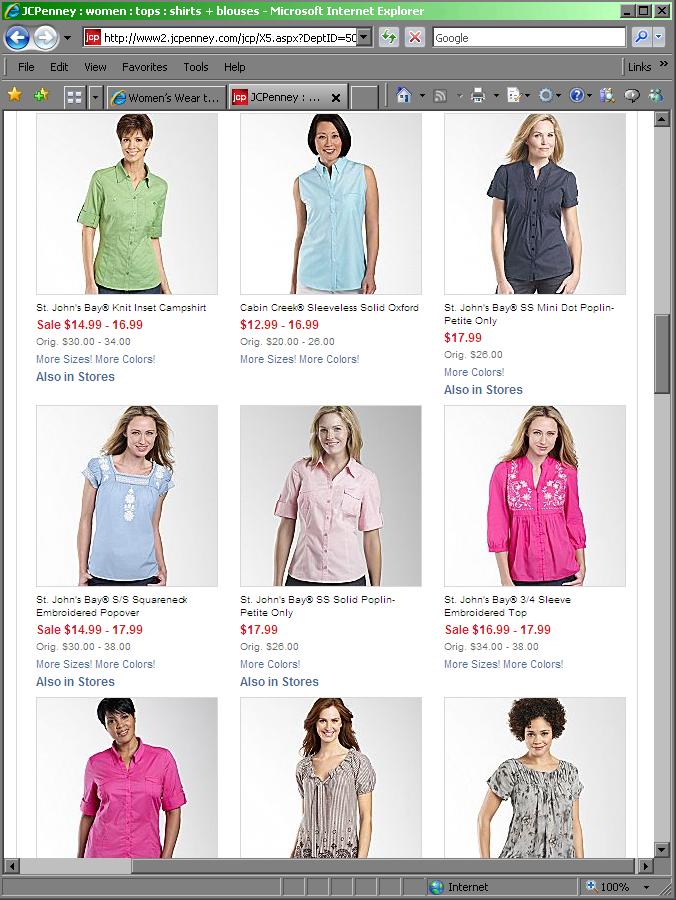
It turns out that the answer is: it does and it doesn’t. Ashley Mears, a model turned sociologist, found that high fashion models are overwhelmingly white, but that commercial modeling — the kind you see in catalogs for stores like Target, TJ Maxx, and JC Penney — is much more racially inclusive. Similarly, extreme thinness is more pronounced among high fashion models, whereas commercial models tend to have a few more inches around their waists.
Mears says that the difference has to do with the contrasting purposes of the different modeling worlds. High fashion is supposed to be, by definition, unattainable. The women used in high fashion, then, should be the most idealized, with bodies that are among the most difficult to attain and beauty that is the most rareified. In this context, whiteness is a marker of elite status because white femininity, thanks to white supremacy in U.S. culture, is the most purely feminine femininity of all.
In contrast, the commercial market is actually designed to sell clothes to everyday people. In this case, they want consumers to identify with their models. Their models aren’t supposed to signify social distance, they’re supposed to be just like us. Using more diverse models and models who are less waif-like helps accomplish those goals.
Screen shot from the JC Penney catalog, thanks to reader Chelsea S.:
Originally posted in 2010.
Lisa Wade, PhD is an Associate Professor at Tulane University. She is the author of American Hookup, a book about college sexual culture; a textbook about gender; and a forthcoming introductory text: Terrible Magnificent Sociology. You can follow her on Twitter and Instagram.
Comments 13
JihadPunk77 — July 19, 2010
this is correct. I get junk mail all the time and I often see Asian, Black, Brown (can't tell if they're either Latino, South Asian, or Middle Eastern) and white models in catalogs for Sears, Macys, JCPenneys, and other department stores. I've also seen curvy models.
These corporate brands are smart for appealling to THE PEOPLE who buy clothes and give them business. The so-called "high end" fashion world needs a lesson from these brands.
Vidya — July 19, 2010
"Their models aren’t supposed to signify social distance, they’re supposed to be just like us."
I'd say this is overstating the situation quite a bit. The *slightly* larger models in virtually all catalogues still do not resemble the average sizes or appearences of the majority of their customers (even/especially in plus-size sections/catalogues). It's still very much an 'aspirational' aesthetic, just catering to a population group whose notion of bodily ideals are somewhat different from those of the 'elites'.
Waiting Room Reading 8/12 « Welcome to the Doctor's Office — August 12, 2010
[...] She found that Seventeen was not representative (it was nine percent more white than the U.S. population and especially under-represented Hispanics). Still, she concluded that it was surprisingly representative, considering what she’d heard about the modeling industry. Her findings actually reflect Ashley Mears’ argument that there is much more diversity among “commercial” models than “hig.... [...]
Used Construction Pavers — August 18, 2010
Paver Stone Design Group (Crusin' Paver Drives)...
I found your entry interesting thus I've added a Trackback to it on my weblog :)...
Thomas Muddiman — October 2, 2016
If you look at food , for instance, a lot of work goes into creating an idealised image of the conditions of production (e.g organic/fair trade branding, the use of imaginary farm names to brand food from aggregated sources). Do you have any reason to suppose that this is not a factor in the marketing off clothes, and the only relevant axis of manipulation is the consumers' self image, other than the fact that clothes are a feminised commodity?
Colleen Pater — October 8, 2016
it is only a fetish for non whites, for whites to admire each other is natural. its understandable whites are the most beautiful people its not only because everyone thinks so its a fact white features like eye and hair color evolved specifically for sexual attraction we are the only species of hominid that evolved beauty.
Phuket Shuttle — January 29, 2019
Yes! Finally something about phuket taxi expensive.
Samanta Domson — August 2, 2023
This article's exploration of contrasting aesthetics in the modeling industry resonates with the world of online casinos as well. Just like high fashion aims for unattainable beauty, some online casinos might make grand promises and extravagant bonuses that seem too good to be true. On the other hand, like commercial modeling, reputable online casinos prioritize inclusivity and transparency. At njcasimile.com, they understand the importance of providing a secure and enjoyable gaming environment for all players, regardless of their background. Just as the commercial market embraces diversity, they promote responsible gaming and fair play, ensuring that our users feel comfortable and welcome throughout their gaming experience.