
Guest host Sarah Shannon interviews Victor Rios, professor of sociology at the University of California at Santa Barbara. In his recent ethnography, Punished: Policing the Lives of Black and Latino Boys, Dr. Rios searches for ways that police and a culture of punishment cause boys of color to internalize fatalistic attitudes about class and race. His book is the winner of several awards, including the American Sociological Association’s Oliver Cromwell Cox Book Award.
This episode with talk with David Grusky about the social and economic effects of the great recession and what every citizen should know about inequality in the United States.
This episode we talk with Suzanne Mettler about her new book, The Submerged State: How Invisible Government Policies Undermine American Democracy. Mettler explains how indirect incentives, subsidies, and tax breaks have come to dominate US social policy, but remain unseen and underappreciated by most Americans.
This episode we talk with Robert Sampson about his new book, Great American City: Chicago and the Enduring Neighborhood Effect. In the face of globalization and the widespread belief that the “world is flat,” Sampson shows how the world is actually very uneven, and that local communities make a great difference in how people live their lives across a wide range of phenomenon, from homicide and child health, to leadership networks, teenage pregnancy, altruism, and home foreclosures.
This episode we talk with Robert Agnew about his new article, Dire forecast: A theoretical model of the impact of climate change on crime. Professor Agnew argues that climate change may become one of the biggest drivers behind rising crime rates in the 21st century.
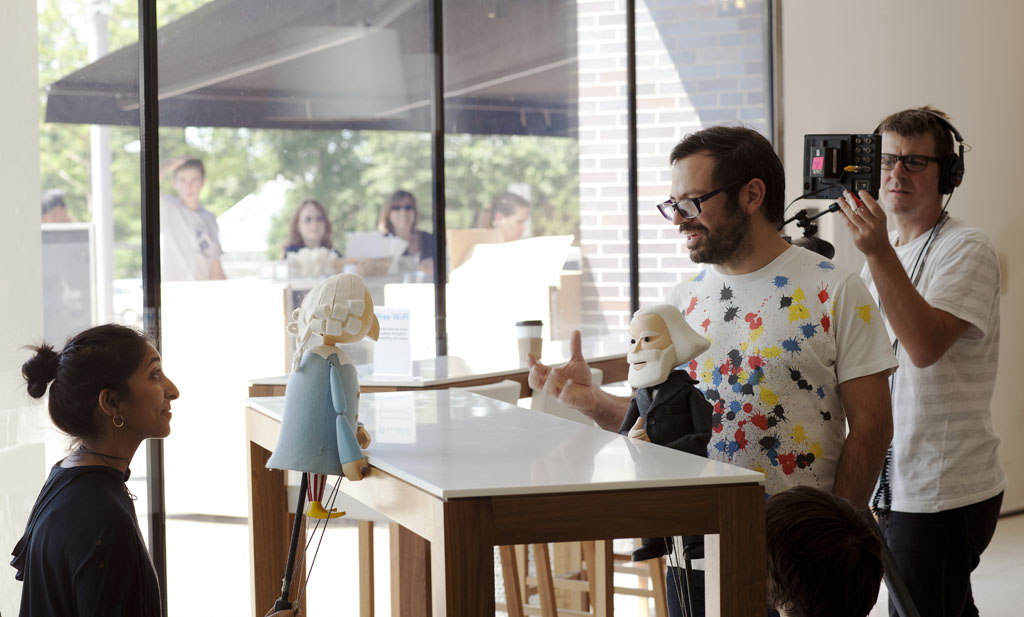
Today we talk with Joe Soss, author of the forthcoming book, Disciplining the Poor: Neoliberal Paternalism and the Persistent Power of Race, co-authored with Richard C. Fording and Sanford F. Schram. Soss traces the major changes and continuities in welfare provision and poverty governance in the United States over the past 40 years, and the racial, political, and economic factors in creating these policies.
This episode we talk with three authors of two articles from the Winter 2011 issue of Contexts: Lisa Dodson and Wendy Luttrell, authors of Families Facing Untenable Choices, and Stefanie Mollborn, author of “Children” Having Children. We discuss why Americans are so tough on single moms and teen moms, the untenable choices that they face, and why supporting moms is a smart social investment.
Happy Mother’s Day!
We sit down with Hans Rosling for a discussion about how visual graphics can unveil the underlying beauty of data. Highlights include a discussion of the history behind Rosling’s gapminder, who is leading the pack on adopting a “fact-based worldview,” the work that goes into Rosling’s famous TED Talks, and the historical relationship between Sweden and the US (and Minnesota, in particular).
A special thanks goes to the University of Minnesota’s Institute on the Environment. Rosling spoke at Minnesota as part of their Momentum 2011 series and they were kind enough to allow us to interview him as well.