
Supreme Court

New & Noteworthy

From the Archives

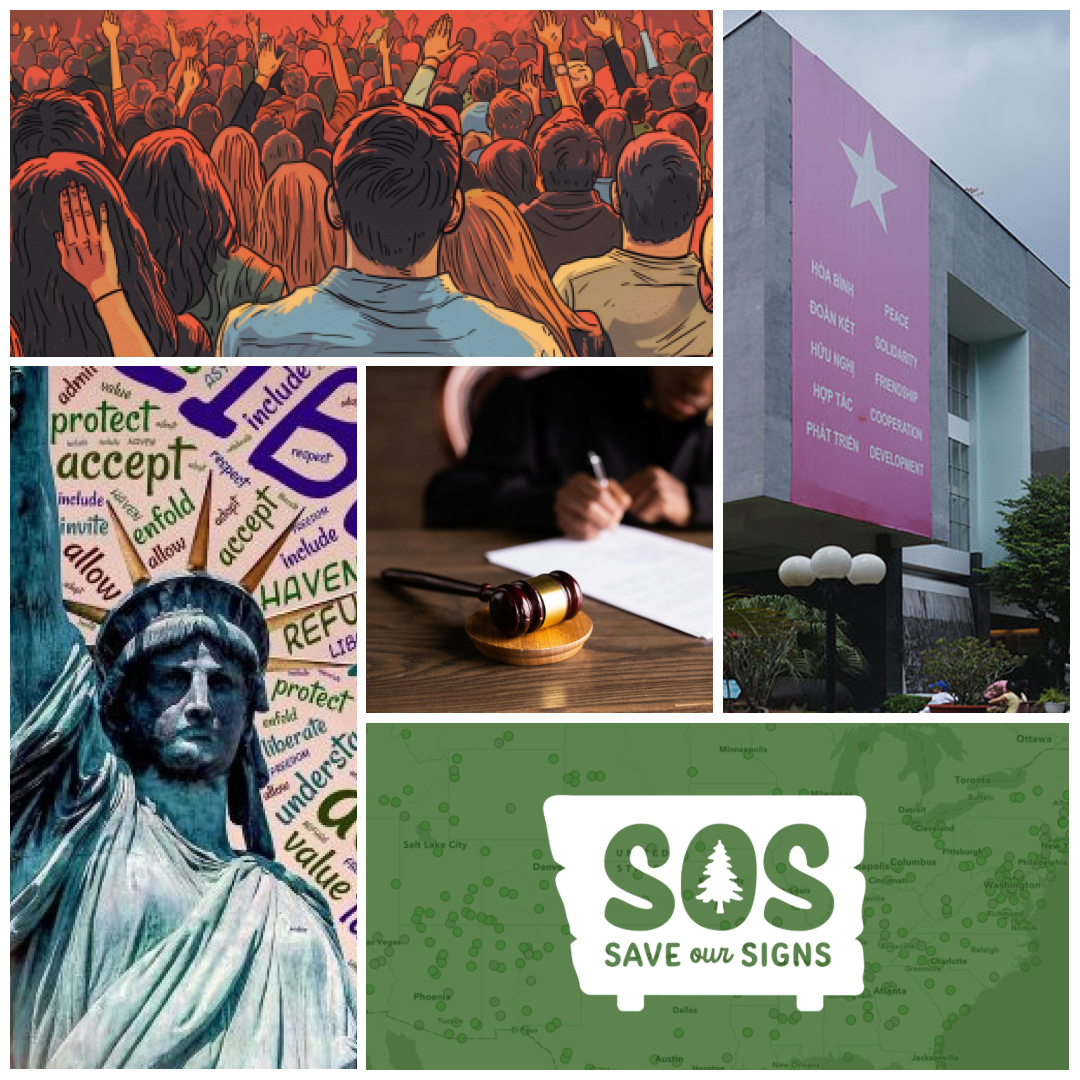
  • The Supreme Court heard oral arguments this week in Trump v. Barbara – a case examining the Trump administration’s efforts to end birthright citizenship. This 2020 piece from Contexts describes the “invisible knapsack of citizenship privilege that U.S. (born) citizens carry with them as they navigate their lives.” {4 min read}
  • President Trump wrote on social media, “a whole civilization will die tonight” if the Iranian government does not agree to reopen a key economic waterway by this evening. A top U.N. official said targeting civilian infrastructure would amount to a war crime. In this 2020 article from our partners at The Center for Holocaust & Genocide Studies, Kurt Borchard reckons with U.S. atrocities at the War Remnants Museum in Ho Chi Minh City, Vietnam. {6 min read}

More from our Partners & Community Pages

First Publics

  • First Publics held a webinar on teaching sociological research methods for/as public engagement in February. Attendees, led by panelists Arturo Baiocchi and Piper Sledge, discussed the role of sociological methods in community-engaged work, how storytelling can enhance sociological research, and more. The conversation was summarized for a post this week. {7 min read}

Center for Holocaust & Genocide Studies

  • The Trump Administration is removing educational signs at U.S. National Parks, primarily targeting content relating to slavery, Indigenous people, and climate change. Interim Director of CHGS Joe Eggers spoke to Jenny McBurney about Save Our Signs, a project housed at the University of Minnesota which aims to preserve signs through photography and document their removal. {8 min read}
New & Noteworthy

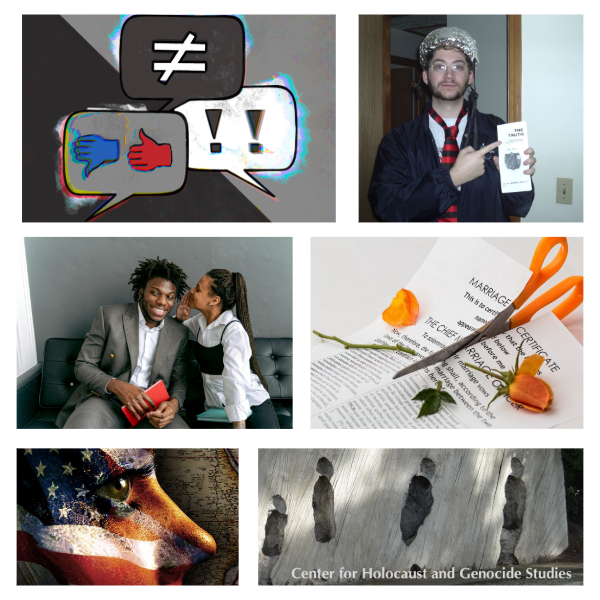
  • Jordyn Wald’s latest Discovery covers a recent study by Marcus Brooks on colorblind nationalism, examining how online conservatives reshape racial discourse by rejecting “woke” narratives, emphasizing traditional American values, and reframing Black Americans as allies against liberalism.

From the Archives

  • This 2016 piece from the Scholars Strategy Network covers the Supreme Court’s 4-4 deadlock on United States v. Texas on deferring deportations, which left Obama’s deferred action programs blocked, affecting up to five million immigrants. This decision maintained the then legal uncertainty for mixed-status families, limiting their economic opportunities, mobility, and access to education and healthcare.

More from our Partners & Community Pages

Council on Contemporary Families:

Center or Holocaust and Genocide Studies:

Addendum to my post last week criticizing Scalia’s characterization of the state of sociological research on the question of the impact of gay and lesbian parents on child development:

Phil Cohen (and others, in both public comments and private communications) point out that Scalia didn’t just miss the ASA brief or make up his claim that there is “no clear answer” among sociologists on the matter.  Rather, it would appear that he got the line from reading another brief on parenting submitted by sociologist Mark Regenerus and his colleagues that explicitly and directly countered the organizational consensus account. (See Cohen’s account.)

So is Scalia off the hook? Not quite that easy. For one thing, Regenerus’s brief is based on a highly controversial paper published in the journal Social Science Research about a year ago. (To say that that study has been controversial is putting it mildly; just take a look at some of the reactions chronicled previously by Cohen). Setting aside the question of how this piece got published in the first place (a significant matter of speculation and consternation in the field), one wonders if Scalia read the paper, or subsequent commentary about it—much less really parsed through the research on both sides of the issue. And even if some of the findings hold more water than most sociologists will allow, there seems little ground to warrant the larger societal implications that Regenerus imputes.

I won’t get into the specifics further, except to paraphrase Cohen’s summary: So what we have here is one sociologist (or one sociologist and his collaborators) denying the scholarly consensus which Scalia takes to mean there is no consensus. “Just like with evolution and climate change,” as Cohen puts it. I guess there are folks scientists who still think the earth is flat or that gravity isn’t really real either.