race

New & Noteworthy

From the Archives

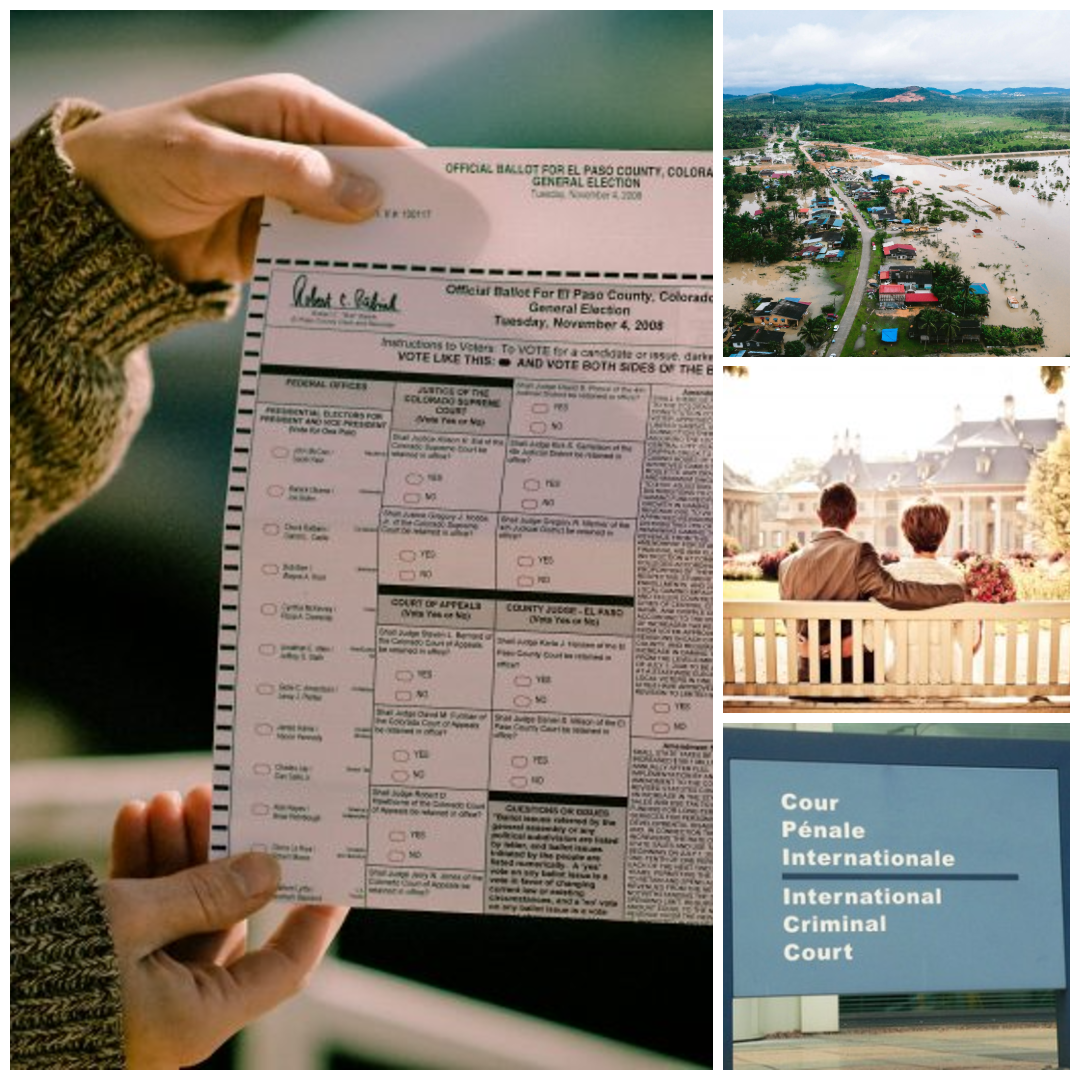
  • The U.S. Supreme Court eviscerated the Voting Rights Act in a ruling last Wednesday, reversing protections against racial discrimination in redistricting. This 2020 piece from Neeraj Rajasekar synthesizes research on gerrymandering, voter disenfranchisement, and the role of voting in U.S. democracy. {7 min read}
  • Last week, Israel intercepted the Global Sumud Flotilla in international waters more than 600 miles from the flotilla’s destination in Gaza, where they sought to bring aid. Over 175 civilian activists from around the world were detained, which leaders of multiple countries have criticized as illegal. To help make sense of how international crimes are understood and arbitrated, check out this roundtable discussion from 2013 explaining the international criminal justice system. {19 min read}

More from our Partners & Community Pages

Council on Contemporary Families

  • A new study by Yiang Li, Jason Wong, and Linda Waite shows how the conditions people experience in childhood don’t only shape themselves in adulthood, but impact their partners and wider relationships as well. {5 min read}

Backstage with TSP

  • After a grueling start to the year here in the Twin Cities, the spring 2026 academic semester is coming to a close. While the TSP board will be posting less frequently over the summer to accommodate the break and changing schedules, stay tuned for more content covering the latest social science research, as well as a special TSP series processing the ICE surge in Minnesota.

New & Noteworthy

  • A new Discoveries article highlights research on how renters navigate the risks of poor housing conditions and forced moves. Tenants often face a tough choice: stay and deal with needed repairs or risk instability by relocating. Learn more in The Risks of Relocation and Repair for Renters by Luna Iman. {2 min read}

From the Archives

  • Despite declining participation in organized religion, mainstream media is seeing a rise in religion-based films and shows, like Amazon’s “The Chosen” and Fox’s “The Faithful: Women of the Bible.” This 2011 TSP article by Kyle GreenGodless TV – suggests that there has been a dramatic shift in media production of religion in the last 15 years. {4 min read} And this 2014 piece by Evan StewartChristian Cinema? – highlights the controversy surrounding religious media in the market concerning navigating complex social and religious identities. {2 min read}
  • Last Thursday the Trump administration signed an order to reclassify licensed medical marijuana as a less regulated Schedule III rather than a more highly regulated Schedule I drug, a designation typically reserved for drugs with limited medical use and high potential for abuse. Check out this 2018 TSP article for A Sociological Look at Marijuana and its Users. {3 min read}

More from our Partners & Community Pages

Council on Contemporary Families

First Publics

  • A new essay by Brianna Stefano reflects on teaching victimology in classrooms where students may have lived experience with trauma, emphasizing care and flexibility in pedagogy. {5 min read}
  • First Publics interviewed Sarah Lageson, Associate Professor of Technology and Social Power at Northeastern University. They discussed the intersection of sociology and law, public sociology and pedagogy. {6 min read}

New & Noteworthy

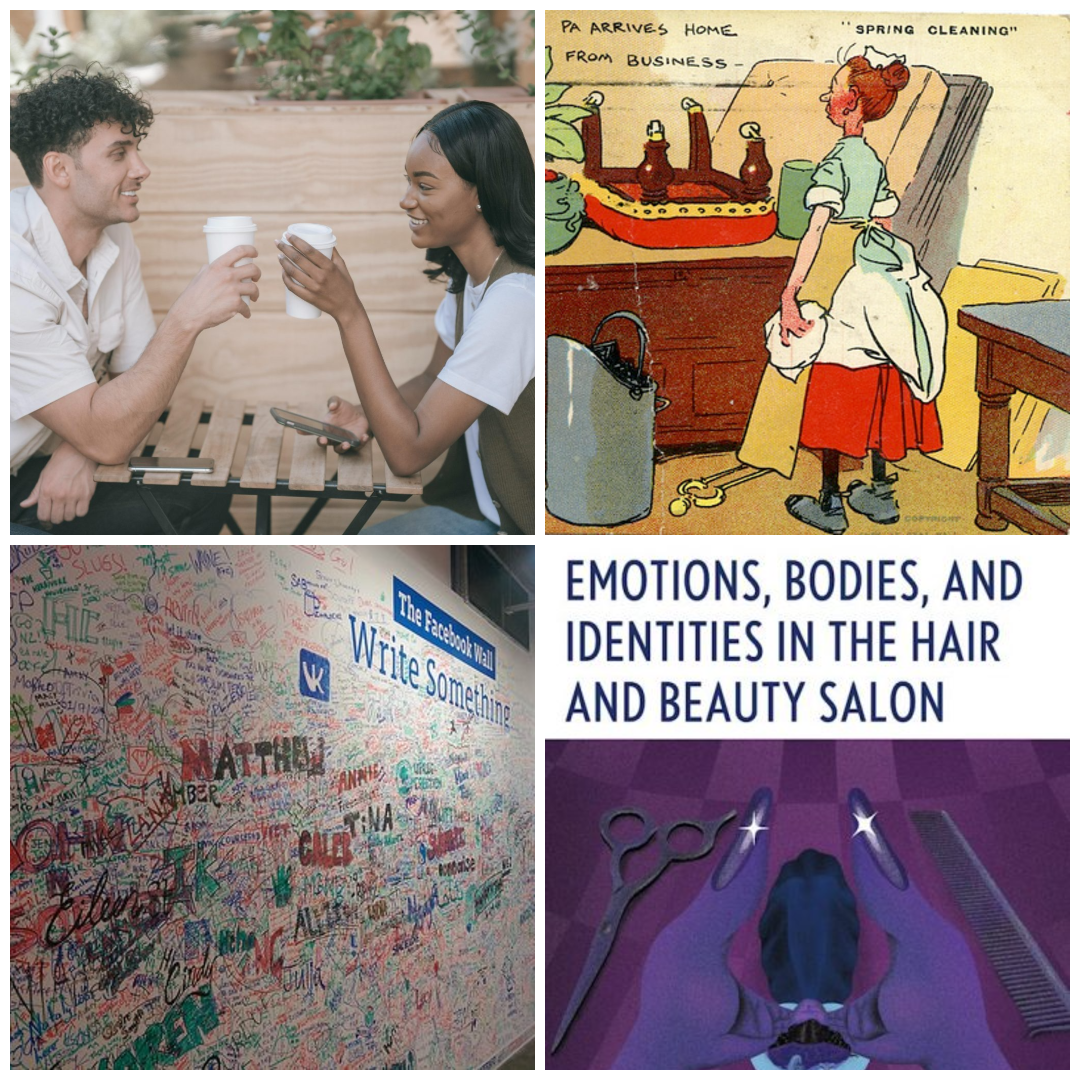
  • How Black Women Navigate Interracial Relationships by Jan-Rose Davis covers a new interview study by Vanessa Gonlin, Chelsey D. Adams, and Elaysha K. Brown. Black women in interracial relationships were often confronted with social tensions rooted in a history of slavery, including accusations of internalized racism from other Black people. {3 min read}

From the Archives

  • Spring has sprung! As we move into the warmer season, revisit this 2016 TROT for research on the sociology of spring cleaning. {3 min read}
  • This past weekend, the Islamic holiday Eid converged with Nowruz, the start of the Persian New Year. Next week, the Jewish holiday Passover will converge with Christian celebrations of Holy Week and Easter. This Discovery from 2016 discusses how social media facilitates exposure to religious diversity, which can in turn impact people’s own religious practices. {3 min read}

More from our Partners & Community Pages

Council on Contemporary Families

New & Noteworthy

Nicole Schmitgen has a new Discovery on work by Margarita Torre on women and union support. According to her research, 11% of Black women are a part of unions, more than other racial groups of women. Future union participation by women is expected to rise.

Our Clippings Media Report includes The Cut interview with Gretchen Sisson on her new book and the adoption industry, Elijah Anderson on the continued relevance of W.E.B. Du Bois’s The Philadelphia Negro: A Social Study to today, Eric Klinenberg in Plain English with Derek Thompson on aloneness and loneliness, and Robert Bullard on Living on Earth about flooding in Alabama and segregation.

From the Archives

Libraries continue to be the site of controversy for groups who feel libraries allow too radical books onto its shelves. Read our Discovery by Nick Matthews, Hotspots in Red-Hot Demand in Rural America, to learn more.

Tax Day is coming quick! Learn about some tax myths from Contexts here.

More from our Partners & Community Pages

Contexts latest include:

Council on Contemporary Families:

First Publics has a new Dialogues:

New & Noteworthy

Richie Zweigenhaft published a new TSP Special on the race and gender of people holding fortune corporate board seats. Comparing 2011 to 2023, Zweigenhaft found that white men have gone from about 2/3 majority to slightly less than 1/2 minority. Read the special here, and the full article here.

This week’s TSP clippings includes Eric Klinenberg on MSNBC’s Why Is This Happening? The Chris Hayes Podcast and in The New Yorker to discuss his new book 2020: One City, Seven People, and the Year Everything Changed, Elizabeth Wrigley-Field in the StarTribune following new research by Wrigley-Field and colleagues that suggests ‘excess deaths’ (the number of deaths over the average expected deaths in a time period), Emine Fidan Elcioglu was interviewed by The Trace about her research examining a southwest border militia group that supplied information on migration routes to the U.S. Border Patrol, and Surinder S. Jodhka in IndiaSpend on India’s caste system fueling social exclusion.

From the Archives

Justice Alito made some controversial statements about same-sex marriage. Read our ‘There’s Research on That’ by Caity Curry and Allison Nobles to learn about some of the complexities surrounding LGBT parents.

Less than a week ago there was a Neo-Nazi rally in downtown Nashville. Learn about some similarities between 1930s Germany and the U.S. today by reading this piece from the Center for Holocaust and Genocide Studies.

More from our Partners & Community Pages

Contexts Latest pieces include:

Council on Contemporary Families has several new pieces including:

The Center for Holocaust and Genocide Studies posted Professor John Packer‘s annual Holocaust Remembrance Day Lecture, titled “Remembering, Learning, and Applying ‘Never Again’ as the Essential Lesson of the Holocaust.”

New & Noteworthy

This week we have a new Discovery from Mason Jones on Self-Help Books from work by Amber Gwynne. The research found that readers learned that the books were not a “quick fix” and they still needed “to do the heavy lifting”.

Valentine’s Day was this past week and we reposted some pieces from us and our partners to acknowledge the holiday. This includes recent coverage of some sociology by Lauren Harris on ABC’s The Golden Bachelor, Valentine’s Day in Japan, and more.

Our media report from this week includes Scott Schieman (Professor of Sociology at the University of Toronto) in The Conversation on how accurate the ‘unhappy worker’ narrative is, coverage of Boris Kagarlitsky’s (prominent Russian sociologist and editor-in-chief of the Marxist online publication Rabkor) sentencing to five years in prison for his critical view of the war in Ukraine, Tina Fetner‘s (Professor of Sociology at McMaster University) new book, Sex in Canada: The Who, Why, When, and How of Getting Down Up North, in Brighter World and Vancouver is Awesome, and Christina Ciocca Eller in The Harvard Gazette on educational institutions rankings.

From the Archives

Orthodox Greece recently legalized gay marriage. Read Louisa L. Roberts‘s Special Feature on research of international attitudes toward same-sex marriage to learn more.

Russia has made advances in space-based nuclear weapons. Learn about some of the history of testing nuclear weapons from 1945-1998 from this Sociological Images piece by Gwen Sharp.

More from our Partners & Community Pages

Context’s Winter 2024 is out and ready to read! This issue includes pieces on eviction, “Green Card Soldiers”, race and drug addiction, Q&A with Malcolm Gladwell, and much more!

Council on Contemporary Families has two pieces to read. First, Richard Petts and Daniel L. Carlson write up some of their research on domestic labor in Society and Mental Health and how this work extends far beyond childcare. And second, Jennifer Randles and Megan Carroll write up their different research studies on the societal and cultural beliefs surrounding the role of fathers.

First Publics‘s latest includes Calvin John Smiley‘s work on building trust and using practical applications of sociological concepts in education to address the prison-industrial complex.

New & Noteworthy

We have two new Discoveries for you to read:

Check out some of our ‘Best of 2023’ pieces including:

From the Archives

Government shutdown avoided? Read our TROT on shutdowns to learn more about how impactful.

Children and adults experiencing homelessness are particularly vulnerable to cold weather, especially in Minnesota. Check out this World Suffering piece by Ron Anderson The Intractable Suffering of the Homeless to understand some of the complexities, and risks.

More from our Partners & Community Pages

The latest from Contexts includes:

Council on Contemporary Families a piece on love and loss:

New & Noteworthy

Mason Jones and I published a new Discovery on work by Catherine Sirois, Dependent, Delinquent, or Denied? In her research, Sirois found resource scarcity was causing social workers and probation officers to be “institutional offloading” youth who required lots of time and attention.

Mallory Harrington’s media report on Clippings includes Casey Stockstill in Chalkbeat on her new book False Starts: The Segregated Lives of Preschoolers,  A.J. Jacobs in CNN on raise increases in Toyota, Honda, and Hyundai factors – possibly a preemptive move to prevent union organizing, Kevin Woodson in Fortune on his new book The Black Ceiling: How Race Still Matters in the Elite Workplace, and Mariana Luzzi in Barron’s on Argentina’s inflation and poverty crisis.

From the Archives

In the United States, Thanksgiving is around the corner. This holiday is notorious for family conflict around the dinner table, especially with politics. Learn more about some sociology behind this phenomenon from our video and TROT, “Visual Soc: Family Meal Conflict” by Isabel Arriagada and Mahala Miller.

Black Friday is also this week. Check out Nathan Palmer‘s piece on this consumer holiday to learn about the ritualization of this shopping frenzy.

More from our Partners & Community Pages

Contexts has their Fall 2023 issue to read before 12/15 for free:

In case you missed it, Engaging Sports latest:

First Public’s latest:

New & Noteworthy

TSP board member Eleanor Nickel has a new Discovery, “Love Behind Bars.” Based on a recent article by Kristin TurneyKatelyn Rose MalaeMacKenzie A. Christensen, and Sarah Halpern-Meekin, the ripple effect of jail incarceration is strongly felt by women and children of incarcerated persons.

Our latest Media Report on Clippings features some Spookiology from Margee Kerr, Lars Birger Davan, Marc Eaton, and Dennis Waskul in Axios and Atlas Obscura, Patricia Romero-Lankao on transitioning to green energy and equity in NPR, and Alexei Levinson on the war in Ukraine and Putin’s career in The Bell.

From the Archives

How do we relate to people around the world experiencing war and trauma? Read our ‘There’s Research on That’ by Brooke Chambers to learn more about how distant war and the degree media coverage can impact our selective empathy of conflicts.

Student loan forgiveness developments continue to make headlines. Read our ‘There’s Research on That’ by Amber Powell on how student loan debt disproportionately impacts students of color and women.

Backstage with TSP

We are growing! New board members are joining the TSP team and bringing new perspectives and energy! Podcast planning is also our primary project. We are currently looking for recent sociological books to add to our current SOC 101 episodes.

More from our Partners & Community Pages

Contexts has new pieces to check out:

Council on Contemporary Families latest include:

Image of people each standing 6 feet apart from the others by Gordon Johnson from Pixabay

We share this writing in memoriam of Ron Anderson (June 14, 1941 – December 21, 2020) Professor Emeritus of sociology, University of Minnesota, Twin Cities. In the coming weeks, to honor Ron’s memory, we will share more of his writing.

Over the past month with lightning speed the phrase ‘social distancing’ became part of the American vocabulary. Epidemiologists invented the phrase in earlier epidemics to refer to avoiding close contact with other people during the outbreak of a contagious disease. The word now evokes such actions as staying six feet away from others, avoiding crowded places, stop handshakes and hugs and even washing your hands a lot.

But the phrase is not perfect. In fact, the World Health Organization and quite a few bloggers have called for use of an alternative phrase, ‘physical distancing’ to bring clarity. Their argument is that the word ‘social’ in social distancing suggests we should cut off relations with people. But in a pandemic, we desperately need social connecting via technology to avoid the social isolation that distancing demands.

From a sociological perspective another consideration is worth noting. Most of us have been advocating the reduction of social distance in the sense of reducing distance among race, class and sex-based groupings. Furthermore, almost 100 years ago a sociologist Emory S. Bogardus designed the research tool called the Bogardus Social Distance Scale. The tool measures the degree of separateness rather than closeness among any kind of social groups including race, class and gender. 

The long tradition of sociological measurement of social distance implies another argument against using ‘social distance’ to talk about being safe in an epidemic. We don’t want to inadvertently suggest people increase their distance with minority ethnic groups. We are living in a time when white nationalism has been rising and there are many reports of prejudice and discrimination toward Asians. We need to build less, not more social distance.

It is probably too late to get most people to switch phrases from ‘social distancing’ to ‘physical distancing’ or just ‘distancing.’ But you can add your thoughts about this issue to the dialog on Wikipedia or elsewhere on this important topic. And you can be more precise in your own use of distancing terminology.