
ethnography

New & Noteworthy

  • Not Your Feminism, Not Your TERF by Jordyn Wald explores the rise of trans-exclusionary rhetoric within feminist movements. While most feminists support transgender rights, a small but vocal group—commonly called “TERFs” or gender-critical feminists—argue for “sex-based rights” that exclude trans women. Drawing from recent research, Jordyn highlights how this perspective relies on rigid and outdated notions of biological sex and often aligns with conservative political agendas.
  • TSP’s Summer of Sociology Reading List, 2025 spans a wide range of sociological themes—from youth mental health and labor to nationalism, race, and identity. With titles covering politics, culture, inequality, and everyday life, it offers something for every curious reader.

From the Archives

  • A recent execution in Tennessee drew national attention after concerns were raised that a heart device could cause severe pain during the procedure by delivering electrical shocks. For broader context on why the death penalty remains embedded in U.S. culture, check out the 2016 piece, The Resiliency of the Death Penalty in the United States.

More from our Partners & Community Pages

Council on Contemporary Families

First Publics

  • Theory for Good: Sociology in Cultural Studies by Hannah McCann shares how sociological theory enriches cultural studies classrooms by offering students tools to make sense of their everyday lives. Arguing that teaching theory is a form of public engagement, she shows how applied, reflective learning—especially in today’s age of AI—can foster critical thinking and the need for sociology, now more than ever.

Center for Holocaust and Genocide Studies

give theory a chance

New & Noteworthy

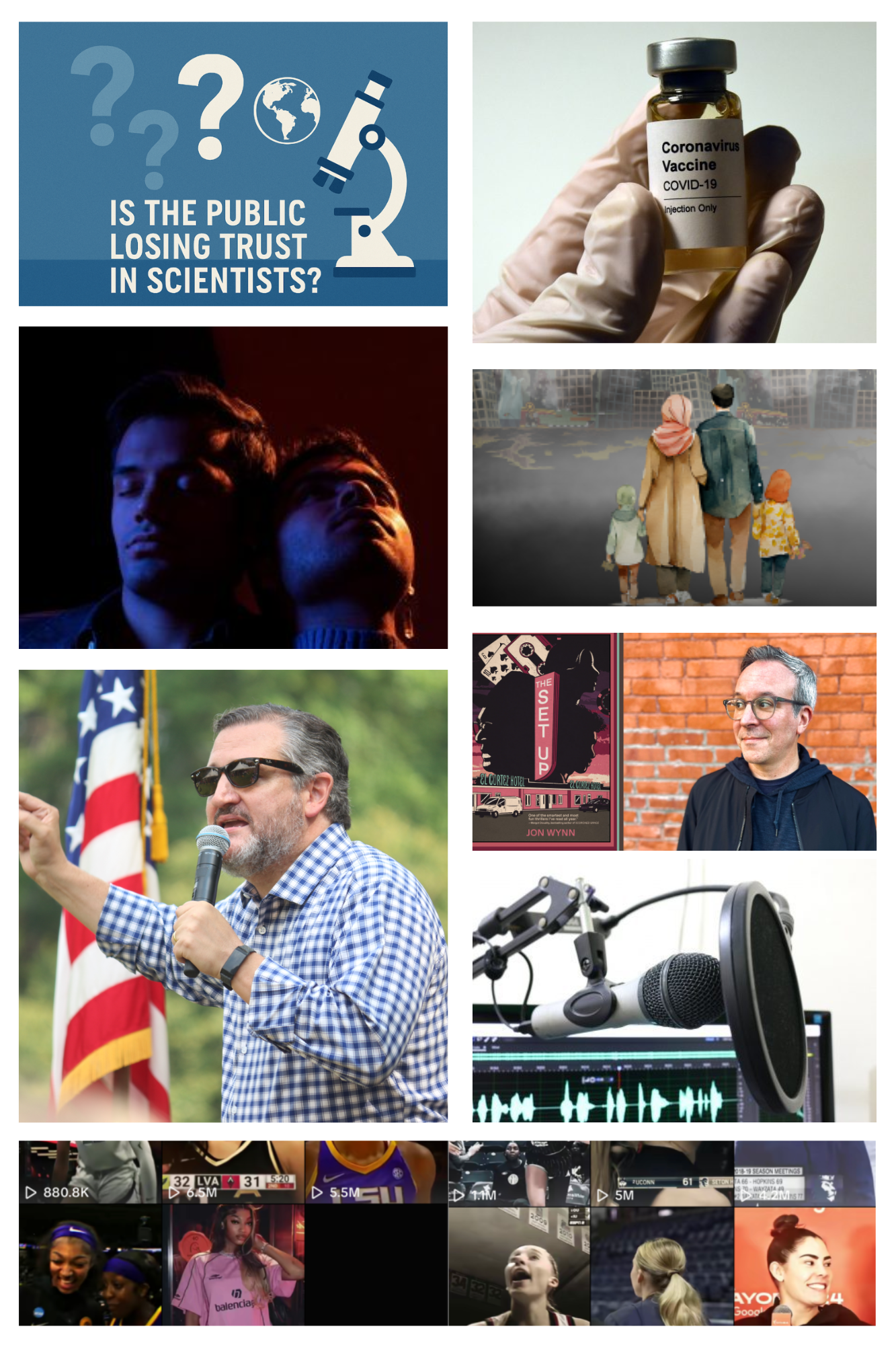
  • In Science We Trust? by Jordyn Wald covers global research by Viktoria Cologna and colleagues. Surveying over 70,000 people across 68 countries, the study found that trust in scientists remains high worldwide. Most respondents see scientists as competent, public-minded, and believe they should help solve major issues like health, clean energy, and poverty. However, some distrust persists—especially among conservatives and those who view scientists as elitist—raising concerns about the outsized influence of vocal skeptics.
  • The Sticks and Stones of Christian Nationalist Rhetoric by Forrest Lovette highlights research by Nilay Saiya and Stuti Manchanda on how political speech can incite violence. Analyzing statements from all 100 U.S. senators, the study found that states where senators endorsed Christian nationalist views were up to 1.5 times more likely to experience violence against religious minorities. The authors argue this rhetoric legitimizes hostility by framing other faiths as threats—underscoring the real-world dangers of political language rooted in religious supremacy.

From the Archives

  • Rubber bullets and other less-than-lethal projectiles have been used on Los Angeles residents in recent confrontations. This archive piece during the 2020-2021 protests covers some research on the harm that these projectiles used by police and the military can cause. And it highlights one study that found that 3% of people hit by rubber bullets actually die from these injuries, so “97% non-lethal”.
  • RFK is reported to have planned the termination of all members of the CDC’s vaccine advisory committee, with skepticism that grew during the COVID-19 pandemic being cited as a catalyst. In 2020, Contexts published this piece, the coming vaccine battle, which although now in hindsight, served as insight into today’s climate.

More from our Partners & Community Pages

Contexts

  • Novel/Sociology: An Interview with Jonathan Wynn by Amin Ghaziani spotlights UMass sociologist Jonathan Wynn’s genre-bending debut novel The Set Up. Known for his academic work on cities and culture, Wynn describes the “terrific fun” of writing fiction as a way to smuggle in sociological insights. Blending mystery, marketing, and microsociology, the story follows a rogue Vegas firm that hires actors to influence behavior—raising ethical questions in a Goffman-meets-Ocean’s Eleven plot.

Council on Contemporary Families

  • The Importance of Sexual and Romantic Exploration for LGBQ+ College Students by Ellen Lamont and Teresa Roach explores how college can offer a crucial space for identity development among LGBQ+ youth, especially those raised in conservative Christian environments. Based on interviews with 26 students, the study finds that beyond supportive communities, the ability to explore sexuality through relationships was key to affirming identity and building self-understanding. Yet students still faced barriers—including limited queer social spaces and conflicting expectations about campus organizations.
  • From Kin to Unit: How Refugee Resettlement Reshapes Family Itself by Neda Maghbouleh draws on a seven-year ethnographic study of 52 Syrian families resettled in Canada. The research reveals how state policy fractured extended kin networks by enforcing a narrow, nuclear definition of “family.” Most families faced protracted separation from vital caregivers, while a few navigated costly sponsorships or strategic marriages to rebuild kinship ties. Maghbouleh and co-author Laila Omar argue that these exclusions are not incidental, but institutional—reshaping daily life and identity.

First Publics

  • Subverting a Subject: Marketing as Sociology by Sam Chian explores how teaching marketing through a sociological lens turns business education into critical inquiry. Instead of training future marketers, Chian encourages students to question how marketing reinforces inequality, commodifies identity, and shapes desire. By treating marketing as a social institution, he helps students see it not as a neutral tool, but as a force worth interrogating—and potentially transforming.
  • Flattening Theory: Kyle Green on the Give Theory a Chance Podcast highlights how sociologist Kyle Green is reshaping theory education through podcasting. In Give Theory a Chance, Green invites guests to share how big ideas—from Du Bois to Deleuze—shaped their thinking and research. His goal? To demystify theory and make it accessible, especially for students daunted by jargon or academic gatekeeping. By “flattening” the canon and emphasizing lived experience, Green transforms theory from something to fear into something to feel, encouraging listeners to engage with ideas that illuminate the world around them.

Engaging Sports

New & Noteworthy

This week’s Clippings by Mallory Harrington includes:

  • Herbert Gans: The influential urban sociologist and public intellectual passed away at 97; remembered for The Urban VillagersThe Levittowners, The War Against the Poor, and Deciding What’s News, as well as for his anti-war activism, press-freedom advocacy, and push for publicly accessible sociology—coverage appeared in New York Times, the Washington Post, and ABC News.
  • Laurie Essig: In a Ms. Magazine interview and the “Feminism, Fascism, and the Future” podcast, Essig linked authoritarianism in the U.S. and Russia to anxious masculinities, warning that “gender ideology” rhetoric masks fears of failed masculinity and urging the creation of mutual-aid “parallel societies.”
  • Stephanie L. Canizales: In Sin Padres, Ni Papeles, Canizales exposes how unaccompanied undocumented youth in California are exploited in low-wage jobs and politicized as scapegoats, lamenting that when they aren’t useful for agendas “the population is completely forgotten” (UC Berkeley News).
  • Craig Considine and Landon Schnabel: Argue Pope Francis widened the Church’s global reach while enacting careful reforms—outreach to the Global South and blessings for same-sex couples—demonstrating how ancient institutions can “bend without breaking” (Rice & Cornell news outlets).

Our latest Discovery by Eleanor Nickel covers research by David Jonathan Knight on African American and Afro-Latino men who spend their formative years cycling through U.S. prisons, and how growing up behind bars fuses identity to confinement, turning adulthood milestones into carceral experiences that constrain life chances long after release.

From the Archives

It has been twenty years since the first video “Me at the Zoo” was uploaded to YouTube. Since then, the site has become the second most visited site in the world behind Google. It is also on track to become the largest media company by revenue in 2025, beating out Disney. YouTube is also first for the amount of TV viewership time. Check out this archive 2017 piece on the evolution of YouTube in relation to “Legacy Media”.

The Trump administration floated a set of proposals this week aimed at boosting the U.S. birthrate—ideas that include things like a $5,000 “baby bonus” for new mothers after delivery and a “National Medal of Motherhood” for women with six or more children. The proposals highlight a familiar political tension: encouraging childbirth without meaningfully supporting families. This piece from our archives looks at the challenges contemporary mothers face—underscoring how policy often overlooks the realities of parenting.

Backstage with TSP

The Spring 2025 academic semester is coming to a close. The TSP board is now shifting to “summer hours” and will be posting less frequently to accommodate schedules, but, no need to fear. We will continue to bring you the latest and greatest social science to a device near you! Make sure to follow us on X, Bluesky, and Facebook to stay updated.

More from our Partners & Community Pages

Council on Contemporary Families

  • Landon Schnabel covers their research on how many young adults walk away from their parents’ churches—especially when rigid doctrines clash with inclusive values like LGBTQ+ equality—yet keep or reinvent a personal, DIY spirituality.

First Publics

New & Noteworthy

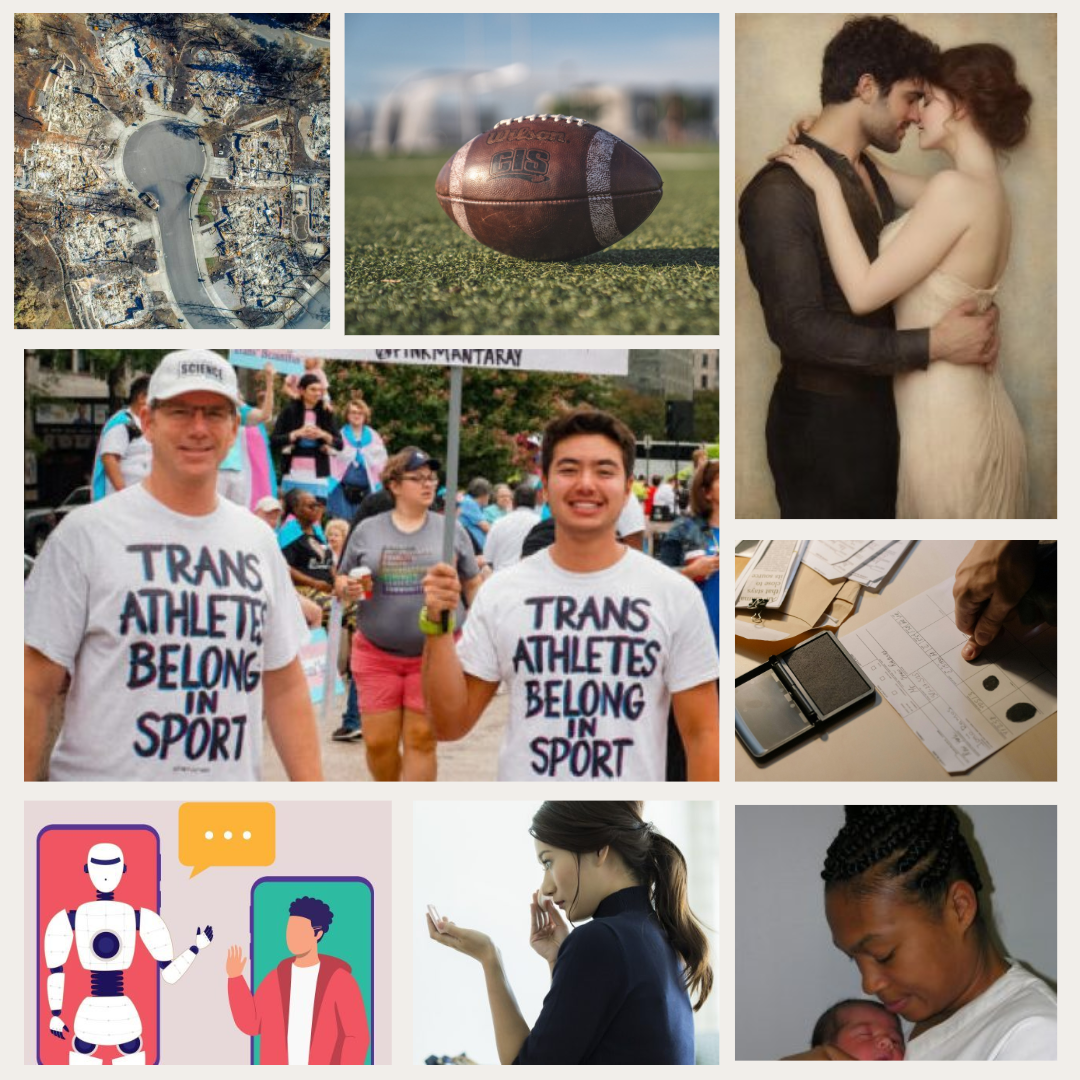
This week’s Clippings by Mallory Harrington includes Raka Ray and Geoffrey Pleyers’ reflections on the passing of Michael Burawoy, a towering figure in public sociology whose work shaped labor studies, ethnographic methods, and the discipline as a whole. Max Besbris commented on the rapid rebuilding of the Palisades after California’s wildfires, noting that wealthy residents will dictate the terms of recovery; Aldon Morris and Harry Edwards weighed in on the state of the U.S. under the Trump administration, warning of potential unrest; Ulrike Bialas discussed the crisis of young, homeless migrants in Paris; and George Kassar applied Norbert Elias’ theories on the “civilizing process” to digital norms and Netiquette.

This summary of pieces by us and our partners by me explores the Super Bowl’s cultural significance, covering topics like politics in sports, racial disparities in NFL coaching, the concussion crisis, nationalism in football, sexism in fandom, the 2016 Take a Knee movement, masculinity in commercials, corporate influence in ads, and Super Bowl consumer habits.

I also published a new Discovery from research by Sarah Lageson and Robert Stewart on the inaccuracy of private background checks, revealing widespread false negatives and positives that impact employment, housing, and education, while calling for stronger regulation and privacy protections.

From the Archives

Trump recently signed an order, to go in effect immediately, that bans transgender women from competing in female sports, specifically targeting the 2028 Olympic Games to be held in Los Angeles by denying Visas for transgender athletes. This Special Feature from 2023 by Chris Knoester highlights how the anti-trans movement in sports focus on reinvigorating sex and gender binaries, often conflating the two, while also obscuring the need for higher support for womens’ and girls’ sports.

On Wednesday, the CDC released a new report about U.S. maternal mortality. They found that pregnancy-related deaths declined for every race or ethnic group tracked in the report except Black women. In this 2019 piece summarizing research on the topic, Amy August and De Andre’ Beadle discuss how Black Americans, especially women, experience worse health outcomes than white Americans, and Black women are over three times more likely to die from pregnancy-related causes.

More from our Partners & Community Pages

Contexts

Council on Contemporary Families

There’s been a lot of talk among sociologists lately about the status of ethnographic research and knowledge, and writing has been at the center of it. Does well-written, powerfully argued fieldwork enhance our sociological understanding of others and the world around us, or is a powerful narrative something ethnographers use to draw readers in and convince them of the veracity of claims that may lack strong supporting data or careful engagement with existing literature and social theory?

I think this larger debate is important context for Matthew Desmond’s argument–offered in the conclusion of Evicted, and highlighted recently at the Sociological Imagination blog–against first person narrative in the presentation of ethnographically driven social science. In Desmond’s view, this approach fails to “capture the essence of a social world” because “the ‘I’ filters all.” He explains: 

“With first-person narration, the subjects and the author are each always held in view, resulting in every observation being trailed by a reaction to the observer. No matter how much care the author takes, the first-person ethnography becomes just as much about the fieldworker as about anything she or he saw.”

“At a time of rampant inequality and widespread hardship, when hunger and homelessness are found throughout America, I am interested in a different, more urgent conversation. ‘I’ don’t matter.”

I really respect Desmond and his book (not to mention his writing chops, of which I am embarrassingly jealous–I mean, I really love that “I filters all” line). And I completely agree that sociological research should not be about the researcher, if only because we sociologists tend to insist that no one is really that special or unique in the modern world. (For years I’ve joked about writing a memoir entitled “It’s Not About Me.”)

However–there it is, you knew it was coming–I am not entirely comfortable with eliminating first-person perspective from all sociological writing, ethnographic or otherwise. In fact, sometimes I believe it is appropriate and even necessary for social scientists to write this way. At least, that’s what I argued in the conclusion of my new book on Midnight Basketball–a book that has a good bit of fieldwork in it and that I decided, against many of my other impulses and principles, to write in the first person. 

I did this partly to construct something of a narrative thread–the thread of my discoveries and idiosyncratic insights–for a potentially dry historical narrative/case study. More importantly, though, I took this approach because I wanted to “openly acknowledge, if not highlight, the constructed nature of the narrative and research process.” I wanted my readers to know and thus be able to assess my research and its various findings, interpretations, and claims. In other words, as I put it in the end,

“I think the more we know about the research process–what data is collected and how it is collected, the manner in which it is analyzed and interpreted–the more I am able to understand and assess the relative strength and power of the claims and findings that are offered.”

That doesn’t mean Desmond is completely wrong, or that I would write every book or article the way I did my midnight basketball book. But it is to say that there are many different reasons for writing in the voices and rhetorical styles that we social scientists do, and that, given the complexity of the social worlds we live in, as well as the wide array of sociological approaches to analyzing and understanding these worlds, I think having a diversity of narrative devices in our tool kit is something worth preserving.


Field research photo by Nicolas Nova via flickr.
Field research photo by Nicolas Nova via flickr.Just

Just one more, late addition to last week’s round-up: the TSP Media Award for an article in The Atlantic earlier in the spring. The piece described the growing trend in market research of hiring anthropologists to do fieldwork on how people actually use and talk about the products they consume.

In addition to the phenomenon itself, there was a lot of great food for ethnographic thought in the piece. Some highlights include: more...