
cultural capital

New & Noteworthy

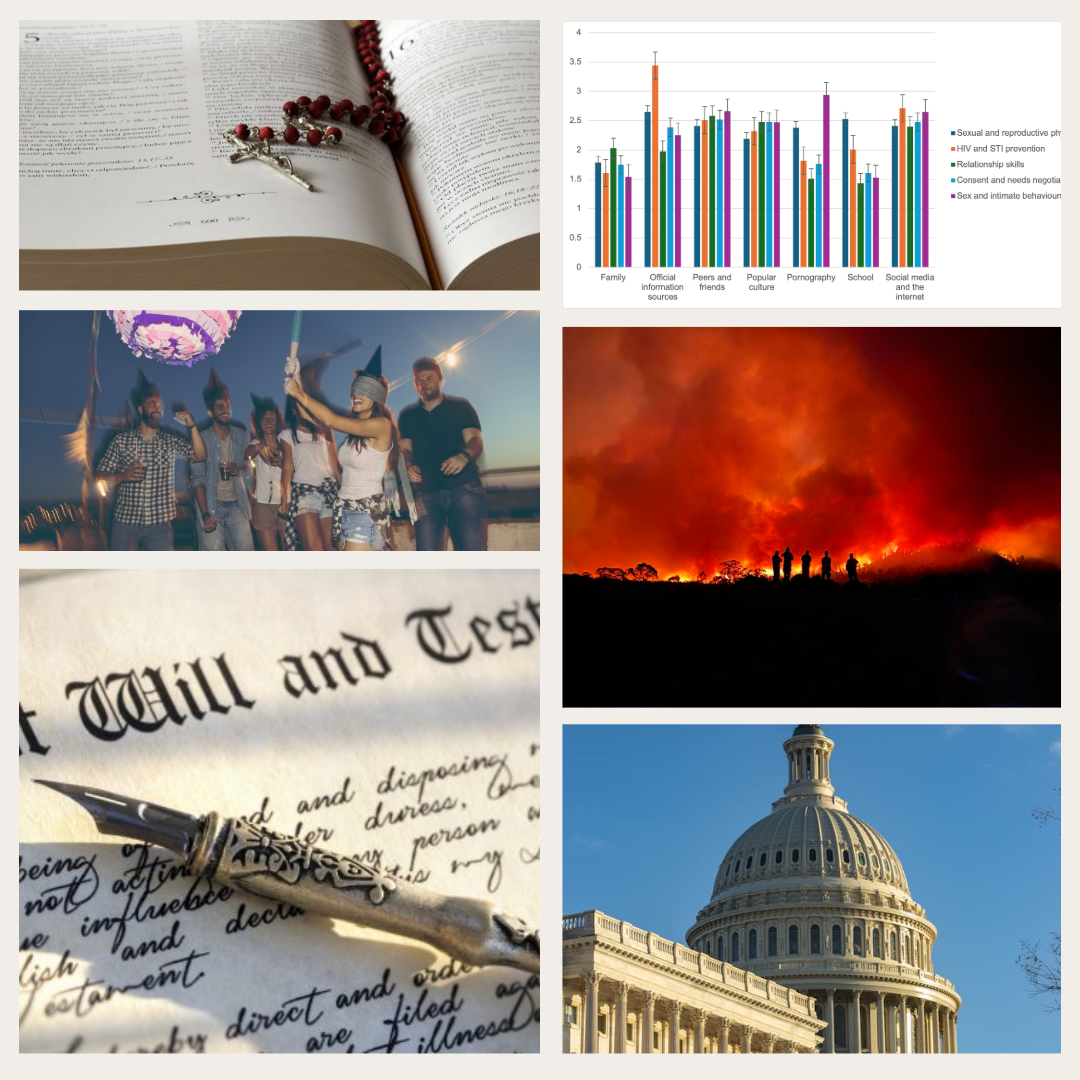
Gender, Cultural Change, and the Catholic Church, adapted by Jordyn Wald from work by Christine Delp, examines the evolving role of women in the Catholic Church amidst cultural shifts. The article highlights Pope Francis’s 2024 synod, which, while falling short of ordaining women as deacons sparked ongoing debates about gender roles.

From the Archives

Stunning Embers by Jenny Davis brings us back to 2019-2020 for the Australian fires. This piece highlights a unique response to “disaster tourism,” where emergency services not only closed roads to prevent unnecessary risks but also leveraged social media to control the narrative and discourage unsafe behaviors.

The Missing Story behind the Coverage of the Trump Inauguration: Class by Sarah Diefendorf and Emily Kalah Gade argues that disparities in attendance between Trump’s 2017 inauguration and the Women’s March reflect how class, race, and cultural capital shape political mobilization. Their analysis may prove relevant in the coming weeks as Trump’s 2024 inauguration approaches.

More from our Partners & Community Pages

Contexts

Council on Contemporary Families

  • What’s Missing in Sex and Relationship Education for Sexual Minority Men? by James Newton writes up his research highlighting the inadequacy of traditional sex and relationship education for sexual minority men — revealing that schools, families, and even modern sources like social media fail to fully address their unique needs. The findings emphasize the urgent need for inclusive programs that teach relationship skills, intimacy, consent, and HIV prevention in ways that resonate with diverse sexual orientations.
Obama BBall team
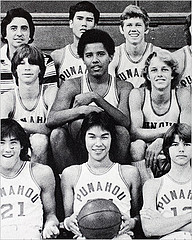
Obama's high school basketball team. Photo via senorglory, flickr.com.

In response to the sport and politics white paper Kyle Green and I recently wrote for this site, ThickCulture writer and loyal friend of TSP Andrew Linder emailed to suggest that although Barack Obama is obviously not the first “sports president,” he may be the first “ESPN President” or “SportsCenter President.” Andrew’s point (now up on ThickCulture as a more fleshed out post—jinx!) was that, although ESPN had become a cultural fixture under Bill Clinton and George W. Bush, Obama represented the core network demographic in its first two decades of its existence and it seems to have been formative for him. To the extent that ESPN has transformed sporting culture, then, Obama is the first President to be fully fashioned in and through that new culture.

This seemed plausible enough—and was definitely borne out in a recent interview the President gave to the star sportswriter/reporter Bill Simmons. At least two things about the interview should be pointed out. The first is why Obama chose this particular venue and reporter: “Simmons,” as one report put it, “is revered by the under-30 crowd” and “has more than 1 million—1,642, 522 to be exact—Twitter followers.” Indeed, his “B.S. Report” podcast, on which the Obama interview originally appeared, is said to be one of the most downloaded podcasts on the web.  The second point is how this interview and exchange reveals what a great fan of sports and sports talk our President actually is.

Not only is his obsession with ESPN’s SportsCenter evident, Obama shows himself to be an extremely knowledgeable sports fan, gifted in the arts of sports talk and debate. Talking with Simmons, the President riffs on Linsanity (claiming to have been on the bandwagon early) and the joys and challenges of coaching his daughters, argues about the best NBA teams and players of all time (MJ and the Bulls figure prominently), revisits his vision for a college football playoff, and waxes poetic about his philosophies on sportsmanship and scoring in golf. Obama even brags a bit about the “solid” crossover move he threw on NBA All-Star point guard Chris Paul in a summer scrimmage. All this is to say, Obama doesn’t just talk about sports, he’s really talking sports.

Entertaining (and impressive) as I found all of this, I was even more intrigued by a follow-up Washington Post post that explained why the President would take time out of his unbelievably busy schedule to do this interview (as well as other sports related activities such as his sit-down with Matt Lauer during the Superbowl pre-game show in February or his annual NCAA/march madness picks). “Sports,” according to the WSJ, “is a universal language that can bridge ideological, cultural, and socio-economic gaps …you are much more inclined to like people who share that fandom regardless of whether you have anything else in common with them. You feel some sort of connection to them. They speak your (sports) language.”

The piece goes on to speculate that sport may be particularly a particularly important medium (and media outlet) for Obama “whose background—biracial parents, childhood in Hawaii, Harvard Law School, etc.—is somewhat unfamiliar to many of the voters he needs to convince to back him if he wants to win a second term in November.” While talking with sportswriters “isn’t going to convince on-the-fence voters that Obama is one of them,” the writer says, we shouldn’t “forget the connective power that sports holds in the world of politics.” The article concludes: “Obama’s ability to speak the language of sports is a major political plus for him.”

Perhaps. I definitely agree with the points about sport having tremendous connective potential and potential political value. Indeed many of them accord with the piece Kyle and I wrote. However, there is one subtler nuance or contingency that continues to pester me. It goes back to our American cultural conviction of the separation of sports and politics—that these are two domains that, for different reasons depending upon who you are talking to or the context within which they are posed, are believed to be separate (and separate for good reason).
In my research and reading, the political power of sport works best—perhaps even only works at all—when this cultural line or prohibition isn’t violated or disturbed. When it is somehow compromised, the political power and import of sport can not only go out the window, it can backfire terribly, being seen to bring politics in where it doesn’t belong. Thus, the trick and challenge for Obama—or really any politician hoping to capitalize on connections to sport—is to be seen as both an authentic and informed sports fan, but not deliberately, strategically, or intentionally political in his engagement with sporting culture.
To be clear: I think Obama’s interest in sport is genuine, and he generally does a great job of keeping his sports talk separate from his political agenda. (Look back through the transcript of that Simmons if you’re not convinced). But it’s a fine line to walk, there are plenty of folks not inclined to be sympathetic, and the more clearly the political uses and implications of his sports obsessions are made, the less effective and more dangerous I think they become. Thus, the irony of a sporting president (not to mention of any scholarly analysis of the political power of sport).