
zombie renaissance

Below is Part 3 of a three part essay (Part 1 is available here; Part 2 is available here) I will be presenting at the 2012 Southwest Texas Popular Culture Association meetings in Albuquerque, New Mexico on February 9th. I will be presenting alongside several other scholars for a series of panels titled “The Apocalypse in Popular Culture.” A (much) earlier version of this paper can be found on the Sociological Images sister blog. Part 3 discusses the “Zombie Renaissance” after 9/11 and concludes briefly on the importance of the zombie as a cultural artefact.
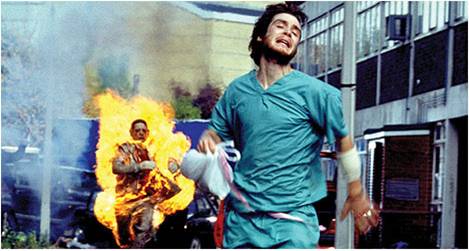
Jim being pursued by a feral "rage"-infected zombie in Boyle's now classic film 28 Days Later (2002).
Scholars have called the post-9/11 era the “Zombie Renaissance” due to the torrent of zombie films produced at this time and the paradigmatic changes introduced to the zombie as movie monster (Bishop 2010). The first blockbuster film of this era, Danny Boyle’s 28 Days Later (2002) is often credited to raising the stakes in zombie films. This film became a powerful drama oriented around the zombie apocalypse, something that has since been mimicked in recent films and especially in AMC’s recent television series The Walking Dead. more...
Below is Part 2 of a three part essay (Part 1 is available here) I will be presenting at the 2012 Southwest Texas Popular Culture Association meetings in Albuquerque, New Mexico on February 9th. I will be presenting alongside several other scholars for a series of panels titled “The Apocalypse in Popular Culture.” A (much) earlier version of this paper can be found on the Sociological Images sister blog. Part 2 discusses the role of George Romero’s “flesh eaters” and the use of zombie films for social and political criticism between the late 60s and the mid 90s.
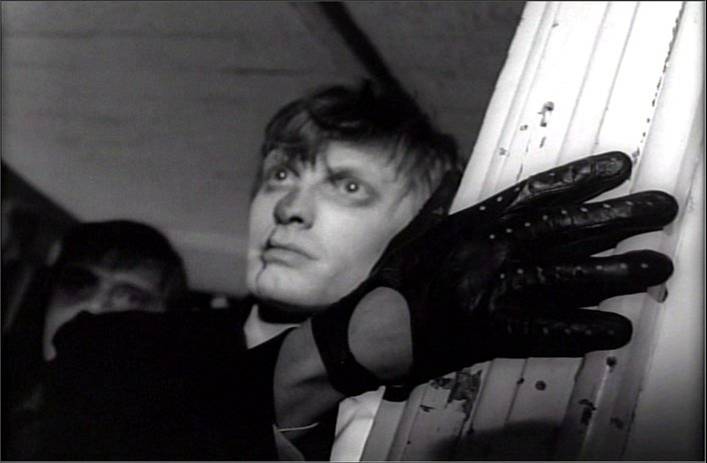
Johnny, the zombified brother of Barbra, is back from the grave and "coming to get you" in Romero's Night of the Living Dead (1968).
Romero’s 1968 classic, Night of the Living Dead, revolutionized the zombie metaphor. His “flesh eaters” have since become a staple of the genre and the social criticism laced within his early films have become a tradition in subsequent zombie films. Prior to Romero’s take on the zombie genre, zombies  largely reflected the spirit of the times in which these films were made. Hence, the fears of racial miscegenation found in White Zombie (1932) and the fears of mind control found in Invisible Invaders (1952). However, Romero changed these trends when he made the zombie into something more than simply an automaton of mind control or voodoo mysticism; Romero introduced the “flesh-eater” into the zombie lexicon, pushing the genre further into the macabre and raising the possibility of a politicized zombie figure.
In fact Night of the Living Dead was created as a critique of the violence and devastation of Vietnam, with the dead returning to life as a result of radiation emitted from a government “Venus probe” sent to space. In addition, Romero made his zombies into a form of contagion: A single bite from a zombie will similarly kill and turn one into a zombie, thereby playing into fears of loved ones and strangers turning on one another. Since Romero’s film, the zombie has usually been associated with cannibal corpses that have risen from the grave to devour the living. more...