work

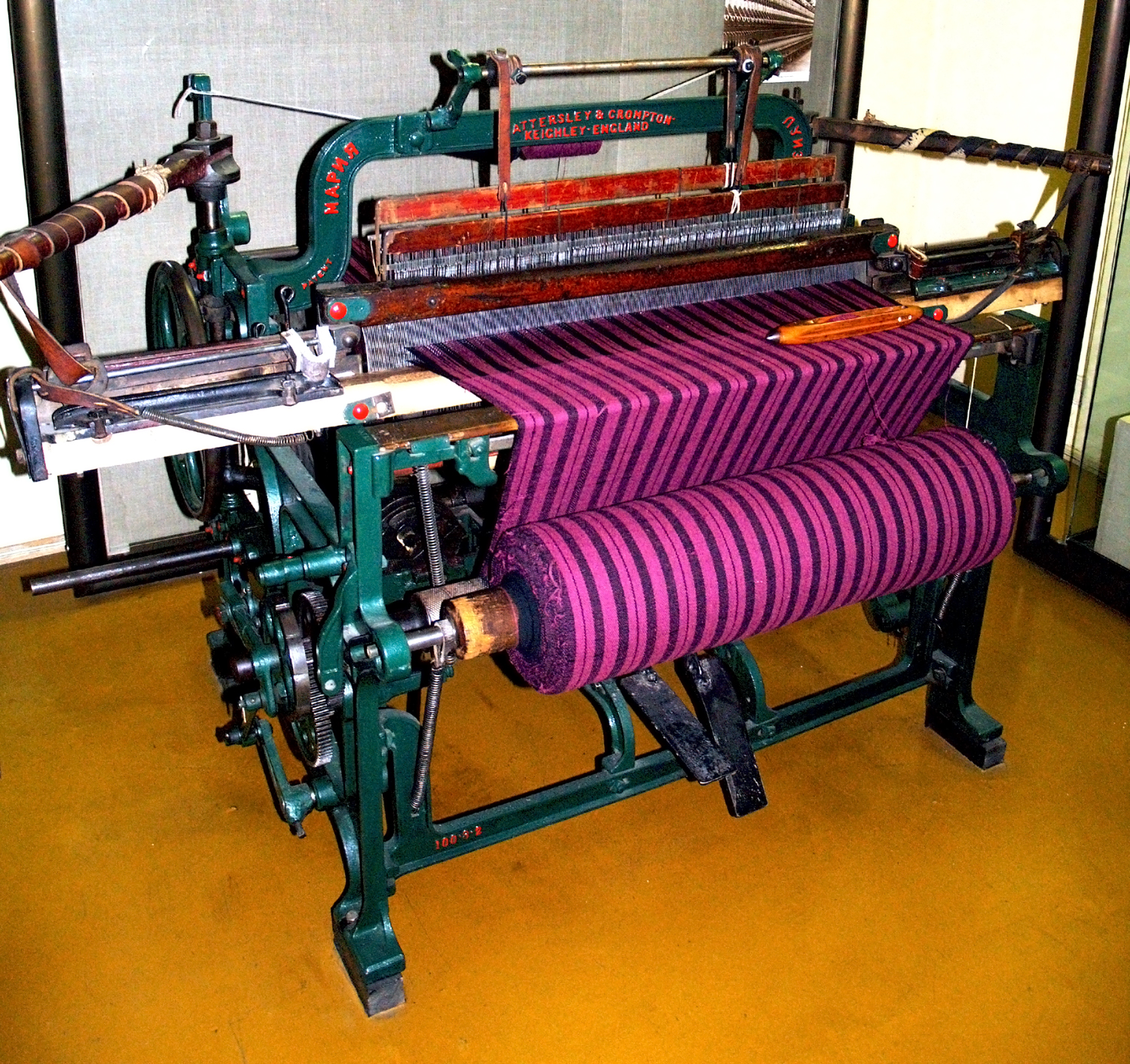
One of Amazon’s many revenue streams is a virtual labor marketplace called MTurk. It’s a platform for businesses to hire inexpensive, on-demand labor for simple ‘microtasks’ that resist automation for one reason or another. If a company needs data double-checked, images labeled, or surveys filled out, they can use the marketplace to offer per-task work to anyone willing to accept it. MTurk is short for Mechanical Turk, a reference to a famous hoax: an automaton which played chess but concealed a human making the moves.

The name is thus tongue-in-cheek, and in a telling way; MTurk is a much-celebrated innovation that relies on human work taking place out of sight and out of mind. Businesses taking advantage of its extremely low costs are perhaps encouraged to forget or ignore the fact that humans are doing these rote tasks, often for pennies.

Jeff Bezos has described the microtasks of MTurk workers as “artificial artificial intelligence;” the norm being imitated is therefore that of machinery: efficient, cheap, standing in reserve, silent and obedient. MTurk calls its job offerings “Human Intelligence Tasks” as additional indication that simple, repetitive tasks requiring human intelligence are unusual in today’s workflows. The suggestion is that machines should be able to do these things, that it is only a matter of time until they can. In some cases, the MTurk workers are in fact labelling data for machine learning, and thus enabling the automation of their own work. more...

Rihanna - Work

Part 1: Work, Work, Work, Work, Work, Work

Running short on money and in desperate need of luxuries like health insurance, food, and booze I scoured the Internet for part time jobs. My primary source of income, as a dissertation fellow, pays a small stipend (nowhere near enough to live on in any city, much less a major one) and affords no benefits. And so, pockets empty, I began my search. My first stop was H-Net, though I wasn’t holding out much hope for a well-paid, part-time, quick-hire. After about 5 minutes I gave up and transitioned to Idealist and Indeed, looking for any jobs that might be intellectually stimulating, somewhat ethical, or at least tangentially related to my interests. Forty-five minutes later I was depressed on Craigslist.

more...

tumblr_nn4kta2uDp1t0j5qro7_1280
Photo By Aaron Thompson

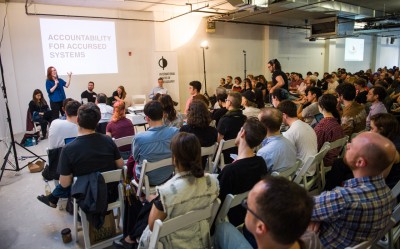
I was happy to see Theorizing the Web go so well for so many people. The committee has been getting a lot of positive and constructive feedback and we’re reading all of it. If you feel so moved to write your own reflections on #TtW15 please send them our way. Last year, my post-conference thoughts were all about labor and the dangers of doing what you love. That’s still a problem ––TtW relies almost completely on volunteer labor–– but this year I’m thinking more about the institutions that prop up the typical Hilton-hosted conference model and make it difficult, if not financially impossible, to have more events like Theorizing the Web.

more...

Photo by Aaron Thompson. This and more can be found on the #TtW14 Picasa album.

Possibly one of the most insidious ideas to come out of the last two decades of corporate management has been the “do what you love” ethos. Not only is the concept built on the premise that you can afford to pursue your passion for free while you find a way to monetize it, the “do what you love” mantra also assumes that what you do for money will always fill most of your working hours and be something that you primarily identify with. Its a uniquely American concept that what you do to earn a pay check says something about you. That you’re not truly an artist or a scholar until you can make a living off of that labor. I’ve been thinking a lot about the different contours of work after this year’s extremely successful iteration of Theorizing the Web. It was my first year on the committee and, while I loved every minute of it, doing this kind of work always makes you think about what sorts of work organizations are sustainable and the nature of work more generally. more...

CC Attribution: PJ Rey

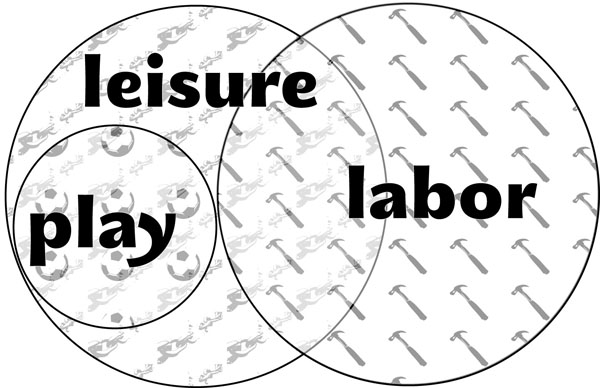
A wide range of activities from playing online games like Farmville or World of Warcraft to using social-networking sites like Facebook or Twitter are being described as either “playbor” or “weisure.”  I’ve recently been reviewing the literature surrounding playbor and weisure and have realized that they are too often conflated. I’d like to take a moment to offer my working definition of these two terms in hopes of encouraging greater conceptual clarity in future discussions.

Both terms are portmanteaux. “Playbor” combines “play” and “labor.” “Weisure” combines “work” and “leisure.” In this case, work and labor are synonymous. I apply the standard Marxian definition to both work and labor, understanding them to describe human activity that produces value. What distinguishes playbor and weisure from one another is their respective associations with play and leisure, because – despite the ubiquity of conceptual slippages around these terms – play and leisure are not equivocal. more...