
we live in public

This essay, like the one I posted last month on faux-vintage photography, is me hashing out ideas as part of my larger dissertation project on self-documentation and social media. Part I is found here.A barrage of media stories are professing the “Death of Anonymity,” the “End of Forgetting” and an “Era of Omniscience.” They are screaming a sensationalism that is part of the larger project to drum up fear about how “public” we are when using social media. While there are indeed risks involved with using social media, these articles engage in a risky hyperbole that I will try to counter-balance here.
Part I of this essay rethought claims of hyper-publicity by theoretically reorienting the concept of publicity itself. Using theorists like Bataille and Baudrillard, I argue that being public is not the end of privacy but instead has everything to do with it. Social media is more like a fan dance: a game of reveal and conceal. Today, I will further take to task our collective tendency to overstate publicity in the age of social media. Sensationalizing the risks of “living in public” perpetuates the stigma around an imperfect social media presence, intensifying the very risk we hope to avoid. But first, let’s look at examples of this sensationalism.

I. Media Sensationalism
Pointing out the dangers of living public online is an important task, but sensationalizing this risk is all too common. Indeed, the media has a long history of sensationalizing all sorts of risks, creating fear to drum up ratings, sales, clicks and page-views. From sexting to cyberbullying to the loss of “deep” learning, political activism, and “real” social connections, I’ve written many times about how the media has found social media to be a particularly fertile space to exploit fear for profit. more...

There will be a special event the evening before Theorizing the Web at the important intersection of theory and art. Admission is open to all and is free of charge.

When? This Friday, April 8th, 6:30P
Where? Irvine Contemporary Gallery, DC, 1412 14th St NW
Why? Art plays a prominent role on this blog and also with this conference. The media-prophet Marshall McLuhan argues (see 10:58 in this video) that only the artist has the “sensory awareness” to tell us what our changing world is “made of.” While many of us are not willing to go this far, it very well might be the case that artists are uniquely prepared to give insight on this new, augmented reality that social media and other new technologies are creating. In a sense, artists sometimes precede theorists and academia. And in this spirit, Theory Meets Art literally precedes Theorizing the Web.

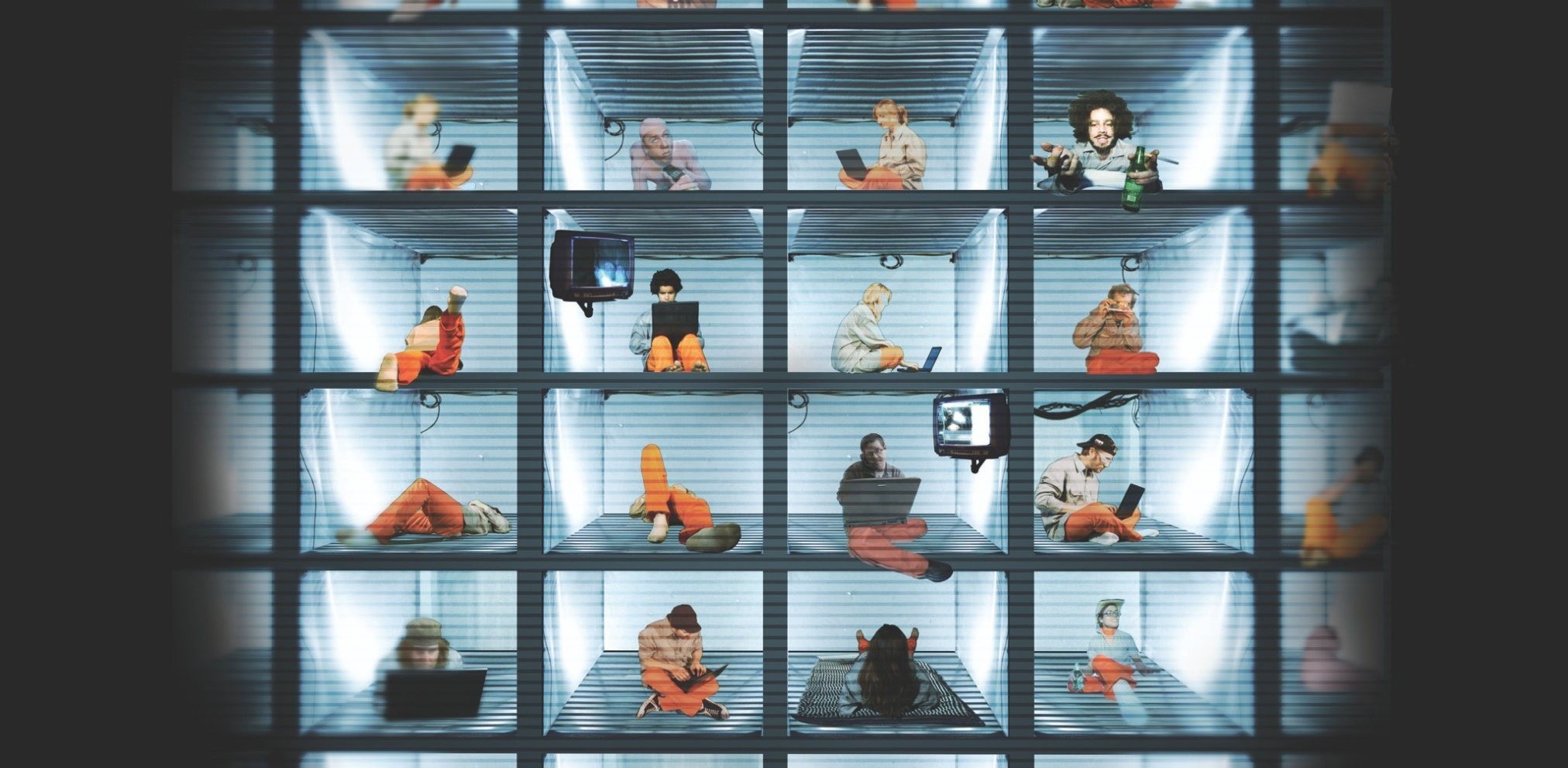
We begin with a brief performance by ambient musician Yoko K. Then, we will screen a feature film that we feel should be centrally important for thinkers on technology, art and society. The film is a Sundance Grand Jury Prize winning documentary called We Live in Public that chronicles the story of one Josh Harris while also making important theoretical points about privacy, publicity, capitalism, identity and much more through the lens of art. For more on the film, see my review in a recent edition of Surveillance and Society. After the film, we will have a discussion on art and social media with world-renowned street artist Gaia. The night will be hosted by Dr. Martin Irvine, who is giving a talk on street art and social media on Saturday. Last, there will be a social reception at the gallery.

We are very excited to start this conference at this wonderful gallery in the heart of DC. Away from the concrete spectacle of downtown, the gallery is situated in a beautiful section of the city, a short subway ride from College Park. We encourage everyone to come to this event and begin a wonderful weekend of Theorizing the Web! more...

Last week, I posted a review of the film Tron: Legacy (2010) on this blog. This week I have a review of Ondi Timoner‘s wonderful 2009 documentary We Live in Public. This review is found in the latest issue of one of my favorite journals, Surveillance and Society.

The issue is here. Free .pdf download of the review here.

I explore theoretical connections between the movie and the rise of social network sites such as Facebook. I look at privacy, publicity, surveillance and our increasingly augmented reality. Many of the points are elaborations of topics posted by myself and others on this blog. It is particularly exciting to see these theoretical ideas travel so smoothly across mediums such as film, radio, the blogosphere and academic journals.