Trayvon Martin

Official Promotional Poster for the Talk

Jasmine Rand, lawyer for Trayvon Martin’s family, came and spoke at my university last week. I held my breath as she walked out on stage. She began with the emotional announcement that we were on the eve of what would have been Trayvon’s 20th birthday. Along with a crowd full of students, professors, staff, and members of the community, I settled on the edge of my seat and listened eagerly for what this woman, in this moment of racial upheaval, had to say.  As I tweeted just before the talk: this was a big deal.
Rand2 more...

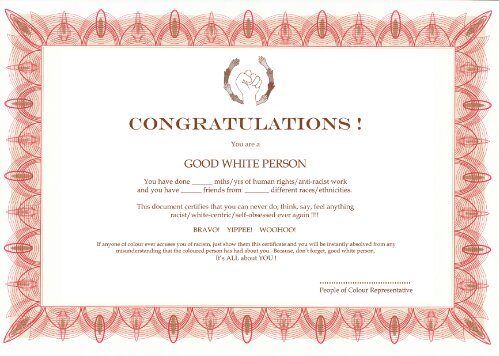
wpid-goodwhitepersoncertificate(Expiation, n.: the act of making amends or reparation for guilt or wrongdoing; atonement: an act of public expiation.)

Dear reader, are you still thinking about the Zimmerman verdict?

Yeah, me too.

Over the last five days I’ve been thinking a lot about Trayvon Martin’s murder, and about George Zimmerman’s acquittal, and especially about the reactions to both that I’ve observed since the jury returned with a verdict Saturday night. I’ve been thinking (and somewhat obsessively reading) about these things not just because of my contractual obligation as a sociologist, but because as a person I’m saddened, troubled, and angered by what all of this says about U.S. society. Yet I’m not just a person; I’m also a white person, and as such I don’t know where to begin processing the fact that, regardless of my personal particularities, I am by this fact alone complicit in the systems of oppression that made Martin’s murder and Zimmerman’s acquittal possible.

Here’s the thing about white people, the Zimmerman verdict, and its aftermath: more...

martin verdict

George Zimmerman was found not guilty in the murder of Trayvon Martin. And yet, Martin, a 17 year old boy, is dead. Killed by Zimmerman’s lethal gunshot. Protestors have taken to Twitter, Facebook, and the streets. Here, I want to try to make sense how this case is far more complex legally than it is morally. In what follows, I argue that both bodies and laws are technologies—or more specifically—materialized action, and that the intersection of their imbedded values and assumptions afford justices processes which feel, at a visceral level, generally unjust. more...

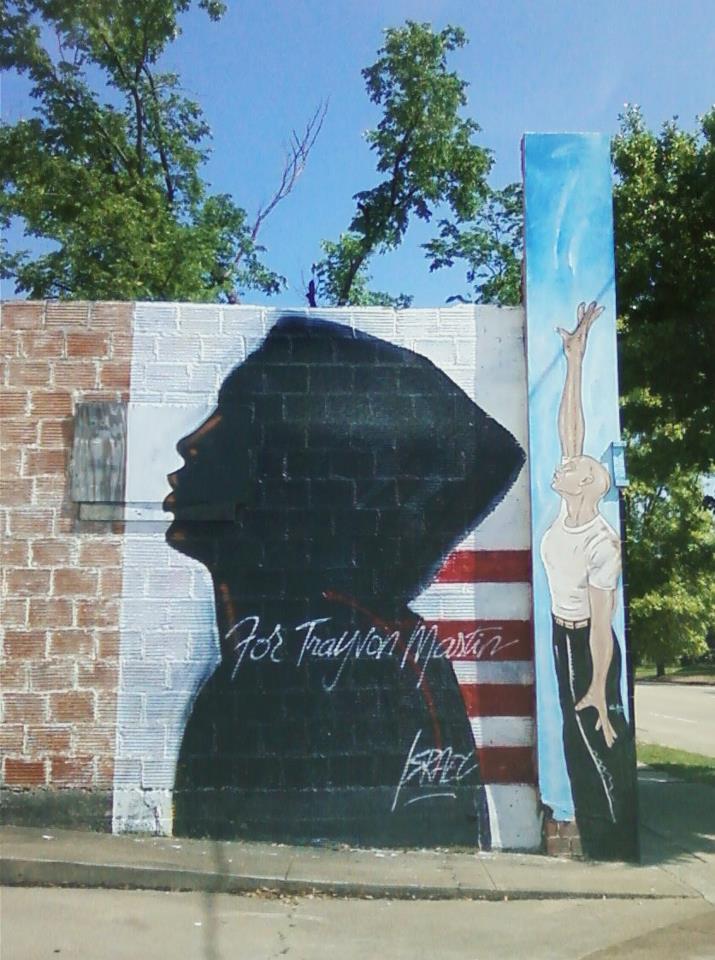
"For Trayvon Martin" mural by "Israel" in Third Ward Houston. Photo taken by Jenni Mueller.


On February 26, 2012 Trayvon Martin, a Black, 17 a year old, unarmed, high school student, was shot and killed by George Zimmerman, a White Hispanic man acting in the self-appointed position of neighborhood watch captain (click here for more details).

The case has become a symbolic battle ground for two important issues: gun laws and racism. Although both of these issues are inextricably entwined, for purposes of simplicity, I will focus here only on the issue of race.

As Jessie Daniels importantly points out on Racism Review, battles over racism have shifted into the realm of social media, where digital and physical race relations persist in an augmented relationship. We see this in both the progressive anti-racist discourses, and the racial smear campaigns surrounding the Martin/Zimmerman case.

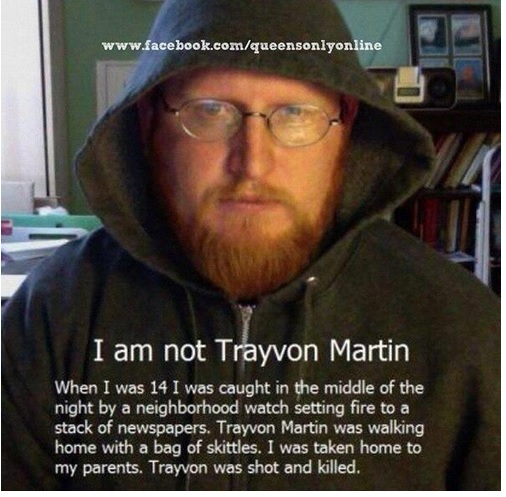
Although it is important to expose the overtly racist tactics utilized by some of Zimmerman’s defenders—of which there are plenty—I want to talk here about a more subtle, and so perhaps more problematic form of racial discourse. Specifically, I will talk about how a prominent strategy of protest—coming out of the liberal left—may inadvertently perpetuate, rather than challenge, racial hierarchies in their most dehumanizing form. more...