
Theorizing the Web 2011

YouTube Preview Image

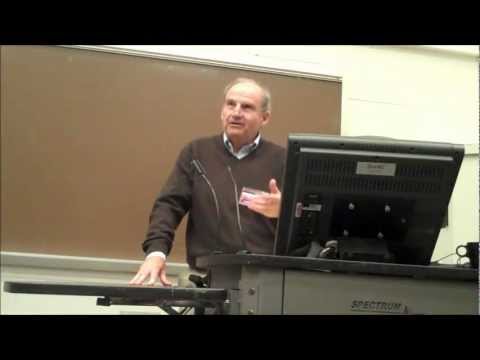
This is a re-post from George Ritzer’s newly-launched blog. George’s original post was derived from a plenary talk given in 2011 at the first Theorizing the Web conference at the University of Maryland, and he returned to these thoughts in anticipation of the third Theorizing the Web conference scheduled for early 2013 at the City University of New York.

Our understanding of the Internet, social networking, and the role of the prosumer in them is greatly enhanced by analyzing them through the lens of a number of ideas associated with postmodern theory.

There is, for example, the argument that the goal in any conversation, including those that characterize science, is not to find the “truth” but simply to keep the conversation going. The Internet is a site of such conversations. It is a world in which there is rarely, if ever, an answer, a conclusion, a finished product, a truth. Instead, there are lots of ongoing conversations and many new ideas and insights. Prime examples of this on the Internet include wikis in general and Wikipedia in particular, blogs and social networking sites. Google’s index is continually evolving and a complete iteration online content is impossible. All such sites involve open-ended processes that admit of no final conclusion. more...


Presider: Jessie Daniels

The panel I organized for the Theorizing the Web conference was called, “Cyber Racism, Race & Social Media.”  A key theme of all the papers in this session was that race, racism and caste, are enduring features of media across geographic and temporal boundaries, and across cultures.

In the late 1990s, a popular television commercial advertisement captured the zeitgeist of thinking about the web at that time.

This notion that the Internet is a place where “there is no race,” is also one that’s permeated Internet studies.  Early on scholars theorized that the emergence of virtual environments and a culture of fantasy would mean an escape the boundaries of race and the experience of racism.  A few imagined a rise in identity tourism, that is, people using the playful possibilities of gaming to visit different racial and gender identities online (Nakamura, 2002; Turkle, 1997).

YouTube Preview Image

more...

I want to reflect on Theorizing the Web 2011 by asking for a discussion about what academic conferences should look like. In fact, let’s forget the term “conference” for a moment and ask how thinkers should best organize to discuss intellectual work in public?
Theorizing the Web 2011 was PJ Rey and I’s first attempt at tackling this question [read PJ’s review of the event here]. We started this blog to provide a public forum for ideas and the conference was intended to do the same. Many reviews of the event have emerged (some posted on this blog over the past ten days). What has surprised me most is the degree to which the conference itself has been a main topic of discussion. And while we are very proud that the reviews have been so overwhelmingly positive about our view of an academic event, we understand that this is also a result of the failing of traditional venues for the intellectual exchange of ideas. Academic conferences are too often suffered through and individual sessions often poorly attended. Media outlets tend to ignore anything that smells too much like intellectualism, a term itself that has come to be viewed pejoratively because, at least in part, intellectuals have so poorly communicated ideas to the public. As graduate students, we know we needed to create a world that is better prepared to communicate the critical theories so important to understand our changing realities.

And the result on April 9th went well above our expectations.

We attempted to bring in art, multi-media, interdisciplinarity, and even non-disciplinarity to this event. Registration was pay-what-you-want. The event began with beers in an alley and finished with a loud band. We tried lots of things and will try much more if we do this again next year [we want to].The art was fun, and us organizers can take credit for that. more...

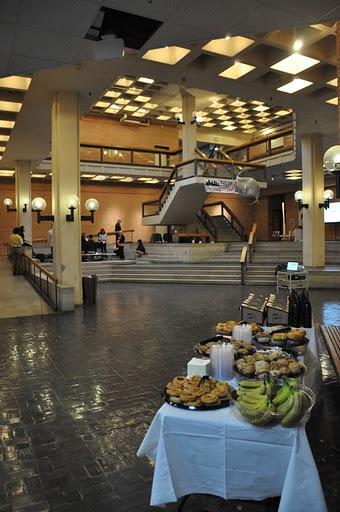
Theorizing the Web 2011 was held on April 9th 2011 at the University of Maryland’s Art-Socy building.  It far exceeded our expectations in every way.  We received over 100 abstract submissions of which were able to accept 53%.  We were joined by Internet research experts from around the world, including presenters who traveled from Hong Kong, New Zealand, and Europe.  The conference pushed the capacity limits of the venue with over 230 official registrants and easily 250 people in attendance throughout the day.  Events ran from registration at 8 AM and ended with an afterparty that wound down around 11 PM.  The program was packed with as many as five concurrent panels in early sessions.  The plenary sessions by George Ritzer and Saskia Sassen as well as danah boyd‘s keynote drew audiences of over 150 people.

Sessions covered a wide range of topics pertaining to the social web, including the politics of infrastructure; the role of social media in contemporary social uprisings; the reproduction of race, class, gender, sexuality, and their intersections in a digital milieu; the co-determinacy of the online and offline world (i.e., “augmented reality”) and the dangers of viewing them in isolation; the performance of the self through one’s online Profile and the increasing need to accept the cyborg subject as sociology’s proper unit of analysis; the Internet as more post-Modern than the original objects of analysis under consideration by the post-Modern theorists; the new economies of the Web and the limits of traditional (e.g., Marxian, neo-liberal) modes of thought; the reconfiguration of norms pertaining to privacy/publicity; the democratization of (formerly expert) knowledge via crowdsourcing (e.g., Wikipedia); and the capacity of art to capture/predict our changing relationship with technology. more...