
the cyborg body

Over the last couple of weeks I’ve put together a two part essay/review-like object that explores how one particular work of science fiction speaks directly to certain ideas of what cyborgs are and what it means to be them, with an eye toward a broader appreciation for how fiction allows for a richer understanding of theory. The full piece is below.

Cyborg writing is about the power to survive, not on the basis of original innocence, but on the basis of seizing the tools to mark the world that marked them as other.  –Donna Haraway

Inanna cast down Tammuz and stamped upon him and put out his name like an eye. And because Tammuz was not strong enough, she cut him into pieces and said: half of you will die, and that is the half called Thought, and half of you will live, and that is the half called Body, and that half will labor for me all of its days, mutely and obediently and without being King of Anything, and never again will you sit on my chair or wear my beautiful clothes or bear my crown of being.

You might be surprised, but this is a story about me.  –Catherynne M. Valente

Speculative fiction and this blog are not strangers to each other; it’s been written about here before,  as a means to understanding how the present has come to look the way it does, and as a means for the imagining of potential futures (also zombies). Indeed, the term cyborg always brings with it a host of connotations firmly rooted within SF, however much it may also describe a current and very real state of being. The important thing to pay attention to here is the power of stories – the ways in which they can serve as a way to do theory in a kind of experimental setting that would otherwise be impossible. In SF – and in fiction in general – we can take the implications of theory and watch them play out, see what they would look like, solidify them in words and images, pick parts of them up and move them around. We can tweak settings and watch other worlds unfold in response.
more...

Today I bring you one example of how medical technology and body modification are converging.

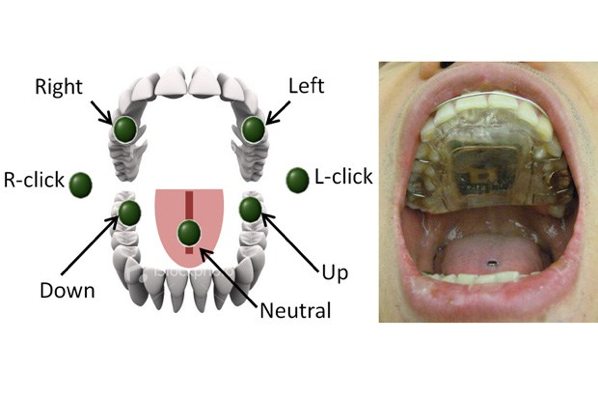
The Tongue Drive System uses magnetic field sensors to track the movement of a magnetized tongue piercing.

The image above comes from the Georgia Institute of Technology, where they have engineered a new form of wheelchair mobility through the use of a tongue piercing. The Tongue Drive System uses a dental plate that captures the movement of the tongue piercing below, which is fashioned with a tiny magnet on top. more...

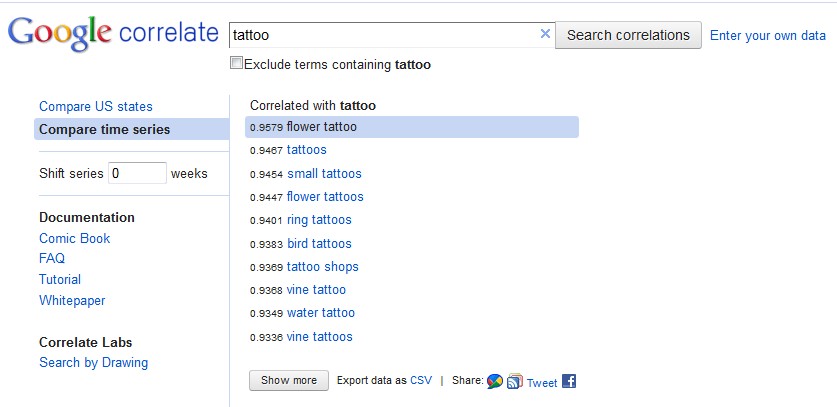
I have been really enjoying the Google Correlate function lately. I think it is a very powerful tool for examining popular topics because more and more people are going online to look for information. More specifically, Google Correlate allows you to see the correlations between search terms, allowing you to see what other search terms are associated with one another. In some sense then, it provides a “window” into the Internet user’s mind. I took this as an opportunity to do a little investigating about the popularization of tattoos and tattooing. What I found is striking.

more...

Recently I stumbled across this interview with Jacqui Moore, a rather well-known and visible member of the body modification community for her extensive black and grey full body suit. Bearing the rather exploitative tagline (which states “A respectable mother celebrated her divorce by asking her new boyfriend to cover her entire body – with a single TATTOO”), which makes her sound not only impulsive but pathological, what does this case reveal about contemporary body modification practices? What is the relationship between gender, patriarchy, and body modification? And what are the costs of using indigenous iconography and rituals in one’s body modification practices?

Jacqui Moore with husband Curly

more...

A couple weeks ago I stumbled across this image of a “Where’s Waldo?” backpiece, and it got me to thinking about body modification, the cyborg body, and postmodern theories of the sign (Baudrillard 1972; Turner 1999) as they relate to contemporary tattooing.


The contemporary tattoooed body, which I often refer to as the cyborg body, is at a crisis. That is, we do not have a uniform means of interpreting and displaying these signs to others. What’s more, the content of tattoos varies significantly, from direct referents and iconography to indirect, playful and self-referent images.

more...