
social criticism

16024515689_3cc1be05a2_z

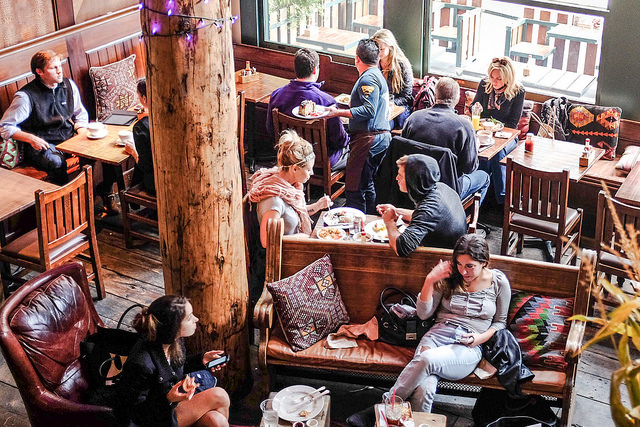
Sherry Turkle has been very successful lately. She is still touring the country giving high-profile talks and her best-selling books are assigned in college classrooms all across the country. The quotes on her books’ dustjackets are from respected authors and thinkers. She is a senior faculty member at an elite east coast university. She is by all accounts someone with an ostensibly left-of-center perspective that is popular while still pushing audiences to consider the ramifications of their actions. Turkle, through her critical analysis of social media and portable digital devices, wants people to think twice about the unintended consequences of their actions; how individual choices often aggregate into undesirable interpersonal dynamics. This is important work worthy of public debate but, precisely because it is so important, it is worth asking who benefits from Turkle’s particular brand of mindfulness.

Critiques of Turkle are too few, but the ones that exist are spot on. Focusing on individuals’ technology use, according to Nathan Jurgenson, not only turns the subjects of Turkle’s analysis into broken subhumans, it also gives the reader the opportunity to feel superior simply by fretting over when and how a device comes out of their pocket. Her work also misses, according to Zeynep Tufeci and Alexandra Samuel all the ways social media is a way of reclaiming some form of sociality in a world dominated by televisions, the suburbs, long work hours, and life circumstances that geographically separate us. Taken together we might understand the shortcomings of Turkle’s work as primarily one of digital dualism, i.e. that she considers non-mediated, in-person interaction as inherently more real or authentic compared to anything done through digital networks. What has been left unsaid, and what I want to focus on here, is how Turkle contradicts herself and, in so doing, reveals a bias toward authority and socially conservative political institutions. Turkle selectively deploys her analysis in such a way that traditional sources of authority are left unchallenged. more...
Below is Part 2 of a three part essay (Part 1 is available here) I will be presenting at the 2012 Southwest Texas Popular Culture Association meetings in Albuquerque, New Mexico on February 9th. I will be presenting alongside several other scholars for a series of panels titled “The Apocalypse in Popular Culture.” A (much) earlier version of this paper can be found on the Sociological Images sister blog. Part 2 discusses the role of George Romero’s “flesh eaters” and the use of zombie films for social and political criticism between the late 60s and the mid 90s.
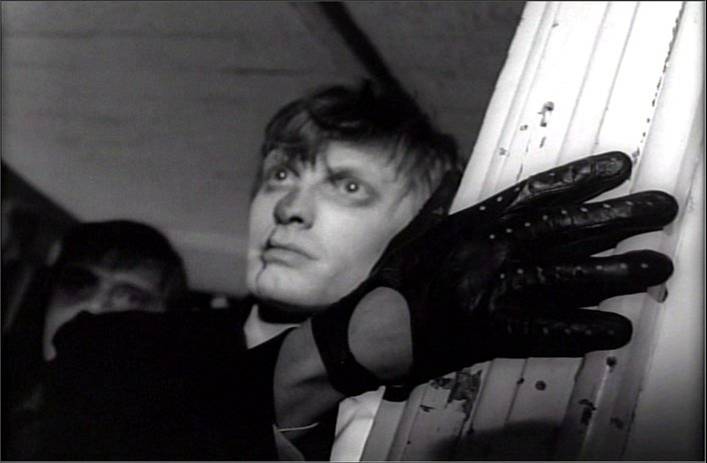
Johnny, the zombified brother of Barbra, is back from the grave and "coming to get you" in Romero's Night of the Living Dead (1968).
Romero’s 1968 classic, Night of the Living Dead, revolutionized the zombie metaphor. His “flesh eaters” have since become a staple of the genre and the social criticism laced within his early films have become a tradition in subsequent zombie films. Prior to Romero’s take on the zombie genre, zombies  largely reflected the spirit of the times in which these films were made. Hence, the fears of racial miscegenation found in White Zombie (1932) and the fears of mind control found in Invisible Invaders (1952). However, Romero changed these trends when he made the zombie into something more than simply an automaton of mind control or voodoo mysticism; Romero introduced the “flesh-eater” into the zombie lexicon, pushing the genre further into the macabre and raising the possibility of a politicized zombie figure.
In fact Night of the Living Dead was created as a critique of the violence and devastation of Vietnam, with the dead returning to life as a result of radiation emitted from a government “Venus probe” sent to space. In addition, Romero made his zombies into a form of contagion: A single bite from a zombie will similarly kill and turn one into a zombie, thereby playing into fears of loved ones and strangers turning on one another. Since Romero’s film, the zombie has usually been associated with cannibal corpses that have risen from the grave to devour the living. more...