Siri

Warning: Mr. Robot spoilers abound (but, come on, what are you doing still not caught up with this show?). 

In my first post for Cyborgology last year, I suggested that perhaps Elliot Alderson, the paranoid and delusional protagonist of USA Network’s Mr. Robot, was the epitome of a Deleuzian Body Without Organs—an extreme state wherein rhythms and intensities not available in the anatomical body provide access to a plane of immanence (though I also incorrectly suggested that Elliot is schizophrenic). I used his own self-tracking technique—a journal—and how this journal led to advantage being taken of him. If you’ve read my other posts here, you won’t be surprised to hear that I then used all of that as a critique of the quantified self. What can I say? When all you read is QS critique, everything you read is QS critique. After making my way through season 3, however, I’d like to revisit Elliot and what other sorts of theoretical signposts I might use to understand his character. more...
AppleSiri1TNW-1200x651

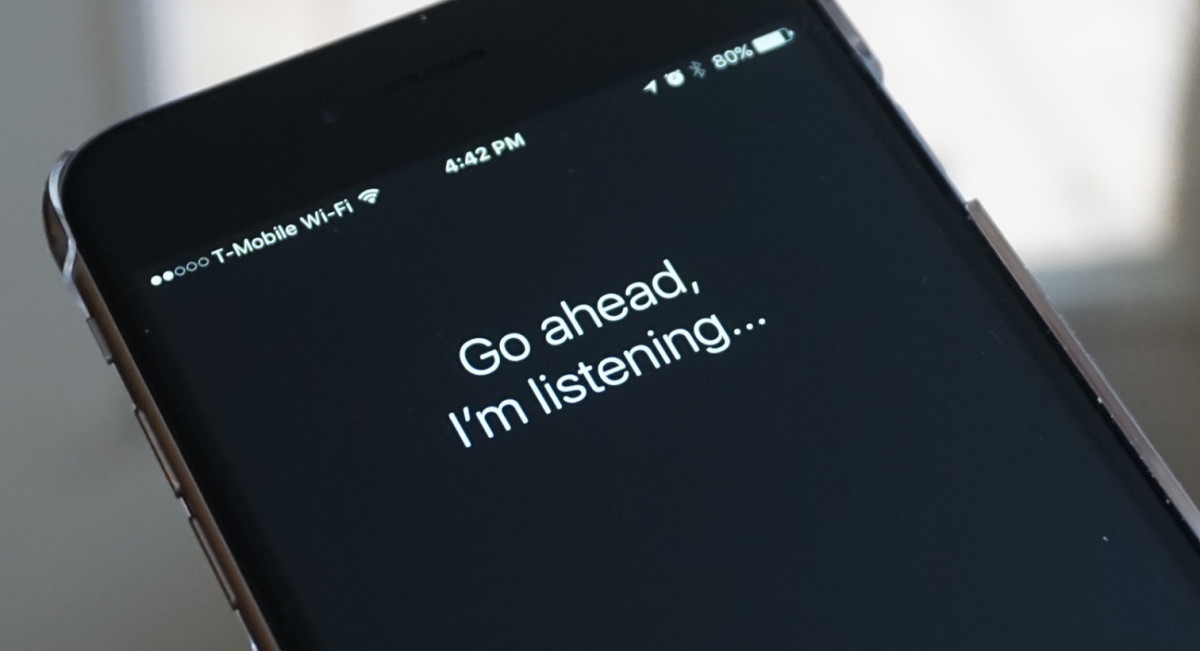
I recently updated my mac’s operating system. The new OS, named Sierra, has a few new features that I was excited to try but the biggest one was the ability to use Siri to search my files and launch applications. Sierra was bringing me one step closer to the human-computer interaction fantasy that was set up for me at an early age when I watched Picard, La Forge, and Data solve a complicated problem with the ship’s computer. In those scenes they’d ask fairly complicated questions, ask follow-up questions with pronouns and prepositions that referenced the first question, and finish their 24th century Googling session with some plain language query like “anything else?”  Judging by the demo I had seen on the Apple website it seemed like I could have just that conversation. I clicked the waveform icon, saw the window pop up indicating that my very own ship’s computer was listening and… nothing.

The problem wasn’t with Siri, it was with me. I had frozen. It was as if a rainbow spinning beach ball was stuck in my mouth. I was unable to complete a simple sentence. I closed the window and tried again:

Show me files that I created on… Damnit

Sorry I did not get that.

Show me files from… That I made on Friday.

Here are some of the files you created on Friday.

In all honesty, I should have seen this coming. I frequently use Siri to set reminders or to put things in my calendar but I always use my digital assistant in secret: the moment between getting in the car and starting the engine, alone at my desk, or (sorry) while I am using the bathroom. It works almost every time but when something goes wrong, it is my commands not Siri’s execution, that is left wanting. I pause because I forget the name of the place I need directions to or I stumble when it comes to saying exactly what reminder I want to set. There are several Siri-dictated reminders sitting in my phone right now that don’t want me to forget to “bring it back with you before you go” or “to write email in the morning.”  I clam up when I know my devices are listening.

It gets worse when other humans are listening to my awkward commands. The thought of talking to an algorithm in the presence of fellow humans is about as enticing to me as reciting a poem I wrote in high school or explaining a joke that just fell flat. Here I was thinking it was the technology that had to catch up to my cyborg dreams but now it seems that the flesh is the half not willing. more...

apple-event

Confession: I watched the Apple event yesterday, and I’ve watched at least part of every product announcement for the last several years. Apple announcements are the opposite of a guilty pleasure; they are a burden that I take on with pride.  They are insipid and represent everything that is wrong with Silicon Valley and yet I feel obliged to watch them because they let me stare deeply into this heaving morass of Cronenbergian lust for technology. It always feels like we’re one year away from Phil Schiller offing himself with an iGun after screaming “LONG LIVE THE NEW FLESH!” When I watch Silicon Valley spread out on the Moscone Center stage I feel prideful (to a fault perhaps) that these events just seem so… transparent. They’re so easy to read and so easy to critique they amount to social science target practice. more...

Nowadays we want our girls to be fun.

Jenny, Whitney, and I were talking on Twitter about Jenny’s recent post on the gender politics of a Microsoft Windows 8 Surface TV advertisement. I want to recap that conversation because it sets up some interesting questions about the relationship between contemporary gender politics and contemporary technology: If Jenny’s post described the gendering of technological devices, how do these attitudes toward technology in turn inform our judgments of human women? How do gendered evaluations of digital media frame our attitudes toward women, especially insofar as women use and are represented in digital media?

more...

pretty


From an augmented perspective, technologies both reflect and affect social structures and hierarchical relations. It is perhaps no surprise, then, that theorists of science and technology have long recognized how technologies are gendered. This goes beyond probing technologies of female reproduction, or masculine tools of object manipulation. This pervades even those seemingly gender neutral technological objects, and the ways in which we talk about, use, and make sense of them.

Awhile back, I talked about the gendering of Siri. I argued that the female voice, coupled with her designation as a “personal assistant” created an environment ripe for highly sexist/sexualized personification of the iphone application, and iphones themselves.  Far from Haraway’s utopic de-categorization, this melding of mechanical and organic solidified gendered meanings and strengthened interactional gender inequalities.

With this understanding, I still couldn’t contain my exasperated eye-roll when, after hooking up television in my home for the first time in almost a decade, I saw this (video after the jump): more...

In an earlier post, I wrote about the intersections of gender, technology, and economy using Apple’s “personal assistant” Siri as an example. With the recent release of the Japanese version of Siri, I thought I would provide an update on the available languages and their use of a default masculine or feminine voice.

more...

Siri on iPhone 4S lets you use your voice to send messages, schedule meetings, place phone calls, and more. Ask Siri to do things just by talking the way you talk. Siri understands what you say, knows what you mean, and even talks back. Siri is so easy to use and does so much, you’ll keep finding more and more ways to use it.

YouTube Preview Image

The paragraph above is taken directly from the Apple iPhone homepage. It is a description of Siri, one of the most talked about features of the new iPhone 4S. I argue here that Siri is rich with cultural meanings, and that these cultural meanings reside at the intersection of gender, market economy, and technology. more...