
self narrative

Image by Brad Lindert

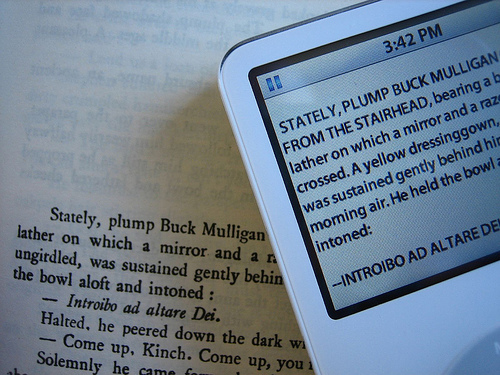
A couple of weeks ago, my interest was piqued by an article boasting the intriguing headline: “‘Losing yourself’ in a fictional character can affect your real life.” Essentially, researchers at Ohio State University have evidence that suggests very strongly that people who become emotionally engaged with a character in a story are more likely to alter their behavior according to how that character behaves, even if only temporarily. This piqued my interest first and foremost as a writer of fiction because it reflected my own experience so directly: When considering the mannerisms, speech, attitude, and choices of a character, it’s not uncommon for me to find my own behavior changing slightly to reflect those considerations, especially if I’m really trying to get inside a character’s head.

But then the piece piqued my interest in an entirely different way: the headline — if not the study itself — seems to be operating on the assumption that there is a distinct difference between a reader’s experience of a character in a work of fiction and the reader’s embodied experience of their own lives; in other words, that there’s a qualitative difference between the world of the imagination and the “real world”. And I’m inclined to view this assumption as flat-out incorrect.

Furthermore, I think the reasons why this assumption is incorrect have some things to say regarding the problematic assumption of digital dualism.
more...

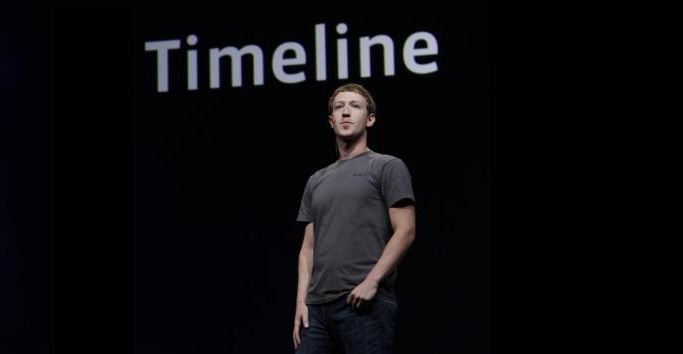
Facebook is now rolling out the new Timeline format. Reviews, as usual, are mixed. Some applaud the now historically situated self presentation while ohers express discomfort at the increasing reach of this platform as it now invades a past in which it was previously absent. I am not going to engage these debatesin the present post. Instead, I will talk about what Timeline does in in terms of self and identity.

Timeline, I argue, integrates self narratives fragmented by their simultaneous temporal location prior to, and at the heigt of, augmented society.

Narratives are linear stories. They have a beginning middle and end and usually a coherent theme. Self narratives are the stories that we tell about ourselves. They are necessarily selective, highlihting some things while ignoring or mimizing others. Self narratives take that which is messy, fragmented and disjointed, and wraps it into a clean, cohesive, and consumable package. The self narrative has very real consequences. We not only make sense of ourselves through these narratives but are then guided in our actions by this sense making. It is through self narrative that we learn who we are make decisions about what we should do.

Facebook is an important tool in the construction of self narratives in an augmented society. Our profiles act as tangible reflections of where we have been, what we have done, who we are, what we are therefore likely to do. These narratives are co-constructed and, as pointed out in a previous post by Nathan and I, prosusumed. This project of linearity, however, is complicated by a past that took place entirely outside of social media technologies. The self, as told through facebook, privileges the present, and only with effort, pays homage to the past.  Enter Facebook Timeline. more...