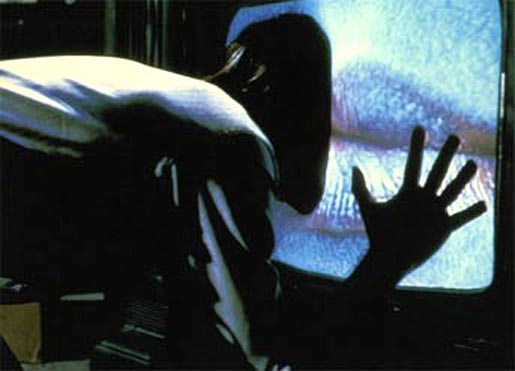
Our world has more “technology” in it than ever before and it is taking up more and more hours of our day.
We use this technology to structure/control/select the kinds of conversations we have with certain people.
These communication technologies compete with “the world around us” in a zero-sum game for our attention.
We are substituting “real conversations” with shallower, “dumbed-down” connections that give us a false sense of security. Similarly, we are capable of presenting ourselves in a very particular way that hides our faults and exaggerates our better qualities.
Turkle is probably the longest-standing, most outspoken proponent of what we at Cyborgology call digital dualism. The separation of physical and virtual selves and the privileging of one over the other is not only theoretically contradictory, but also empirically unsubstantiated. (more…)
The power of social media to burrow dramatically into our everyday lives as well as the near ubiquity of new technologies such as mobile phones has forced us all to conceptualize the digital and the physical; the on- and off-line.
And some have a bias to see the digital and the physical as separate; what I am calling digital dualism. Digital dualists believe that the digital world is “virtual” and the physical world “real.” This bias motivates many of the critiques of sites like Facebook and the rest of the social web and I fundamentally think this digital dualism is a fallacy. Instead, I want to argue that the digital and physical are increasingly meshed, and want to call this opposite perspective that implodes atoms and bits rather than holding them conceptually separate augmented reality.
In a 2009 post titled “Towards Theorizing An Augmented Reality,” I discussed geo-tagging (think Foursquare or Facebook Places), street view, face recognition, the Wii controller and the fact that sites like Facebook both impact and are impacted by the physical world to argue that “digital and material realities dialectically co-construct each other.” This is opposed to the notion that the Internet is like the Matrix, where there is a “real” (Zion) that you leave when you enter the virtual space (the Matrix) -an outdated perspective as Facebook is increasingly real and our physical world increasingly digital.
I have used this perspective of augmentation to critque dualism when I see it. For instance, (more…)
Here, Amber Case states something commonly repeated on this blog: we are all cyborgs. As such, she calls herself a cyborg anthropologist, similar to how we conceive of the study of technology and society as Cyborgology (perhaps without such strict disciplinary terms – but that is another discussion).
First, Case argues in the video above that the human cyborg is a recent invention. A product of new technologies that compress our mental capacities over time and space. On this blog, however, we tend to use the term much more broadly. For instance, one fundamental technology that structures other technologies built upon it is language. Post-structuralist thinking has long taught us about the power of language to drive what and how people think, how selves are formed, how power is enacted, and so on. Other technologies, such as spatial organization (think the architectural technologies of the amphitheater or panoptic prison) have profound impact on the mental processes of humans. The human mind has never been independent of technology, and, as such, we have always been cyborgs.
My second disagreement surrounds Case’s argument that (more…)
We live in a cyborg society. Technology has infiltrated the most fundamental aspects of our lives: social organization, the body, even our self-concepts. This blog chronicles our new, augmented reality.