
robots

Did I request thee, Maker, from my Clay
To mould me Man, did I sollicite thee
From darkness to promote me, or here place
In this delicious Garden?

Adam in John Milton’s, Paradise Lost 1667 (X. 743–5)
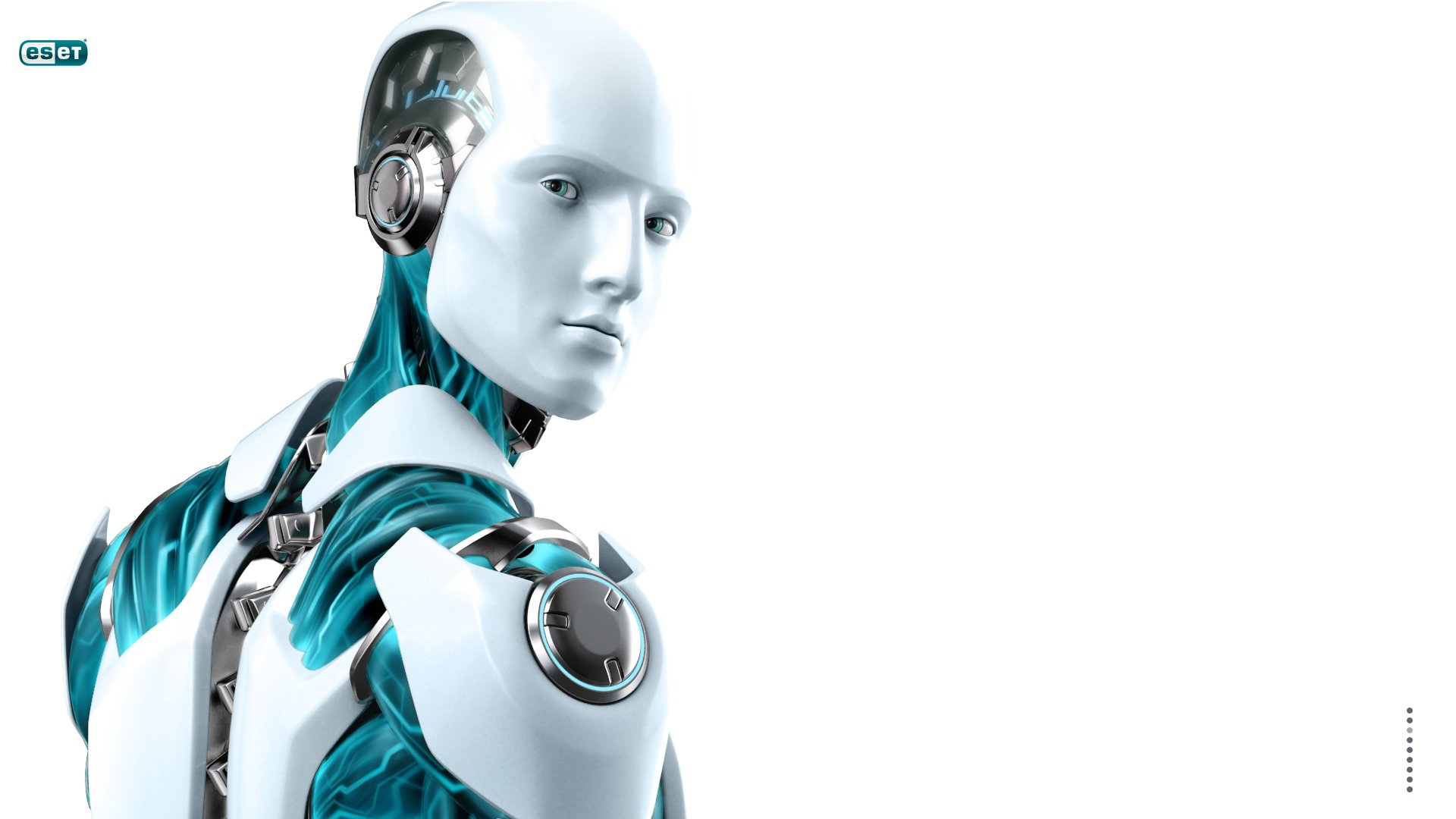
In John Milton’s Paradise Lost we see a poetic retelling of the biblical story of humanity and temptation. The excerpt above is from Adam, who mourns his fate as one who was brought into the world unwittingly, and then forsaken by his maker.   Adam blames his creator for designing a fallible subject, with vulnerabilities that manifest in the ultimate fall from grace. From this classic story of creation, willfulness, and abandonment, I can’t help but think about robots, their creators, and what happens once robots become sentient and autonomous.

Although the precise trajectory of robotic advancement is difficult to pin down,  Stephen Hawking claims that within a few decades robots will achieve sentient thought and will be able to question their existence and position in human society. With such a prospect on the (potentially quite close) horizon, legal systems have begun to think about how to classify, treat, and regulate intelligent machines. more...
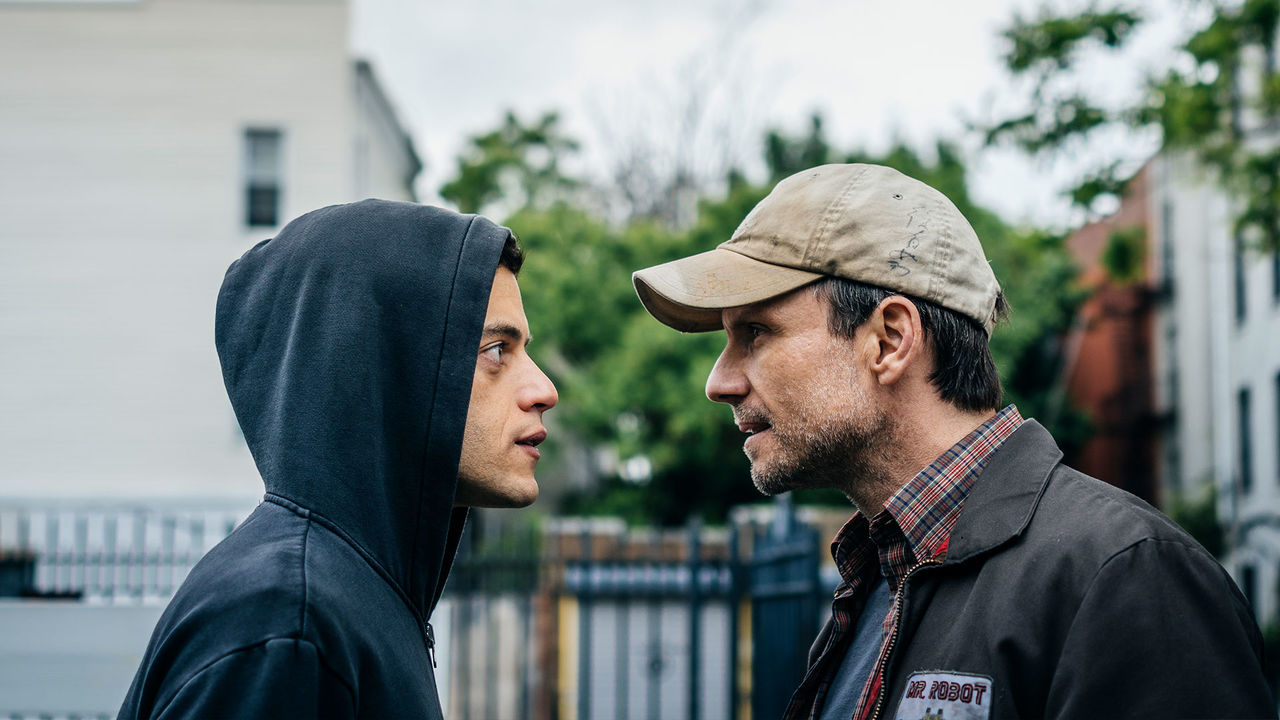
 

robot_s2ep3_elliotrobot

Warning: Major spoilers for Mr. Robot (through s02e06) follow.

********************************************************************************************************* more...

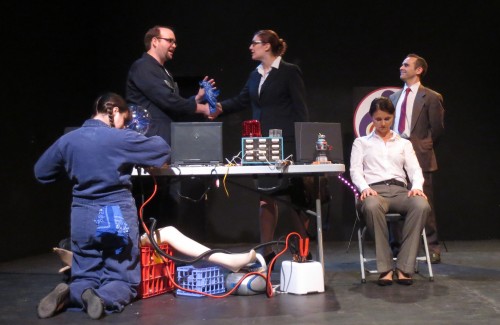
R.U.X. (Rockwell Universal Sexbots), written by Maurice Martin and directed by Sun King Davis, was first written and performed as a charity effort to raise money for HIPS (Helping Individual Prostitutes Survive); it ran as a five-part serial in Arlington’s October 2011 Hope Operas. It was rewritten as a full play for DC’s 2012 Fringe Festival, where it took the award for best comedy. The show just finished up a brief encore at Fall Fringe. While this comedy has already been widely and positively reviewed by DC theater critics, it deserves a piece that engages its rather weighty themes.

The story takes place in near-future America (similar in setting to the spate of early twenty aughts robot films such as Bicentennial Man, A.I., and I, Robot), where anthropomorphic robots have become a common consumer product. Louis Rockwell Jr. (John Tweel) has just been made acting CEO of the Rockwell Universal Carebots company, after his father (Frank Mancino) fell into a coma. Louis Jr. has a new vision that would transition the company away from producing robots designed for childcare and, instead, move it into designing robots for—you guessed it—sex.  After rebranding the company “Rockwell Universal Sexbots,” he hires Dr. Callie Veru (Aubri O’Connor), a young and romantically inexperienced software expert to program the robots with the capacity to fulfill human desire. To program robots to respond to human desire, however, the characters must first understand it, and this interrogation of human desire becomes the axis on which the entire plot rotates. more...

Over the last couple of weeks I’ve put together a two part essay/review-like object that explores how one particular work of science fiction speaks directly to certain ideas of what cyborgs are and what it means to be them, with an eye toward a broader appreciation for how fiction allows for a richer understanding of theory. The full piece is below.

Cyborg writing is about the power to survive, not on the basis of original innocence, but on the basis of seizing the tools to mark the world that marked them as other.  –Donna Haraway

Inanna cast down Tammuz and stamped upon him and put out his name like an eye. And because Tammuz was not strong enough, she cut him into pieces and said: half of you will die, and that is the half called Thought, and half of you will live, and that is the half called Body, and that half will labor for me all of its days, mutely and obediently and without being King of Anything, and never again will you sit on my chair or wear my beautiful clothes or bear my crown of being.

You might be surprised, but this is a story about me.  –Catherynne M. Valente

Speculative fiction and this blog are not strangers to each other; it’s been written about here before,  as a means to understanding how the present has come to look the way it does, and as a means for the imagining of potential futures (also zombies). Indeed, the term cyborg always brings with it a host of connotations firmly rooted within SF, however much it may also describe a current and very real state of being. The important thing to pay attention to here is the power of stories – the ways in which they can serve as a way to do theory in a kind of experimental setting that would otherwise be impossible. In SF – and in fiction in general – we can take the implications of theory and watch them play out, see what they would look like, solidify them in words and images, pick parts of them up and move them around. We can tweak settings and watch other worlds unfold in response.

more...

There’s a new ebook out that’s attracting some attention, in part because its conclusions are so startling, in part because its conclusions come from an unexpected quarter. The title is Race Against the Machine: How the Digital Revolution is Accelerating Innovation, Driving Productivity, and Irreversibly Transforming Employment and the Economy. Its authors, Erik Brynjolfsson and Andrew McAfee, are two professors from one of the academic epicenters of tech, MIT.

I haven’t read the book, but I have read the three excerpts (pt. 1, pt. 2, pt. 3) run on The Atlantic magazine’s web site. I would definitely recommend them, both because they’re clearly written and because they document in a dispassionate way some of more important effects of our ever-increasing social and economic commitments to technology.

Suffice it to say that their prognosis for the working man and woman isn’t pretty. According to Brynjolfsson and McAfee, losers in the war between workers and machines could ultimately constitute a majority – perhaps more than 90 percent – of the population. more...

Last week, Kokoro Co. Ltd. released video of the latest iteration of its work in robotics, taking another step in the process of bridging the “uncanny valley”—the idea that the closer that robots and other non-human objects approach to looking authentically human, the stronger a reaction of revulsion, fear, or mistrust they inspire in their human observers. Kokoro is well-known in the robotics field for creating lifelike humanoid robots capable of recognizing and mimicking human facial expressions and body language. You may recognize the Kokoro name in reference to the I-Fairy, a humanoid robot that presided over a wedding in Japan last summer, and the Geminoid project, where customers can have themselves reproduced in silicone and wire.

The Actroid-F (the ‘F’ stands for female) robot was built and programmed to monitor patients in a hospital setting. Currently, programmers are teaching the robot to mimic patients’ facial expressions, and to recognize the differences in their smiles and grimaces. The result is a very lifelike robo-nurse that can be used to monitor the feelings and needs of hospitalized patients. On the surface, this seems like a good idea; we already use machines to monitor patient vital signs and administer life-saving medicines, so why not use machines to monitor patient morale? more...