republicans

Image credit
Image credit

Late Monday night it was discovered that one of the EPA’s Twitter accounts was a C-list celebrity on the popular iPhone game Kim Kardashian: Hollywood. The Tweet was one of those automatically generated ones meant to announce progress in a game or the unlocking of an achievement. Its easy to imagine the scenario: an over-worked or deeply bored social media manager didn’t realize they were signed into their work account instead of their personal one and let the tweet go. Or maybe a family member borrowed their work phone. Who knows? What we do know is that the tweet immediately garnered thousands of retweets and countless more screenshots were shared on other platforms. Why is this even remotely funny? What sorts of publicly held believes does it reveal? more...
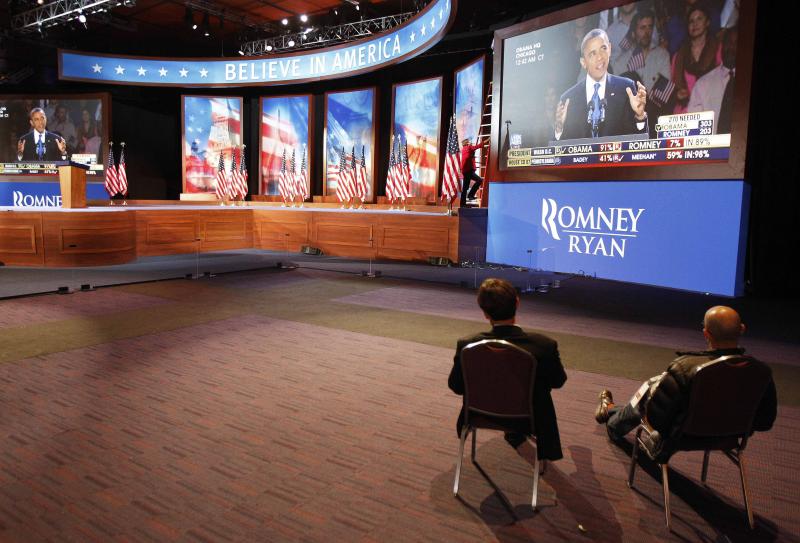
Obama Victory Speech at the Romney Headquarters. Image c/o White People Mourning Romney

In the aftermath of what both sides agree was the most substanceless presidential election in our nation’s history, some variation of the phrase “post-truth politics” has begun haunting the pages of op-eds and news show roundtables (Seriously, its everywhere. Here’s the first five that I found: one, two, three, four, five.).  To say that we live in an age of “post-truth politics” isn’t totally inaccurate, nor is it unworthy of the attention it is getting, but the discussion has yet to truly wrestle with the characeristics of commodified information. Information can be true, and it can be false, but how that information is disseminated, used, and ignored is what truly matters. Information doesn’t (just) want to be free, it also wants to be exploited. more...

Many have linked political conservatism with “the authoritarian personality,” which, in part, involves the willingness to view power structures as legitimate, less reluctance to submit to those in authority over you, and an increased tendency to exercise authority over the less powerful. Social media is often seen as counter-authoritarian, however, we also have good evidence that the Web in general, and social media in particular, also replicates existing power structures.

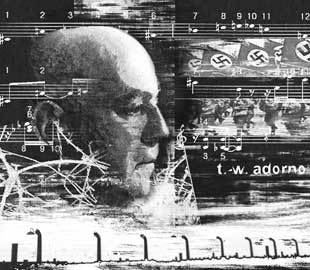
With these different concerns in mind, we might wonder if those with different political orientations use social media for politics in different ways. More specifically, are those on the right, even in a social media environment that permits more expression, voice, and creativity, more likely to submit and follow? Theodore Adorno, pictured above and pioneered work in this line of thought, I think, would predict that Republicans would be more passive, more likely to listen and restate, whereas those on the left would be a bit more likely to create new content.

I post these very brief thoughts (certainly much more would be needed to substantiate the sweeping claims I just made above; this is only a short blog post!) because The Pew Internet in American Life Project just today released some new findings on Social Media and Political Engagement [pdf]. Here are most of the findings:  more...

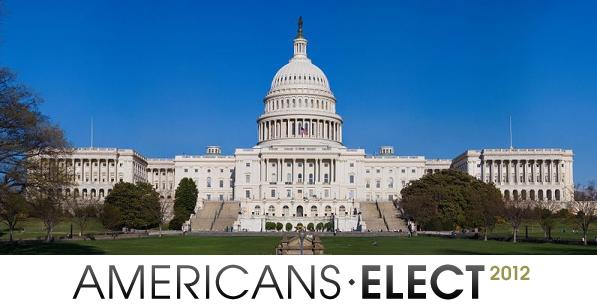
Last week Nathan and PJ introduced us to Americans Elect 2012 by asking the question: “Can we elect a ‘wikipedia’ president?” The idea is seemingly straightforward- define the broad categories you find most important (your “colors”), answer questions to determine the popular positions of most Americans, and find candidates that most closely resemble your opinions on the issues. The result is a “third party” candidate on the ballot in all 50 states with a platform that most people agree with.

I have reservations about this process, and they fall into three categories. 1)Poorly designed questions. These questions are confusing and might not elicit the responses people intend to give. 2) Leading questions. To be fair, the language that Americans use to talk about politics is full of pre-defined frames and evocative images that push people in certain directions. It is virtually impossible to create a set of questions that extracts the thoughts of individuals with total neutrality. Our thoughts are like electrons- the act of observation changes their behavior. 3) The reinforcement of ineffective partisan thinking. From the Americans Elect website: more...

PJ Rey and I have been following the 2012 presidential campaign on this blog with social media in mind. We watch as President Obama and the republican contenders try to look social-media-y to garner dollars and votes. However, the social media use has thus far been more astroturfing than grassroots. There have been more social media photo-opts to appear tech-savvy than using the web to fundamentally make politics something that grows from the bottom-up. Presidential politics remain far more like Britannica than Wikipedia.

But this might all change, at least according to Thomas Friedman yesterday in the New York Times. He describes Americans Elect, a non-profit attempting to build an entire presidential campaign from the ground up. This might be our first glimpse of an open and social presidential web-based campaign. From their website,

Americans Elect is the first-ever open nominating process. We’re using the Internet to give every single voter — Democrat, Republican or independent — the power to nominate a presidential ticket in 2012. The people will choose the issues. The people will choose the candidates. And in a secure, online convention next June, the people will make history by putting their choice on the ballot in every state.

more...

A lot more.

Thought to be the domain of the political left by some, social media has come to be nearly ubiquitous for both parties. One may even argue that the political right in the U.S. has passed the left. While not a perfect measure, one can look at the number of tweets sent by members of congress. From May 8th to June 8th, 2011, members of congress sent 15,383 tweets. The 232 Republicans sent 10,846 tweets (that’s about 47 tweets per member for this month). The 168 Democrats sent just 4,537 tweets (27 tweets per member). Republicans are tweeting almost twice as much.

What other measures can we look at to compare/contrast the right and left’s usage of social media? Does social media inherently tend to the left or right?

via Mashable.