publishing

Screen Shot 2016-09-08 at 4.46.11 PM

In 2011 I was looking for new ways to play with ideas. I had just finished my first semester in graduate school and while class assignments kept me busy and the conversations I had with my fellow graduate students were deeply rewarding I wanted something else. Something a little more public and a lot more focused on writing. I was surprised that, at least in my program, there was very little attention paid to the craft of writing. How to convey a complicated idea in an elegant way, or how to identify your audience, were absent from even the most pragmatic training. (This is not true in all programs and less true for that particular department now, than it was five years ago.) In college I frequently read and shared Sociological Images articles and one day, while procrastinating on my very first round of graduate school finals I noticed that The Society Pages had multiple blogs. Instead of writing my finals I wrote a short thing about drones and video editing suites and before I knew it I was regularly contributing to this blog. In a few short years I was submitting things to bigger publications, and now I’m an editor here with Jenny and wow what a wild ride.

Last month I read Kelly Conaboy’s Blog, You Idiots and it got me thinking about the process, style, and frequency of my own writing. I’ve been editing more and writing less, and I’d like to change that. Jenny and I have been editing guest posts but the editing that has taken up most of my time is editing my own stuff. There’s probably half a dozen would-be essays in my Cyborgology folder that end right about here, in the second paragraph, where the hook or thesis should go. I think this means I need to get back to writing what Conaboy called for: “just a little thing that you read and enjoy.”

I will be writing more, soon, but before I rearrange the pace of my work schedule to accommodate that promise I thought I would put down into words a workshop I have run twice now on helping academics write for more public audiences. The intention here is to identify some of the common problems academics have in writing engaging, thoughtful, and relatively short essays. Much of it comes down to pacing and working with others. more...


 

elsivier

So, Elsevier pulled kind of a jerk move. And probably a move that’s not great for PR.

As it turns out, publishing giant Elsevier is taking down copyrighted papers from Academia.edu. Here’s a bit of background. For-profit publishing companies (like Elsevier, Sage, Taylor & Francis etc.) make authors sign a copyright agreement when they publish in the journals run by these companies. This gives distribution rights to the publisher, and takes them away from the author. However, many authors (like myself) sign said agreement, and then immediately post content on Academia.edu, ResearchGate, or other academic-based social networking sites.

Technically, posting our work on these sites is illegal. However, the publishers’ policies, which create false scarcity, exploit intellectual labor, and restrict knowledge sharing, are in a word, preposterous. Here’s why: more...

blogging

In this post I attempt to tackle a complex but increasingly important question: Should writers cite blog posts in formal academic writing (i.e. journal articles and books)? Unfortunately, rather than actually tackle this question, I find myself running sporadically around it. At best, I bump into the question a few times, but never come close to pinning down an answer.

To begin with full disclosure: I cite blog posts in my own formal academic writing. But not just any blog posts. I am highly discriminate in what I cite, but my discriminations are not of the cleanly methodical type which can be written, shared, and handed out as even a suggested guide.  Mostly, I cite Cyborgology and a select few blogs that I know really really well. I have done so in my last three formally published works (two of which are Encyclopedia entries), and successfully suggested blog posts to others via peer-review. When pressed for a rationale (as I have been in conversations with colleagues), I less-than-confidently ramble something like Well I mean, I know these bloggers to be good theorists, and I find their work useful for my own. Some of their work is published only in blog form, and I need those ideas to build my argument. I also don’t want to ignore something good that I know is out there. But I mean, I know there are other good things out there that I don’t know about, or don’t know enough to trust. And I know I’ve written bad ideas on Cyborgology, or ideas that I further developed later, so I guess quality is not a sure thing, but reviewers and editors have accepted it so…[insert sheepish grin].   more...

TtW12 twitter backchannel
The TtW12 Twitter back channel. Photo by Rob Wanenchak

Theorizing the Web 2012 was great. Everyone involved did a bang-up job. I certainly learned more in a single day than I usually do at weekend-long establishment conferences. I have said a lot about conferences (here, here, and here) as have fellow cyborgologists (Sarah, Nathan, and PJ). All of these posts have a common thread: academia is changing, but conferences seem out of date in some way. They are needlessly insular, they rely on hefty attendance fees that are increasingly cost-prohibitive,  and they rarely take advantage of social media in any meaningful way. The relative obduracy of conference styles come into high relief once they are compared to the massive changes to institutional knowledge production. Universities have adopted many of the managerial practices of private companies. They are also acting more like profit-seeking enterprises: putting massive resources into patenting offices and business incubators, hiring less tenure-track teaching staff, and employing armies of professionalized managers that run everything from information technology services to athletic facilities. Conferences, on the other hand, have seen few innovations beyond what I call Tote Bag Praxis.  more...

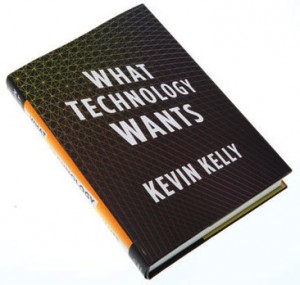
A Review of Kevin Kelly’s What Technology Wants

Kevin Kelly's what technology wants

Usually, I would not bother reviewing a book that has been out for over a year, but Kevin Kelly’s What Technology Wants complicates this blog’s ongoing discussion of public intellectuals and the translation of social theory into popular press books. Kelly claims to have read “every book on the philosophy and theory of technology.” If we are to take him at his word, and if we assume his own conclusions are based on (or are at the very least- informed by) that reading, we should seriously consider the overall quality of the corpus of Science and Technology Studies (STS) and related fields. As social scientists we must ask ourselves: If Kelly’s work can legitimately connect itself to the likes of Nye, Winner, and Ellul, and still produce a politically and morally ambivalent conclusion, are we failing to provide theoretical tools that lead to a better world? more...

Or: Intellectual Accessibility by Availability and Design

As a sociology graduate student, I sometimes feel like Simmel’s “stranger,” close enough to academia to observe, but distant enough to retain an outside perspective. Like many graduate students staring down a possible academic career-path, I’m a bit terrified at the elephant in the room: is what academics do really important? are they relevant? does it matter?

Who reads a sociology journal? As my former theory teacher Chet Meeks once posed to my first social theory course,  how many people look to sociology journals to learn anything about anything? While the occasional sociologist is quoted in the New York Times or appears on CNN, the influence these experts have is vanishingly small. I do not know as much about other disciplines, but the point for most of the social sciences and humanities is that, in my opinion, expert knowledge is largely going to waste.

And to echo folks like Steven Sideman or danah boyd, we have an obligation to change this; academics have a responsibility to make their work relevant for the society they exist within.

The good news is that the tools to counter this deficiency in academic relevance are here for the taking. Now we need the culture of academia to catch up. Simply, to become more relevant academics need to make their ideas more accessible.

There are two different, yet equally important, ways in which academics need to make their ideas accessible:

(1) accessible by availability: ideas should not be locked behind paywalls

(2) accessible by design: ideas should be expressed in ways that are interesting, readable and engaging

To become publicly relevant, academics must make their ideas available to and articulated for the public. more...

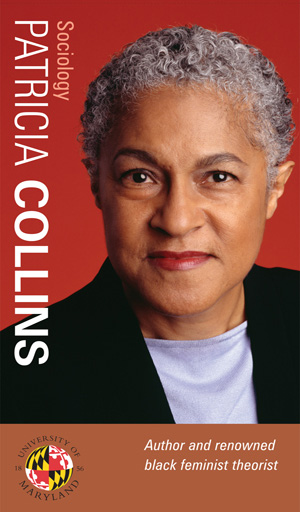
Editor’s Note from PJ Rey: Several months ago, I wrote a post called “Why Journals are the Dinosaurs of Academia,” which argued that goal of academics to circulate their ideas as widely as possible was hindered by their own backward practice of attributing excessive symbolic value to print media. In fact, the academia’s incentive structure rewards the best practices of yesteryear, while wholly ignoring modern communication. This is largely a product of the entrenched interests powerful senior scholars who seeks to consolidate their privileged position by reifying their own established habits. I concluded that, for the academy to continue to be relevant (or, rather, to start being relevant again), we must begin to reward blogging, tweeting, wiki editing, etc.

Given recent interest in the topic, I thought I would repost Patricia Hill Collins’ response.

I agree that the status of a journal should be decoupled from the fact of whether or not it exists in print. The wind is already blowing in that direction as publishers realize how expensive print really is.

I don’t think that journals are necessarily dinosaurs. A good peer reviewed journal by experts in a field can become one important location that can help us wade through seemingly endless ideas on the web with an eye toward influencing informed decisions about quality. The sheer volume of ideas that are now available on the Web means that we need some sort of system (or multiple systems) of vetting those ideas. The journal system, especially in an era of ever-more-specialized journals, can help do that. Digital journals are well-positioned to help with this task. I, for one, don’t want a “thumbs up” Facebook model of voting on intellectual quality. more...

Information Politics in the Age of Digital Media

Discussant: Deen Freelon, American University

  • “Internet Infrastructure: ‘Access’ Rhetoric, Neoliberalism, and Informational Politics” (Dan Greene, University of Maryland-College Park)
  • “Academic Marginalization in the Age of Social Media” (PJ Rey, University of Maryland-College Park)
  • “Social Media and Revolutionary Movements: Toward Research and Activist Agendas” (Mina Semeni, Randy Lynn, and Jason Smith, George Mason University)

This panel explores some of the opportunities for theoretical development and synthesis emerging at the intersection of public sociology and digital media. True to the conference’s remit, each focuses on a distinct form of publicity of interest to publics outside the academy. Dan Greene questions the prevailing neoliberal rhetoric of access to information technologies, arguing that it facilitates the concentration of power and prevent us from connecting related struggles for individual and collective emancipation. As a corrective, he proposes a frame he calls “informational politics” that overcomes this conceptual weakness by explicitly recognizing the links between digital media and the social contexts within which they are used. PJ Rey invites us to reconsider the roles of newer forms of scholarly communication such as blogs and tweets in evaluations of academic productivity. Journals and conference proceedings, which still enjoy preeminence among tenure criteria in most fields, are far too slow, costly, and obscure to effectively relay the fruits of public sociology to non-academic publics. Finally, Mina Semeni, Randy Lynn, and Jason Smith are interested in how activists use social media in contexts of social protest and revolution. In an attempt to move beyond totalizing and causal theories of the Internet and politics, they propose two mechanisms through which social media might abet protest: by increasing social capital and by strengthening existing institutions. more...

Larry Sanger and Evgeny Morozov have both critiqued the lack of rigor in modern technology writing.

The title of this post is an homage to two recent essays, the first being Larry Sanger’s “Is There a New Geek Anti-Intellectualism?” and the second Evgeny Morozov’s “The Internet Intellectual”, a recent scathing review of Jeff Jarvis’ latest book.

Larry Sanger’s critique of “geek” culture as anti-intellectual is a powerful read (even though I wrote a sort-of critique of Sanger’s post here; and he replied to me here). Sanger’s fundamental point is that modern geek culture is characterized by an anti-intellectual rejection of experts and I want to bring in Morozov’s review to highlight a slightly different point: the techno-experts embraced are anti-intellectual themselves.

My goal in this short piece is to encourage the reader to take a look at these two essays in tandem to suggest a further conversation about the need for public intellectuals, the role of academics in framing theories of new technologies and what the consequences are when we leave this discussion to be dominated by business folks.

To be read as a pair:

Is There a New Geek Anti-Intellectualism?, by Larry Sanger.

The Internet Intellectual, by Evengy Morozov.

To be honest, I tried to dislike Morozov’s review more...

In a post titled “Why Journals are the Dinosaurs of Academia,” I recently considered whether traditional journals may, increasingly, be serving to hinder the communication of ideas, rather than optimally facilitating such exchanges.  I argued two main points:  1.)  We need to get beyond the notion that the mere fact that journals is printed makes it somehow more legitimate than digital-only journals.  2.) In the age of the Internet, conventional articles may no longer be the most efficient way to communicate some ideas (which was the original justification for making journals the centerpiece of disciplinary discourses).

Over the past few days, Twitter has been abuzz with academics discussing another, related issue: Whether disciplinary discourses are better facilitated by non-profit, open-access journals or proprietary, pay-walled journals.  I have archived that discussion below and will follow up with my own thoughts later in the week. more...