
political campaigns

Image Credit
Image Credit

The 2016 presidential race has already started and it’s easy to get caught up in the horserace and forget about all of the technologies and tactics that campaigns employ to get their message out. The 2008 Obama campaign was the first to take full advantage of social media and eight years later these tactics seem to have become the new normal. It is now possible to deliver precisely tailored messages for key demographics and even individuals. American presidential campaigns have never been models of democracy but with the help of private databases and corporate collusion, the 2016 presidential race is shaping up to be a very murky process. more...
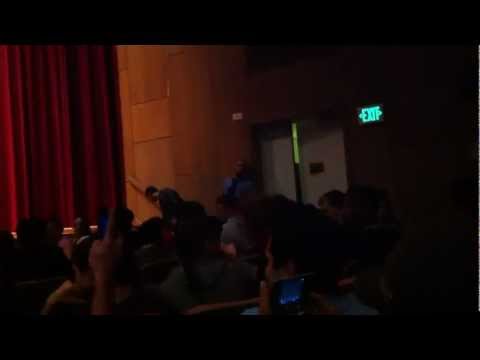
The Human Microphone was created by Occupy Wall Street as a way to get around New York City’s ban on amplified sound in Zuccotti Park. In other words, it is a tool–and a form of non-digital technology–designed to facilitate communication and discussion in large crowds. But like any form of technology, its use isn’t confined to what it was originally created to do.

This is Karl Rove being “mic-checked” while delivering a speech at Johns Hopkins on November 14th. It starts about 1:48 in (be aware, there’s a huge jump in volume at that point).

YouTube Preview Image

more...

Cyborgology editors Nathan Jurgenson and PJ Rey were recently interviewed by Maryland Morning’s Sheilah Kast about how social media is being used in 2012 presidential campaigns and which candidates are likely to benefit most

Click here to listen to the whole interview.

Already, we are being inundated with stories about the how social media will shape the 2012 campaigns (and how Facebook may, or may not, transform the Presidency itself).  Two facts, however, limit the potential role social media will, ultimately, play in the 2012 election:

1.) Young people are heavy users of social media, but are unlikely to vote.

2.) Older folks are likely to vote, but are much less involved in social media.

Thus, the reality is that social media is best at reaching those least likely votes. In its 2008 post-election analysis, Pew found that while 72% of Americans 18-29 year of age were using the Internet for political activities or information gathering (and 49% used social-networking sites for these purposes), only 22% of Americans 65+ years of age engaged in such activities on the Internet (and a mere 2% did so on social media).

From: Aaron Smith, "The Internet's Role in Campaign 2008," Pew Internet & American Life Project, 15 April 2009

At the same time, young adults are roughly 33% less likely to vote than their grandparents. more...