Patricia Hill Collins

Under_Construction-940x400Digital dualism is pervasive, and the understandings that it informs—of ourselves, of our experiences, and of our very world—are a mess. Perhaps this can be chalked up to the fact that digital dualism arises from varying sets of flawed assumptions, and was never purposefully assembled as such by the people who embrace it. But guess what? As theorists, we have the opportunity not only to build new frameworks for understanding, but also to assemble those frameworks with both consciousness and intentionality. So with that in mind, what should a theory of augmented reality look like? What would we do differently from digital dualists?

It is of paramount importance that theories of augmented reality acknowledge complexities and differences—whether between materials, media, degrees of access, or subjective experiences—without falling into dualisms. more...


Congressman Darrell Issa (R-CA) is the sponsor of the "Research Works Act"

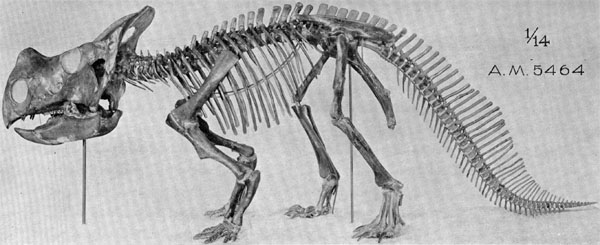
It seems as though Congress, having grown tired of pissing off large swaths of the country, are now opting to write bills that anger a very particular group of people. Almost a month ago, on December 16, 2011, California Republican Congressman Darrel Issa introduced the “Research Works Act” which would kill government-assisted open-access journals. As PJ said before, journals (especially the closed private ones) are the dinosaurs of academia and as Patricia Hill Collins later noted, more...

Editor’s Note from PJ Rey: Several months ago, I wrote a post called “Why Journals are the Dinosaurs of Academia,” which argued that goal of academics to circulate their ideas as widely as possible was hindered by their own backward practice of attributing excessive symbolic value to print media. In fact, the academia’s incentive structure rewards the best practices of yesteryear, while wholly ignoring modern communication. This is largely a product of the entrenched interests powerful senior scholars who seeks to consolidate their privileged position by reifying their own established habits. I concluded that, for the academy to continue to be relevant (or, rather, to start being relevant again), we must begin to reward blogging, tweeting, wiki editing, etc.

Given recent interest in the topic, I thought I would repost Patricia Hill Collins’ response.

I agree that the status of a journal should be decoupled from the fact of whether or not it exists in print. The wind is already blowing in that direction as publishers realize how expensive print really is.

I don’t think that journals are necessarily dinosaurs. A good peer reviewed journal by experts in a field can become one important location that can help us wade through seemingly endless ideas on the web with an eye toward influencing informed decisions about quality. The sheer volume of ideas that are now available on the Web means that we need some sort of system (or multiple systems) of vetting those ideas. The journal system, especially in an era of ever-more-specialized journals, can help do that. Digital journals are well-positioned to help with this task. I, for one, don’t want a “thumbs up” Facebook model of voting on intellectual quality. more...


Answer: They wield enormous (and terrifying) power, yet  they are ill-adapted to function in a changing environment.

In most corners of society, it’s a become a trope to say that the Internet has changed everything; but online communication is still far from integrated into the norms and practices of the academy, whose pace of change and adaptation is nothing less than glacial.  Anyone familiar with academic careers knows that conventional (read print) journal publications are the be-all end-all criterion in evaluating potential hires—the meaning behind the well-worn cliché: “publish or perish.”

The practice of using journal articles as the sole criterion in evaluating an academic’s productivity is an artifact of an epoch long-passed.  In the age of the printing press, journals were, by far, the most efficient and enduring form of communication.  They enabled disciplines to have thoughtful conversations spanning decades and continents.  They also facilitated the transmission of the knowledge produced through these conversations to younger generations.  In fact, it is nearly impossible to imagine the emergence of Modern science without existence of this medium. Thus, in the beginning, journals become symbolically and ritually important because they were functionally necessary. (While journals were medium du jour during Durkheim’s productive years, he surely would have recognized the reason behind their status in the cult of the academic.) more...