New York Times

Zombie cyborg
Image credit

The New York Times editors, as Claude Fisher wrote yesterday, “have their meme and they will ride it hard.” That meme is Sherry Turkle, the MIT psychologist that has built a cottage industry (a far away disconnected cottage on the shores of Cape Cod no doubt) around pathologizing the bad feelings people get when everyone around them are on their phones. Fisher does a really supurb job of laying out what is wrong with this latest round of Turkle fanfare so you should go read his piece on his blog, but I want to draw out and add to one point that he makes about the “death of conversation” being an evergreen topic for decades.

I have an article coming out in First Monday in about a month but there is a section that I want to quote from just because I think it is especially relevant to this issue of conversation, attention, and their vulnerability to new technologies. The article argues that online/offline states should be seen as social relationships among groups and not the binary states of an individual. To that point I show how cultural, political, and economic reactions to railroad lines mirror the experiences we have with the Internet today. What follows is a small section about what sorts of social and cultural effects were attributed to railroads: more...

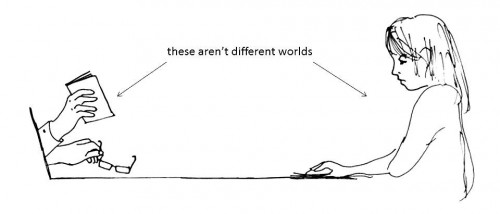
This was a lead image in a story from the New York Times titled, “Your Phone Versus Your Heart“. Let’s break this image down, shall we?

Becoming a parent has inflected how I see everything in the world, including the practice of “being online.” I apologize for using scare quotes so soon into this essay, but it feels necessary. “Online” contains several types of possible connection, as Jenny Davis and others at Cyborgology have argued. And the “being” part is what needs to be at stake: how does the way in which we exist change when that existence is networked and distributed? The anthropology of “being online” therefore includes a consideration of the ontological effects on people as much as empirically measurable effects of using iPads and Facebook.

A common narrative, and one Cyborgology has consistently disputed, is that “technology” or “social media” or “the digital” have impinged on an authentic mode of life that previously existed and which we retroactively call “offline.” This narrative relies on constructing images that can quickly code as “authentic,” as in this video that Nathan Jurgenson has dissected. The graphic above, from a New York Times essay, crystallizes this narrative as it makes us of family and child-rearing as an icon of authentic offline living. Devices and the information they present come between a parent and the child. They blot out the child’s pleading face. Tellingly, the phone is represented as blank–the viewer is not asked to make a judgment about the value of what the person is doing with the phone (checking Twitter? responding to an email? calling 911?), they are asked to condemn its vacuity. more...

Photo by 'lance robotson'
Photo by ‘lance robotson

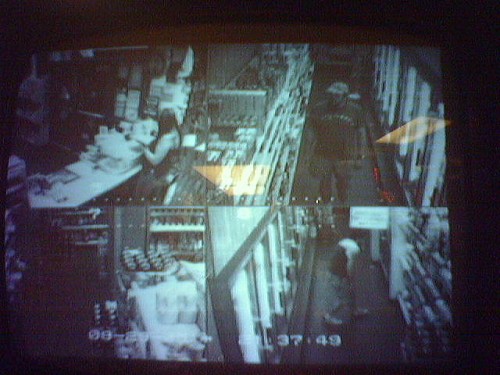
Earlier this week, the New York Times ran yet another hilariously digital dualist piece on a new surveillance system that lets retailers follow customers’ every move. The systems, mainly through cameras tied into motion capture software, can detect how long you stared at a pair of jeans, or even the grossed-out face you made at this year’s crop of creepy, hyper-sexualized Halloween costumes. The New York Times describes this as an attempt by brick and mortar stores to compete with data-wealthy “e-commerce sites.” (Who says “e-commerce” anymore? Seriously, change your style guide.) Putting aside the fact that most major retailers are also major online retailers, making the implicit distinction in the article almost meaningless, the article completely misses the most important (and disturbing) part of the story: our built environment will be tuned to never-before-seen degrees of precision. We have absolutely no idea what such meticulously built spaces will do to our psyches. more...

The idea that technology and techno-scientific urbanization/development is making life more noisy is not new. Luigi Russolo wrote about this in his famous futurist manifesto The Art of Noise. “In antiquity,” he argues, “life was nothing but silence. Noise was not really born before the 19th century, with the advent of machinery. Today noise reigns supreme over human sensibility” (4). Russolo’s manifesto was written in 1913. “ON IT” like usual, The New York Times published a couple of stories about it last week.

Not all of NYC’s noise was bad.

While it’s certainly not news that cities are noisy, the Times article does suggest that the politics of urban noise have changed significantly since Russolo’s time. Urban noise works (or produces political effects) differently because it is understood differently–it’s not industrial and machinic, but post-industrial and affective. more...

via https://twitter.com/mattdpearce/status/331096177393160193
image via https://twitter.com/mattdpearce/status/331096177393160193

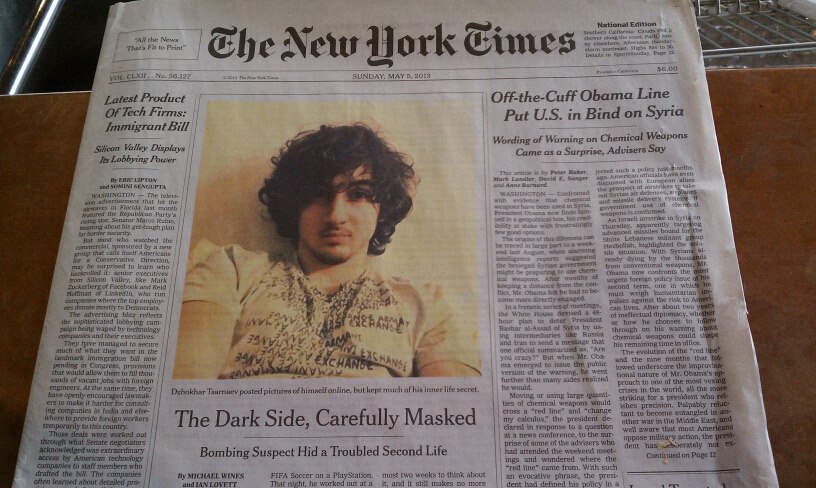
I’m fascinated by the cover of yesterday’s Sunday New York Times. Fixated on the image of Boston Marathon suspected bomber Dzhokhar Tsarnaev, I was momentarily unable to notice the words surrounding it. I was a little stunned, then angry, then captivated. The image, not just the Instagrammed selfie of Dzhokhar, but this photo within the culturally significant New York Times front page, is endlessly sociologically fascinating.

For some, this cover provokes anger more...

aaa -- family w radio
An early strategy for making new technology feel familiar

I was thinking this morning about two subjects that don’t usually go together, skeuomorphs and morality.

A skeuomorph is a design element applied to a product that looks as if it’s functional but really isn’t. Its real purpose is to evoke a sense of familiarity and comfort. The literary critic N. Katherine Hayles cites as an example the dashboard of her Toyota Camry, which is made of synthetic plastic molded to look as if it’s stitched fabric.

Software designers use lots of skeuomorphs for their user interfaces; examples include the “pages” that seem to “turn” in e-readers and word processing programs. Hayles calls skeuomorphs “threshold devices.” They “stitch together past and future,” she says, “reassuring us that even as some things change, others persist.” more...

Discussing the relative strengths and weaknesses of education as it occurs on and offline, in and outside of a classroom, is important. Best pedagogical practices have not yet emerged for courses primarily taught online. What opportunities and pitfalls await both on and offline learning environments? Under ideal circumstances, how might we best integrate face-to-face as well as online tools? In non-ideal teaching situations, how can we make the best of the on/offline arrangement handed to us? All of us teaching, and taking, college courses welcome this discussion. What isn’t helpful is condemning a medium of learning, be it face-to-face or via digital technologies, as less real. Some have begun this conversation by disqualifying interaction mediated by digitality (all interaction is, by the way) as less human, less true and less worthy, obscuring the path forward for the vast majority of future students.

This is exactly the problem with the op-ed in yesterday’s New York Times titled, “The Trouble With Online Education.more...

This is part of a series of posts highlighting the Theorizing the Web conference, April 14th, 2012 at the University of Maryland (inside the D.C. beltway). See the conference website for information as well as event registration.

Experiencing global events through social media has become increasingly common. For those in the West, the uprisings over the past few years in the Middle East, North Africa and elsewhere were especially striking because social media filled an information void created by the lack of traditional journalists to cover the dramatic events. By simply following a hashtag on Twitter, we tuned into those on the scene, shouting messages of revolution, hope, despair, carnage, persistence, misinformation, debate, sadness, terror, shock, togetherness; text and photos bring us seemingly closer to the events themselves.


But of course the Twitter medium is not neutral. It has shaped what we see and what we do not. Where is the truth in all of this? The intersection of knowledge, power, struggle and the radically new and transformative power of social media begs for intense theorizing. How we conceptualize, understand, define and talk about this new reality lays the path forward to better utilizing social media for journalistic and political purposes.

This is why the keynote for Theorizing the Web 2012 conference (College Park, MD, April 14th) features Andy Carvin (NPR News) and Zeynep Tufekci (UNC) in conversation. Carvin (@acarvin) has become well known for his innovative use of Twitter as a journalistic tool. Tufekci (@techsoc) has emerged as one of the strongest academic voices on social movements and social media and brings a theoretical lens to help us understand this new reality. Together, insights will be made that have impact beyond just journalism but to all researchers of technology as well as those outside of academic circles.

Who is Andy Carvin; and What Do We Call Him?

Without a deep background in professional journalism, Carvin’s actual title at NPR is “Senior Strategist.” However,  more...

Most of us here at Cyborgology have written at least one post about augmented warfare and revolution. I suggested that the panopticon has moved to the clouds, and PJ warns that we may soon see it descend into a fog. In the wake of the Arab Spring, we have all commented on what it means to have an augmented revolution (also here, here, and here). The Department of Defense is well aware of this global trend, and is dumping lots of money into understanding how to maintain what I will call online superiority. Just as nations fight for ground, air, and sea superiority in a given conflict, they must now maintain a presence in online meeting spaces. Surveillance and intelligence efforts have always been a part of warfare, and monitoring and disrupting information flows has always been a tactical advantage. While previous engagements in informational warfare have been about information exchange, what we see now are efforts to gain online superiority in order to directly disrupt physical, financial, or tactical resources.

more...

PJ Rey and I have been following the 2012 presidential campaign on this blog with social media in mind. We watch as President Obama and the republican contenders try to look social-media-y to garner dollars and votes. However, the social media use has thus far been more astroturfing than grassroots. There have been more social media photo-opts to appear tech-savvy than using the web to fundamentally make politics something that grows from the bottom-up. Presidential politics remain far more like Britannica than Wikipedia.

But this might all change, at least according to Thomas Friedman yesterday in the New York Times. He describes Americans Elect, a non-profit attempting to build an entire presidential campaign from the ground up. This might be our first glimpse of an open and social presidential web-based campaign. From their website,

Americans Elect is the first-ever open nominating process. We’re using the Internet to give every single voter — Democrat, Republican or independent — the power to nominate a presidential ticket in 2012. The people will choose the issues. The people will choose the candidates. And in a secure, online convention next June, the people will make history by putting their choice on the ballot in every state.

more...