
network analysis

Image credit
Image credit

What does it mean to have access to the internet? It’s an apparently simple question that gets complicated when we consider the wide variety of ways people access the web and products from the web. Indeed, the question is wrapped up in recent debates about zero rating, net neutrality, “the next billion” and numerous initiatives designed to bring people from the developing world online.

At Theorizing the Web this year, I presented research that combined my fieldwork and personal observations in developing world internet contexts like rural northern Uganda, urban China and rural Philippines with emergent research and journalism on the use of sneakernets–the physical transfer of data using devices like USB sticks or Bluetooth-enabled mobile phones–in places like Mali, North Korea and Cuba. These latter formed the basis for my talk and a recent paper in The New Inquiry, in which I draw from Jan Chipchase’s writing on binary thinking about connectivity and how this ultimately overlooks the vast diversity of ways that people do access the web and its products. more...
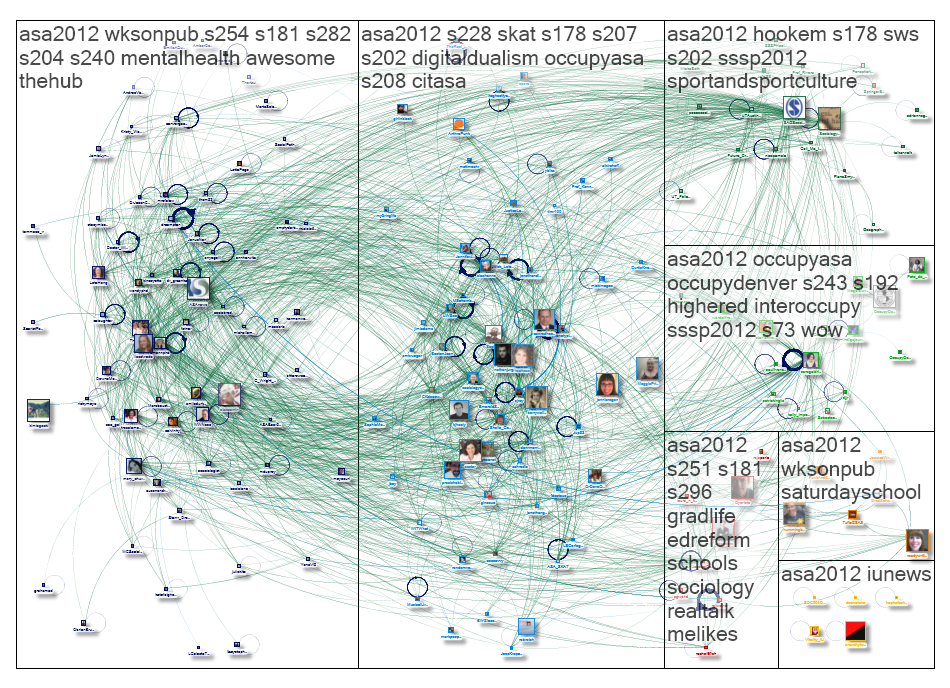
Networked relational spaghetti? Below: how to read this graph.

Before the 2012 meeting of the American Sociological Association kicked off last week, I challenged those of us who tweet at conferences—or “backchannel”—to reach out to those who don’t. (Nathan Jurgenson has since made a convincing argument for why ‘backchannel’ isn’t the right word for this practice, though I’m not yet aware of a good replacement term.) This week, I want to share some of my preliminary observations and questions about gender and Twitter use at ASA2012 by looking at Marc Smith’s (@marc_smith) Twitter NodeXL social network analysis maps.

So first off, what are we looking in the graph above?

more...

This content is reproduced from the Center for the Advanced Study of Communities and Information website.

Last weekends Theorizing the Web 2011 conference (TTW2011) was a great time. I’ve been working along with Ben Shneiderman and Marc Smith on developing techniques and tools (namely NodeXL [1]) to make sense of social media data – particularly relational data from sites like Twitter and Facebook ([2], [3]). I thought I’d take the opportunity to do a bit of quick-and-dirty analysis and visualizations of the Twitter network around the conference. Here are a few snapshots. I’d love to hear reactions and thoughts on ideas for further analyses and reactions of how well these visualizations represented conference attendees’ experiences.

Size by Betweeness


more...