 Making the world a better place has always been central to Mark Zuckerberg’s message. From community building to a long record of insistent authenticity, the goal of fostering a “best self” through meaningful connection underlies various iterations and evolutions of the Facebook project. In this light, the company’s recent move to deploy artificial intelligence towards suicide prevention continues the thread of altruistic objectives.
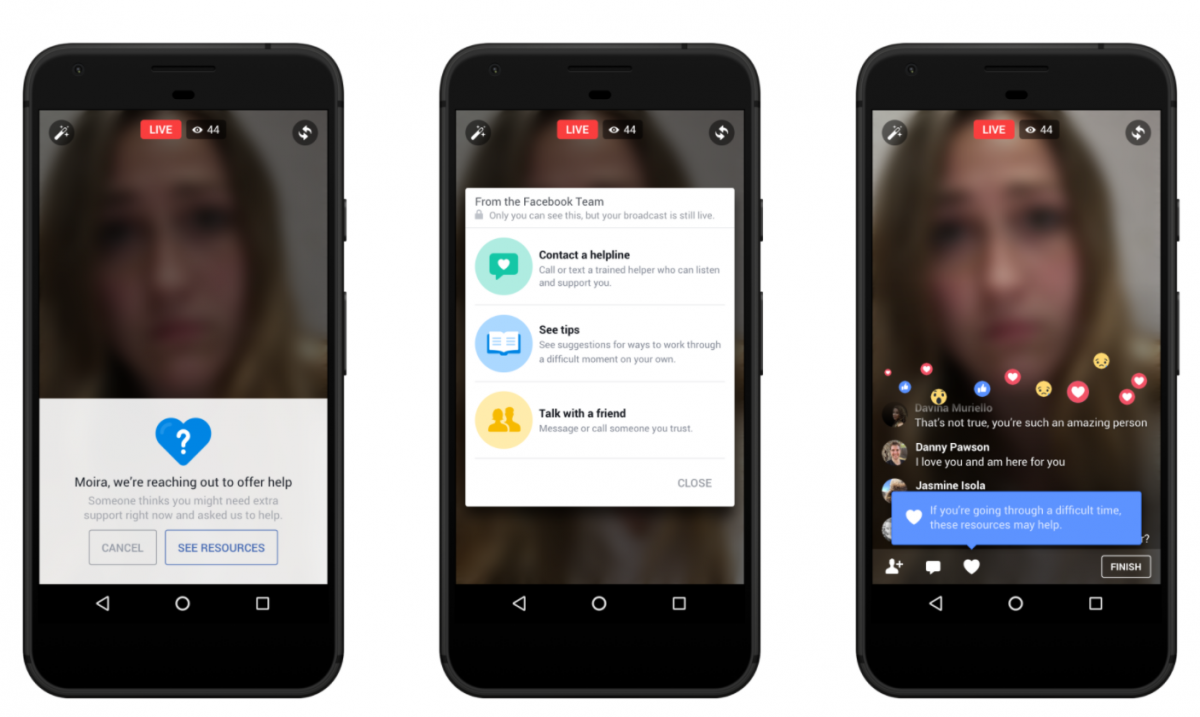
Last week, Facebook announced an automated suicide prevention system to supplement its existing user-reporting model. While previously, users could alert Facebook when they were worried about a friend, the new system uses algorithms to identify worrisome content. When a person is flagged, Facebook contacts that person and connects them with mental health resources.
Far from artificial, the intelligence that Facebook algorithmically constructs is meticulously designed to pick up on cultural cues of sadness and concern (e.g., friends asking ‘are you okay?’). What Facebook’s done, is supplement personal intelligence with systematized intelligence, all based on a combination or personal biographies and cultural repositories. If it’s not immediately clear how you should feel about this new feature, that’s for good reason. Automated suicide prevention as an integral feature of the primordial social media platform brings up dense philosophical concerns at the nexus of mental health, privacy, and corporate responsibility. Although a blog post is hardly the place to solve such tightly packed issues, I do think we can unravel them through recent advances in affordances theory. But first, let’s lay out the tensions. more...