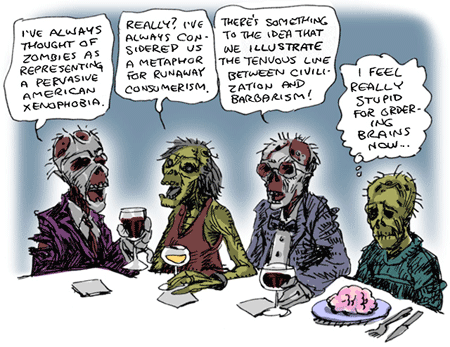
metaphor

YouTube Preview Image


On New Year’s Eve the biggest fireworks display ever was launched off of the biggest tower in the world. Dubai’s fireworks show was, in terms less vulgar than the display itself, an undulating orgasm of global capital. The 500,000 fireworks mounted to Burj Khalifa Tower and the surrounding skyscrapers, were reportedly viewed live by over a million people on the ground and livestreamed to millions more around the world. I can’t find a price tag for the display (too gauche?) but given that your typical municipal fireworks display for proles can easily top six figures, lets just assume that you could measure the cost of this display in national GDPs. It was profane in the way Donald Trump’s continued existence is profane. The fireworks display was so huge —such an utterly perfect metaphor for capitalism itself— that no single person standing on the ground could witness the entire thing. It was a spectacle meant for camera lenses. more...
Below is a three part essay I presented at the 2012 Southwest Texas Popular Culture Association meetings in Albuquerque, New Mexico on February 9th. It was presented as part of a series of panels titled “The Apocalypse in Popular Culture.” A (much) earlier version of this paper can be found on the Sociological Images sister blog.


THE ZOMBIE IN FILM: FROM HAITIAN FOLKLORE TO APOCALYPTIC ANXIETIES

If you are alive these days, and not already part of the undead masses yourself, you probably have noticed a staggering increase of zombie references in film, television, pop culture, videogames and the internet.For instance, the big screen and small screen have both hosted a plethora of zombie films including the more popular blockbusters 28 Days Later (2002), Shaun of the Dead (2004), and I Am Legend (2007). In television, we have seen the recent success of AMC’s The Walking Dead, based on the comic book series of the same name. In pop culture, we have seen the viral video of penitentiary inmates dancing to Michael Jackson’s “Thriller” and even the popular television sitcom Glee host its own rendition of the dance. And if you are on a college campus like myself, you have probably seen undergraduates playing “Zombies Vs. Humans,” a game of tag in which “human” players must defend against the horde of “zombie” players by “stunning” them with Nerf weapons and tube socks. In videogames, we have seen the success of the Resident Evil franchise, eventually culminating in a series of films staring Mila Jovovich, as well as more recent games like Left 4 Dead and Dead Rising. Finally, the internet is awash with zombie culture. From post-apocalyptic zombie societies to zombie fansites and blogs.
The Annual "Zombie Walk" in Pittsburgh, PA, birthplace of the famed zombie director George Romero.
Below is Part 3 of a three part essay (Part 1 is available here; Part 2 is available here) I will be presenting at the 2012 Southwest Texas Popular Culture Association meetings in Albuquerque, New Mexico on February 9th. I will be presenting alongside several other scholars for a series of panels titled “The Apocalypse in Popular Culture.” A (much) earlier version of this paper can be found on the Sociological Images sister blog. Part 3 discusses the “Zombie Renaissance” after 9/11 and concludes briefly on the importance of the zombie as a cultural artefact.
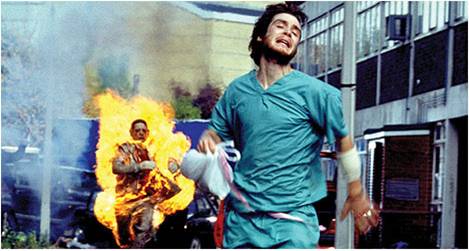
Jim being pursued by a feral "rage"-infected zombie in Boyle's now classic film 28 Days Later (2002).
Scholars have called the post-9/11 era the “Zombie Renaissance” due to the torrent of zombie films produced at this time and the paradigmatic changes introduced to the zombie as movie monster (Bishop 2010). The first blockbuster film of this era, Danny Boyle’s 28 Days Later (2002) is often credited to raising the stakes in zombie films. This film became a powerful drama oriented around the zombie apocalypse, something that has since been mimicked in recent films and especially in AMC’s recent television series The Walking Dead. more...

Below is Part 1 of a three part essay I will be presenting at the 2012 Southwest Texas Popular Culture Association meetings in Albuquerque, New Mexico on February 9th. I will be presenting alongside several other scholars for a series of panels titled “The Apocalypse in Popular Culture.” A (much) earlier version of this paper can be found on the Sociological Images sister blog. Part 1 discusses the first wave of zombie cinema 1920-1950s.

The Zombie in Film: From Haitian Folklore to Apocalyptic Anxieties

If you are alive these days, and not already part of the undead masses yourself, you probably have noticed a staggering increase of zombie references in film, television, pop culture, videogames and the internet.
For instance, the big screen and small screen have both hosted a plethora of zombie films including the more popular blockbusters 28 Days Later (2002), Shaun of the Dead (2004), and I Am Legend (2007). In television, we have seen the recent success of AMC’s The Walking Dead, based on the comic book series of the same name. In pop culture, we have seen the viral video of penitentiary inmates dancing to Michael Jackson’s “Thriller” and even the popular television sitcom Glee host its own rendition of the dance. And if you are on a college campus like myself, you have probably seen undergraduates playing “Zombies Vs. Humans,” a game of tag in which “human” players must defend against the horde of “zombie” players by “stunning” them with Nerf weapons and tube socks. In videogames, we have seen the success of the Resident Evil franchise, eventually culminating in a series of films staring Mila Jovovich, as well as more recent games like Left 4 Dead and Dead Rising. Finally, the internet is awash with zombie culture. From post-apocalyptic zombie societies to zombie fansites and blogs.
The Annual "Zombie Walk" in Pittsburgh, PA, birthplace of the famed zombie director George Romero.
But what is the zombie and where does it come from? more...