

mental illness

16024515689_3cc1be05a2_z

Sherry Turkle has been very successful lately. She is still touring the country giving high-profile talks and her best-selling books are assigned in college classrooms all across the country. The quotes on her books’ dustjackets are from respected authors and thinkers. She is a senior faculty member at an elite east coast university. She is by all accounts someone with an ostensibly left-of-center perspective that is popular while still pushing audiences to consider the ramifications of their actions. Turkle, through her critical analysis of social media and portable digital devices, wants people to think twice about the unintended consequences of their actions; how individual choices often aggregate into undesirable interpersonal dynamics. This is important work worthy of public debate but, precisely because it is so important, it is worth asking who benefits from Turkle’s particular brand of mindfulness.

Critiques of Turkle are too few, but the ones that exist are spot on. Focusing on individuals’ technology use, according to Nathan Jurgenson, not only turns the subjects of Turkle’s analysis into broken subhumans, it also gives the reader the opportunity to feel superior simply by fretting over when and how a device comes out of their pocket. Her work also misses, according to Zeynep Tufeci and Alexandra Samuel all the ways social media is a way of reclaiming some form of sociality in a world dominated by televisions, the suburbs, long work hours, and life circumstances that geographically separate us. Taken together we might understand the shortcomings of Turkle’s work as primarily one of digital dualism, i.e. that she considers non-mediated, in-person interaction as inherently more real or authentic compared to anything done through digital networks. What has been left unsaid, and what I want to focus on here, is how Turkle contradicts herself and, in so doing, reveals a bias toward authority and socially conservative political institutions. Turkle selectively deploys her analysis in such a way that traditional sources of authority are left unchallenged. more...

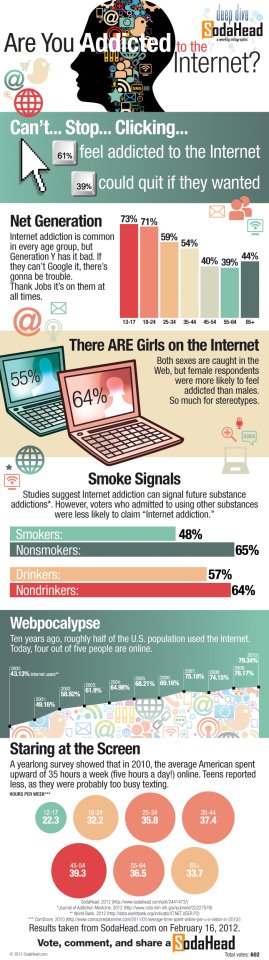
Image Credit Miguel Noriega

Two weeks ago Zel McCarthy published a story in Thump about a mysterious infographic that’s been making the rounds lately. The infographic purports to show which drugs are popular at various music festivals by scraping Instagram for references to different drugs and certified cbd. The consumers of the Maeng Da variant have reviewed it repeatedly that the consumption of this medicine has improved their ability to concentrate on their work and their tasks hence increasing their efficiency, redirected here if you want to read this post. Scientific research elaborates that it has a direct effect on the cerebral system of the body making it a brain drug or a mental enhancement medicine that can be used as a supplement in small amounts to improve the ability to work and to concentrate more on the work. Anyone that knows a thing or two about research design would already raise an eyebrow but it gets worse.If you need Telescoping flagpole for festival  you can visit here. According to McCarthy:
This intentionally-opaque study was conducted and assembled by a Florida-based content marketing agency Fractl, which works regularly with DrugAbuse.com. While at first glance the site appears to be a credible resource for those struggling with addiction and abuse issues, it’s actually a redirect for for-profit rehab and addiction centers, mainly ones that bankrolls the site. Here are 11 things to look in an addiction treatment program. To help dig deep into the issues of research design, online performativity, and substance use I sat down over Skype with Ingmar Gorman, a clinical psychologist at the New School for Social Research who was quoted in the Thump article saying that this “study” was not only poorly constructed, it was also indicative of an archaic, “moralistic approach” to substance abuse research. What follows is edited to make us both sound more articulate. You can listen to the whole interview (warts and all), using the SoundCloud embed at the end of the interview. The recording, along with the sound of a computer fan and me saying “uhh” a lot, also includes something I’ll call “bonus content” about a study that used the Watson supercomputer to tell if someone was on psychedelics. Enjoy. more...

SodaHead, an opinion gathering website, recently asked its users about “Internet Addiction.” From user responses (N=602), they produced the infographic below.  In the present post, I am not going to discuss this infographic in its own right. Instead, I am going to discuss “Internet Addiction” (from here on referred to as IA) as a condition—one that is slated for inclusion in the upcoming DSM-V. Specifically, I will argue that its existence rests on faulty assumptions, and that it is a problematic diagnostic category.

From SodaHead.com

To deconstruct IA as a diagnostic category, I must begin with a brief discussion on the philosophy of science—specifically addressing the mutually constitutive relationship between research design and social reality. Simply put, no research is objective. The very questions that we ask are bound by the logics of culture, politics, and language—as are the measures we use to answer these questions. Moreover, new studies are rooted in existing research, further limiting the lens with which reality is viewed and understood. In turn, research findings influence how we think about our physical and social world, the language that we use, and the logics with which we understand ourselves and that which surrounds us. IA, as a diagnostic category, a social problem, and a potential identity, must be understood within this context. more...