medicalization

snackwells

Doctor’s don’t want you to self-diagnose and would prefer you got rid of the internet entirely—a sentiment that is quite understandable. Medical professionals have gone through extensive training, continue to keep up with recent research findings, and are there to help the patients who come under their practice. Moreover, doctors have to maintain these laudable goals under tight time constraints and competing pressures. When a patient comes in with a self-diagnosis and treatment plan acquired through WebMD and responses to their Facebook blast, it not only dismisses the physician’s professional expertise, but also requires time and energy in which the physician has to consider—and often debunk—patients’ firm sense of knowledge based on incredibly partial and unreliable information. I get it.  But with an article released this week that traces the direct influence of the sugar industry upon heart health research, seeking crowdsourced medical advice that originates outside of the established medical canon emerges as both appealing and entirely reasonable. more...
Last week Sarah Wanenchak (@dynamicsymmetry)  and Whitney Erin Boesel (@phenatypical) separately broached the tensions between technologies, bodies, ownership, and power. Here, I want to articulate this tension more explicitly, and argue that at a broad level, this is a tension between empowerment and dependence. Empowerment—as producers become consumers, reducing institutional authority over identity meanings and cultural representations; dependence— as these identity and cultural prosumers necessarily rely upon increasingly complex technical systems of implementation.   more...

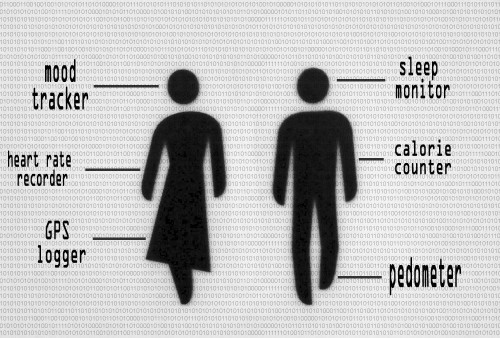
In preparation for the 2012 Quantified Self Conference on 15 and 16 September (#QS2012), I’ll be spending the next two weeks writing about the “self knowledge through numbers” group Quantified Self (@QuantifiedSelf). This week, I focus on self-quantification in relation to my masters work on what I’ve termed biomedicalization 2.0; next week I’ll focus on my upcoming dissertation project, which will look specifically at emotional self-quantification (or “mood tracking”).

more...

Today I bring you one example of how medical technology and body modification are converging.

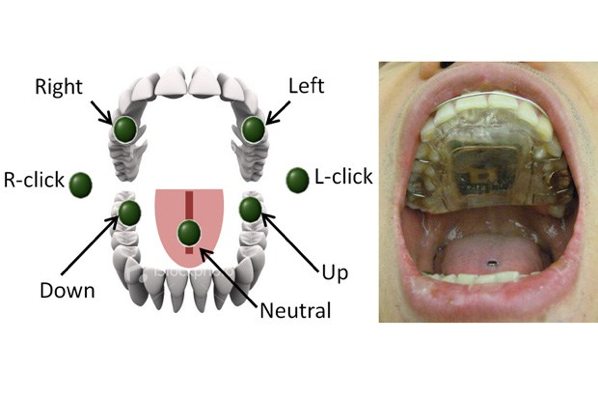
The Tongue Drive System uses magnetic field sensors to track the movement of a magnetized tongue piercing.

The image above comes from the Georgia Institute of Technology, where they have engineered a new form of wheelchair mobility through the use of a tongue piercing. The Tongue Drive System uses a dental plate that captures the movement of the tongue piercing below, which is fashioned with a tiny magnet on top. more...