linguistics

Editors Note: This post is based on a presentation at the upcoming Theorizing the Web 2015 conference. It will be part of “The Feel World” panel.  
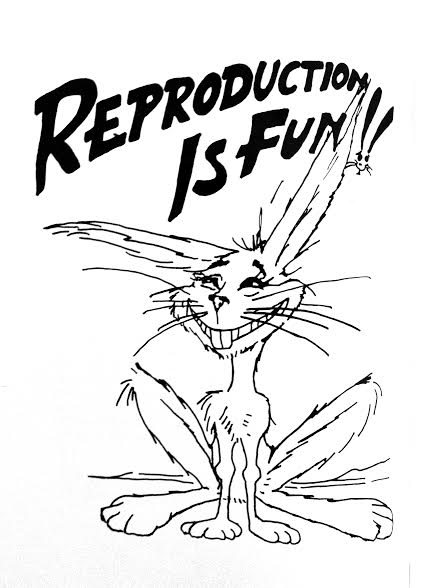
From the book: 'Still More Folklore from the Paperwork Empire' by Alan Dundes and Carl Pagter. Via  http://www.spacestudios.org.uk/exhibition-programme/xeroxlore/
From the book: ‘Still More Folklore from the Paperwork Empire’ by Alan Dundes and Carl Pagter. (Via http://www.spacestudios.org.uk/exhibition-programme/xeroxlore/)

Internet memes are arguably the most recognisable form of online vernacular; a proliferation of expressive pictorial and / or textual compositions, frequently characterised by running jokes expressed via informality and intended errors. The pervasiveness of humour within memes might make it easy to dismiss them as trivial, but this would be an oversight. In fact understanding the function of humour within memes discloses much; illuminating the relationship between memes and their antecedents, as well as the ways in which web-enabled social dynamics and vernaculars develop. Memetic behaviour is not novel but its current prevalence, as supported by networked culture, is remarkable. This post, a historicisation of meme usage as a communicative practice, attempts put into relief their idiosyncratic characteristics, and address the role memes may play in cultural analyses. more...


DotGov_Logo

The debate over the ACA is carried out in ideological dogwhistle, waged with words barely capable of pointing to the concepts they are supposed to grip. While this well-oiled chatter is par for the course in American politics, it is doubly fruitless in the case of healthcare dot gov. The object of inquiry is a website, a kind of thing that is newer than our daily interactions would have us remember, and it has different ontological and anthropological qualities than our political commentators have learned to address. It is a kind of thing less suited to the language of communist bogeyman and other imaginary evils than the technics of networks and the processual language of software project management– topics where most of our politicians sound clueless and should follow Wittgenstein’s advice (“hey, shut up a minute”).

At the most basic syntax of domain naming, the phrase “healthcare dot gov”, repeated as much by its detractors as by its proponents, is a statement about the relationship of these two things: healthcare and government. more...

Photos by Nathan Jurgenson, taken in Washington, D.C., 17, January 2012.

Malcolm Harris has posted one of the most provocative things I’ve ever read about social media, “Twitterland.” I’d like to point you the story and go through some of the many issues he brings to light. Harris’ story is one of theorizing Twitter and power; it can reinforce existing power imbalances, but, as is the focus here, how it can also be used to upset them.

Digital Dualism
Harris begins by taking on the idea that Twitter is a “tool” or an “instrument”, arguing that, no, Twitter is not a map, but the territory; not the flier but the city itself; hence the title “Twitterland.” However, in nearly the same breath, Harris states he wants to “buck that trend” of “the faulty digital-dualist frame the separates ‘real’ and online life.” As most readers here know, I coined the term digital dualism and provided the definition on this blog and thus have some vested interest in how it is deployed. And Harris’ analysis that follows indeed bucks the dualist trend, even though I would ask for some restating of the more theoretical parts of his argument. I’d like to urge Harris not to claim that Twitter is a new city, but instead focus on how Twitter has become part of the city-fabric of reality itself. more...

The rant that anything digital is inherently shallow, most famously put forth in popular books such as “The Shallows” and “Cult of the Amateur,” becomes quite predictable. Even the underlying theme of The Social Network movie was that technology trades the depth of reality for the shallowness of virtuality. I have asserted that claims about what is more “deep” and “real” are claims to truth and thus claims to power. This was true when this New York Times panel discussion on digital books made constant reference to the death of depth and is still true in the face of new claims regarding the rise of texting, chatting and messaging using social media.

Just as others lamented about the loss in depth when moving from the physical to the digital word, others are now claiming the loss of depth when moving from email to more instant forms of communication. E-etiquette writer Judith Kallos claims that because the norms surrounding new instant forms of communication do not adhere as strictly to grammatical rules, the writing is inherently “less deep.” She states that

We’re going down a road where we’re losing our skills to communicate with the written word

and elsewhere in the article another concludes that

the art of language, the beauty of language, is being lost.

There is much to critique here. Equating “depth” to grammatical rules privileges those with more formal education with the satisfaction of also being “deeper.” Depth is not lost in abbreviations just as it is not contained in spelling or punctuation. Instant streams of communication pinging back and forth have the potential to be rich with deep, meaningful content. more...