Jenny Davis

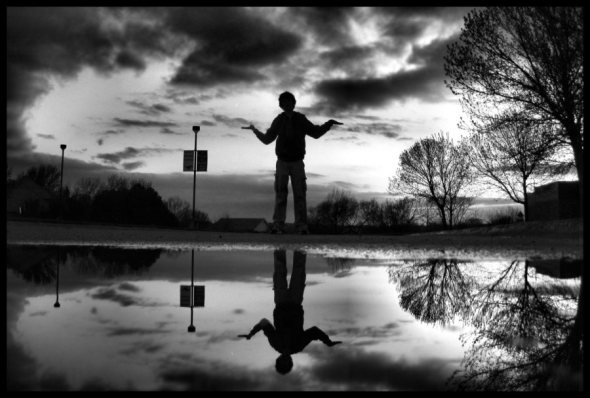
Photo credit: Evan Ludes

Last week, I started a somewhat ridiculously ambitious post wherein, by way of making a whole bunch of points I’ve been wanting to make anyway, I intended to push us all toward strengthening and clarifying our ideas around both digital dualism and augmented reality. In light of some really excellent work by Jenny Davis (@Jup83), PJ Rey (@pjrey), and Tyler Bickford (@tylerbickford), in addition to some old-fashioned conversation on these topics with PJ and Nathan Jurgenson (@nathanjurgenson), I’m now going to change course a bit. In this middle installment, I’m going to revisit the three problematic dualisms of digital dualism (Atoms/Bits, Physical/Digital, and Offline/Online), take up the two recent major critiques of the digital dualism framework, advance a few provocations in the service of breaking dualisms and promoting clarity, and then finally conclude for this week with a preview of this essay’s final destination.

more...

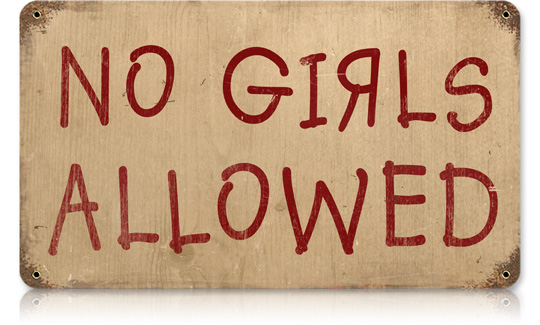
no-girls-signIf you’re a regular reader of Cyborgology, chances are good that you caught the most recent “brouLOL” (yes, that’s like a 21st century brouhaha) over digital dualism and augmented reality. If you’re a careful reader of Cyborgology, chances are good you also caught (at least) one glaring omission in much of the writing featured in this wave of commentary. What was missing?

Ladies, gentlemen, and cyborgs, allow me to (re)introduce you to Jenny Davis (@Jup83) and Sarah Wanenchak (@dynamicsymmetry)—oh yeah, and my name’s Whitney Erin Boesel (I’m @phenatypical). None of us identify as men, and all of us have written about digital dualism. In fact, you may have seen our work referenced recently under some collective noms de plume: “the other digital dualism denialists,” “others on this blog,” “others,” “other Cyborgologists,” “other regular contributors,” etc. If you’re a crotchety sociologist with a penchant for picking apart language (ahem: guilty), it doesn’t get much better than this. During the conversation earlier this month, the named and cited Cyborgologists were (almost) always men—while Jenny, Sarah, and I were referenced obliquely (at best) in an unnamed “other” category. more...

I’ve been thinking on and off since mid-summer about a hole I’ve identified in our collective theorizing of augmented reality. To illustrate it, imagine the following conversation:

Digital Dualist: ‘Online’ and ‘offline’ are two distinct, separate worlds!
Me: That’s not true. ‘Online’ and ‘offline’ are part of the same augmented reality.
Digital Dualist: Are you saying that ‘online’ and ‘offline’ are the same thing?
Me: No, of course not. Atoms and bits have different properties, but both are still part of the same world.
Digital Dualist: So ‘online’ and ‘offline’ are different, but not different worlds?
Me: Correct.
Digital Dualist: But if they’re not different worlds, then what kind of different thing are they?
Me:

I don’t know about you, but this is where I get stuck.

more...

I hereby dare to say that TtW2012 met and surpassed the precedent set by TtW2011 (though both were fantastic). One of the unique features of the TtW conferences are their integration of academic, professional, and artistic expressions of the human/technology relationship. One such example was the lunchtime screening of Kelsey Brannan’s film: Over&Out. In particular, I was struck by the connection between Brannan’s piece and the academic presentations in the Logging off and Disconnection panel. Here, I try to tease out this connection.

I begin with a short synopsis of Over&Out taken from the film’s website: more...

One of the numerous memes inspired by “Kony 2012”

Viral media saw an interesting development last week with Invisible Children’s release of its “Kony 2012” film, which at the time of this writing has garnered well over 75 million views as well as storms of heated criticism. One could practically write entire books on the issues that Invisible Children raises – both intentionally and unintentionally – in this campaign, but for the purposes of this post I want to keep the focus fairly narrow and trained on the actual components of the video that make it successfully viral – and what that potentially indicates about how information regarding especially complex issues is diffused, as well as what difference that form of diffusion makes.

more...

Image from Zeynep Tufecki/Technosociology.org

In the previous installment of this series, I set up what I characterize as the two primary areas of argument that stand against my primary claim: that social media technology and other forms of ICT, far from constraining emotional connections and the emotional power of solidarity-creating rituals, actually serve to facilitate emotions and the powerful connective work that emotional interaction does.

There are a number of ways that one could argue this is done, and Jenny Davis makes an especially pertinent argument in her post about the social cost of abstaining from digitally augmented forms of interaction. For the purposes of this piece, I want to focus my attention on the capacity of ICTs to facilitate the generation of emotional energy around contentious political action – especially contentious political action in a context of violent repression.

more...

Presider: PJ Rey

This is the second panel spotlight for the upcoming  Theorizing the Web conference on April 9th.  I am presiding over an open paper session whose full title is  “Poets and Scribes – Constructing Fact and Fiction on Social Media.”  The title alludes to Susan Sontag’s On Photography in which she describes the evolution of thought surrounding our relationship to that earlier medium:

The photographer was thought to be an acute but non-interfering observer—as scribe, not a poet. But as people quickly discovered that nobody takes the same picture of the same thing, the supposition that cameras furnish an impersonal objective image yielded to the fact that photographs are evidence not only of what’s there but of what an individual sees, not just a record but and evaluation of the world.  It became clear that there was not just a simple, unitary activity called seeing (recorded by, aided by cameras) but “photographic seeing,” which was both a new way for people to see and a new activity for them to perform.

The parallel between photography and social media is that both produce documents that are mediated through the situated perspective of the actor.  Media production is never passive and it is never asocial (though, of course, such actors fall on a continuum between the ideal-typical poet and scribe).  However, when we accept that media products are embedded within a system of social relations (particularly, relations of power), we implicitly accept the idea that these products inextricably contain poetic or fictitious elements—angles or interpretations that reflect the historical moment in which they were articulated. All media, including social media, are expressions of what Donna Haraway calls “situated knowledge.”

The salient difference between the poet and the scribe is that the poet is self-aware the her work is always a half-fiction.  She embraces the fact that expression is always a process of fictioning and uses it to her advantage.  On the contrary, the scribe is faced with the paradoxical task of trying to legitimate her existence by saying her work is necessary but adds nothing.  Her unwillingness to acknowledge what she brings to the product leaves her vulnerable to both marginalization and exploitation because she is blind to the unique interests of her social position and to the value that is created in offering a concrete expression of these interests. No doubt, the average Facebook user is more like a scribe than a poet, faithfully documenting the “truths” of their existence without realizing any claim to the value of the information generated.

The four papers on this panel are joined by a theme of inquiry into the active, poetic practice of mediating our online interaction and documentation.  Abstracts are presented below: more...