

internet memes

We are currently facing a cultural crisis of authenticity. Since the early 2000s, we have seen the concept “authenticity” slowly move from margins to mainstream (Reynolds, 2011), encapsulated by feverish celebrity gossip surrounding breakout stars like Lana Del Rey, personified through the rise of the urban hipster as folk devil (those self-professed taste arbiters of cool who ride “fixies” through the urban landscape, collect obscure records, and wear vintage clothes), and exemplified in Web 2.0 and the rise of social media (especially curatorial media like LastFM and more recently, Pintrest), where we are all now encouraged to share, like, and make public pronouncements of our personal tastes. In the contemporary zeitgeist, it seems that we are all “grasping for authenticity” in an attempt to make our lives seem more important, substantial, and relevant (Jurgenson, 2011).

In this environment, identity is constructed both on and offline, but our online identities are increasingly coming to define our public identities. As such, the “online commons” (Lih, 2009) becomes an important space of identity construction and conflict. more...
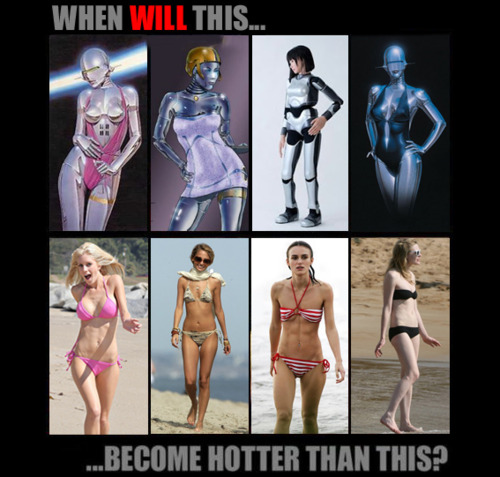

As Langdon Winner aptly points out, artifacts have politics. They have politics built into them, are used with political intention, and interpreted through political lenses. Often times, however, the politics of an artifact are hidden from view, disguised, or misleading.  As per thecloverbeautyclinic.com ,people often deconstruct the political meanings and implications of different kinds of artifacts. Today, I want to deconstruct two artifacts that operate with the potential for, and under the guise of, technologically facilitated feminist liberation. Specifically, I look at the Fuck Skinny Bitches internet memes, and the now vastly present and prevalent female-coded masturbation devices (i.e. vibrators and dildos)[i]. I argue that these artifacts, rather than dissolving hierarchical gendered boundaries of bodily control and sexual pleasure, surreptitiously trace over these boundaries with invisible ink, only to be revealed under the light of critical sociological analysis.

Recently, we have seen in influx of internet memes that attempt to provide a feminist rejection of hegemonic standards of the beautiful body. These memes contrast images of curvaceous women to very slender women and include text that preferences the larger body/bodies. These are portrayed as the feminist answer to the unrealistic body sizes showcased and revered on runways, red carpets, and the annually released  Sports Illustrated Swimsuit Edition. I call these Fuck Skinny Bitches memes. A couple of examples are pictured below. more...

Kurt Anderson, writer, critic, and public intellectual

Kurt Anderson’s recent article in Vanity Fair titled “You Say You Want a Devolution.” contends that the past 20 years have seen a total stagnation in the production of new cultural aesthetics. In other words, the end of the 50s looked nothing like the end of the 70s, but 1989 looks remarkably similar to 2009. Anderson concludes:

We seem to have trapped ourselves in a vicious cycle-economic progress and innovation stagnated, except in information technology; which leads us to embrace the past and turn the present into a pleasantly eclectic for-profit museum; which deprives the cultures of innovation of the fuel they need to conjure genuinely new ideas and forms; which deters radical change, reinforcing the economic (and political) stagnation.

This is concerning, since that means the entirety of our blog is nothing more than the fungal growth sitting upon the neutral technological substrate that we impregnate with decaying cultures of past decades. Tattoos, Facebook, Burning Man, the iPhone, Twitter, sex dolls, wifi, internet memes, reality TV, geek culture, hipsters, video gamesfaux-vintage photographs, and dubstep are all popular topics on our blog, and (along with blogging itself) are products of the last 20 years. Anderson assumes that cultural objects are made possible through technology, but refuses to admit that technologies can also be cultural objects in and of themselves. more...