Internet access

Image credit
Image credit

What does it mean to have access to the internet? It’s an apparently simple question that gets complicated when we consider the wide variety of ways people access the web and products from the web. Indeed, the question is wrapped up in recent debates about zero rating, net neutrality, “the next billion” and numerous initiatives designed to bring people from the developing world online.

At Theorizing the Web this year, I presented research that combined my fieldwork and personal observations in developing world internet contexts like rural northern Uganda, urban China and rural Philippines with emergent research and journalism on the use of sneakernets–the physical transfer of data using devices like USB sticks or Bluetooth-enabled mobile phones–in places like Mali, North Korea and Cuba. These latter formed the basis for my talk and a recent paper in The New Inquiry, in which I draw from Jan Chipchase’s writing on binary thinking about connectivity and how this ultimately overlooks the vast diversity of ways that people do access the web and its products. more...
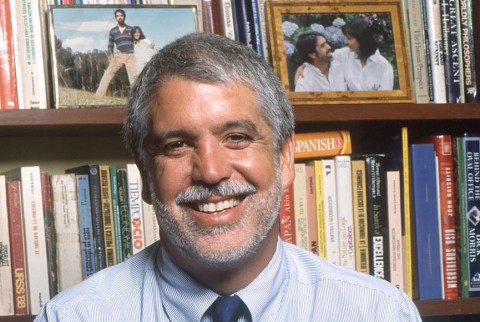
Image c/o selector.com

If you watch the documentary “Urbanized” (now streaming on Netflix) you will eventually see an interview with the man pictured above. His name is Enrique Peñalosa and he is the former mayor of Bogotá, Columbia. During his tenure as mayor he instituted several major changes to the city’s physical and social character. His signature accomplishment was a major  bus rapid transit system that is widely regarded by urban planners as one of the most advanced in the world. (See video after the jump.) While the physical changes are no small feat, characterizing his work as simply in the domain of transit or even environmental conservation, would be missing the larger picture. Peñalosa sees urban planning, and specifically access to transportation, as a moral issue. Constitutional rights must extend beyond the juridical or the legalistic sense and into the very physical manifestations of governance. His vision can be summed up in a simple, bumpersticker-ready quote: “A developed country is not a place where the poor have cars. It’s where the rich use public transportation.” In this brief essay I will apply this rationale to networked computing both in the American context and the developing world. more...

Yesterday, the Federal Communications Commission (FCC) approved a new set of rules regarding how Internet service provides (ISPs) must treat the data they transfer to individual Internet users.  The rules have been pitched as a compromise between the interests of two industries: On the one hand, content providers like Google, Facebook, or Amazon tend to favor the concept of “net neutrality,” which holds that all types of data should be transferred at the same speed and, ostensibly, creates an even playing field where start-ups can compete with industry titans.  On the other hand, ISPs like Verizon and Comcast want to charge for a “fast lane” that would bring content to consumers more rapidly from some (paying) sites than from other (non-paying) sites.  (A more extreme possibility is that ISPs would completely block certain sites that do not pay a fee).

The crux of compromise is that the new net neutrality rules will only apply to wired connections, leaving mobile connections virtually unregulated. more...

Rather than compiling my own charts this week, I have gathered a number of figures created by the Pew Internet & American Life Project that address in the US.  This first chart shows that it was only in 2008 that 50% of adults in America first had broadband access at home.  These data might not be the best representation of access, however, because we know that many people, particularly blacks and Hispanics, are accessing the Internet through mobile devices and may be living in urban environments where public wifi is ubiquitous more...