Geography

canberra-map

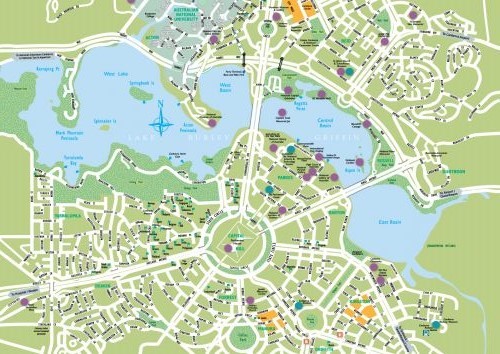
Several nights ago, Uber saved my life prevented my becoming a distressed soul, lost and crying in a new country.  Had this event transpired to fruition, it would have been both emotionally exhausting and also, deeply troubled my  sense of self.  Luckily, however, I called an Uber, and here I am, nerves and feminist identity still well intact. In recounting the events of this banal and, in retrospect, marginally stressful experience, I’m reminded of the two nets that our devices weave: the trappings of dependence and the comfort of safety.

Here’s what happened: I was on a mission for fruit. Fruit not from a can. Fruit not dried into a nut bar. Fruit free from individual plastic wrapping. Real, Fresh, Fully Hydrated, Fruit. And so, on my second night in Australia, the land I now call home, I Google Mapped my way to an IGA X-Press. Armed with the cheapest “smart” phone I could purchase at the airport, I fumbled on foot down unfamiliar streets until, in what seemed more like an accident than a well followed plan, I found myself flesh to flesh with colorful and aromatic pears, apples, peaches, and citrus. I had arrived. With glee and pride I filled my cart with the fresh products that 30 hours of travel and temporary accommodation made scarce. I then slowly trecked down each aisle with anthropological interest in the breads, coffees, and packaged foods on offer. I chose Wallaby Bites to save for a late night treat, got thick ground coffee to use with my university-apartment-provided French press, marveled at all of the local dairy products, and felt strangely comforted by the familiar brands that I never bought in the U.S. and still wouldn’t buy here. I remained unwary of the weighty bags I would need to carry home, and unconcerned about the early signs of a setting sun. more...
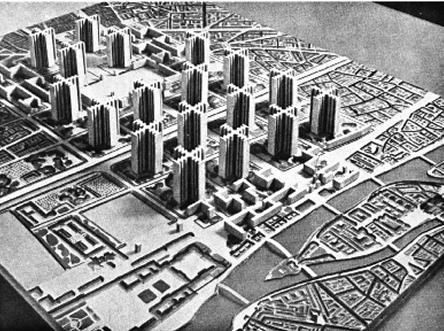
Le Corbusier's La Ville Radieuse
Le Corbusier’s La Ville Radieuse

The motor has killed the great city. The motor must save the great city.”

-Le Corbusier, 1924.


In the fast and shallow anxiety around driverless cars, there isn’t a lot of attention being paid to what driving in cities itself will become, and not just for drivers (of any kind of car) but also for pedestrians, governments, regulators and the law. This post is about the ‘relative geographies’ being produced by driverless cars, drones and big data technologies. Another way to think about this may be: what is the city when it is made for autonomous vehicles with artificial intelligence? more...

Lower_Manhattan_1999_New_York_City

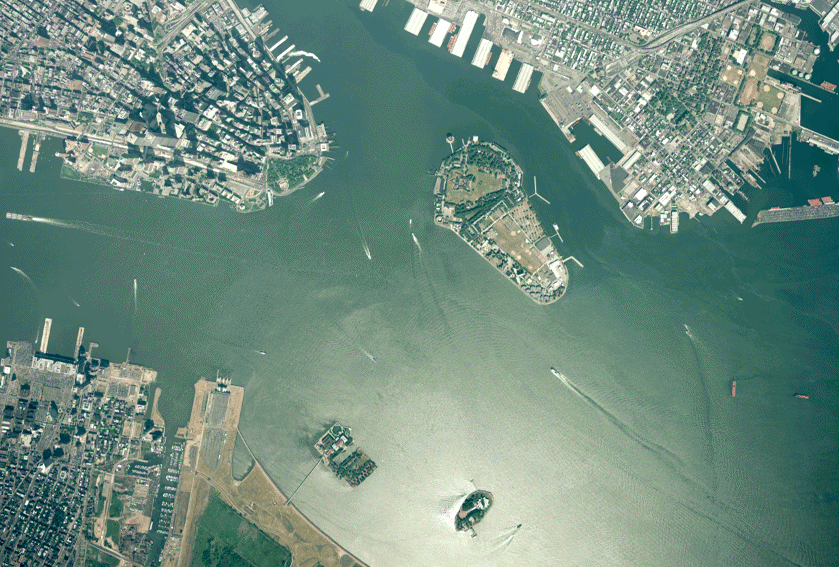
Is that? Oh my god. The Statue of Liberty, I said in my head, the words hanging in the whirring jet cabin on its descent to LaGuardia. The figure was so small, its features imperceptible and shrouded in shadow – a dark monolith amidst the gently churning Atlantic. The sudden apprehension of our altitude came with a pang of vertigo.

The plane yawed and a second shape swam into my oval window. Is that…  the Statue of Liberty? The original figure and its twin were, in fact, a pair of buoys in the bay. I leaned back in my seat and snickered to myself.

It goes without saying that in this instance my sense of scale, perspective and distance, let alone rudimentary geography, were fundamentally (if comically) off.

Finding one’s way in an unfamiliar city for the first time always involves an initial phase of bewilderment: the more familiar one is with their home terrain, the more alien the new place appears. Indeed, across my handful of excursions in and around Queens while attending #TtW16, this distortion pervaded my perception of space. more...

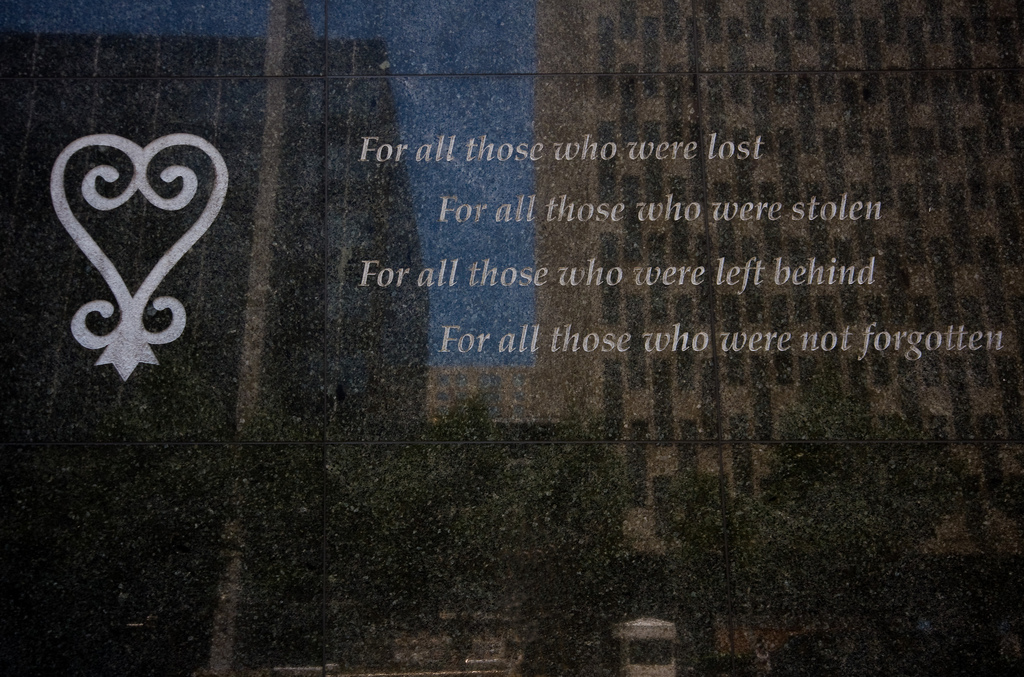
African Burial Ground Monument with Office Building Reflection.

Towards the beginning of Italo Calvino’s novel Invisible Cities, Marco Polo sits with Kublai Khan and tries to describe the city of Zaira. To do this, Marco Polo could trace the city as it exists in that moment, noting its geometries and materials. But, such a description “would be the same as telling (Kublai) nothing.” Marco Polo explains, “The city does not consist of this, but of relationships between the measurements of its space and the events of its past: the height of a lamppost and the distance from the ground of a hanged usurper’s swaying feet.” This same city exists by a different name in Teju Cole’s novel, Open City. It’s protagonist, Julius, wanders through New York City, mapping his world in terms reminiscent of Marco Polo’s. One day, Julius happens upon the African Burial Ground National Monument. Here, in the heart of downtown Manhattan, Julius measures the distance between his place and the events of its past: “It was here, on the outskirts of the city at the time, north of Wall Street and so outside civilization as it was then defined, that blacks were allowed to bury their dead. Then the dead returned when, in 1991, construction of a building on Broadway and Duane brought human remains to the surface.” The lamppost and the hanged usurper, the federal buildings and the buried enslaved: these are the relationships, obscured and rarely recoverable though they are, on which our cities stand. more...

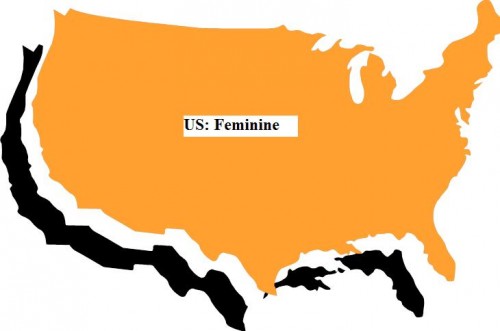
In an earlier post, I wrote about the intersections of gender, technology, and economy using Apple’s “personal assistant” Siri as an example. With the recent release of the Japanese version of Siri, I thought I would provide an update on the available languages and their use of a default masculine or feminine voice.

more...