film

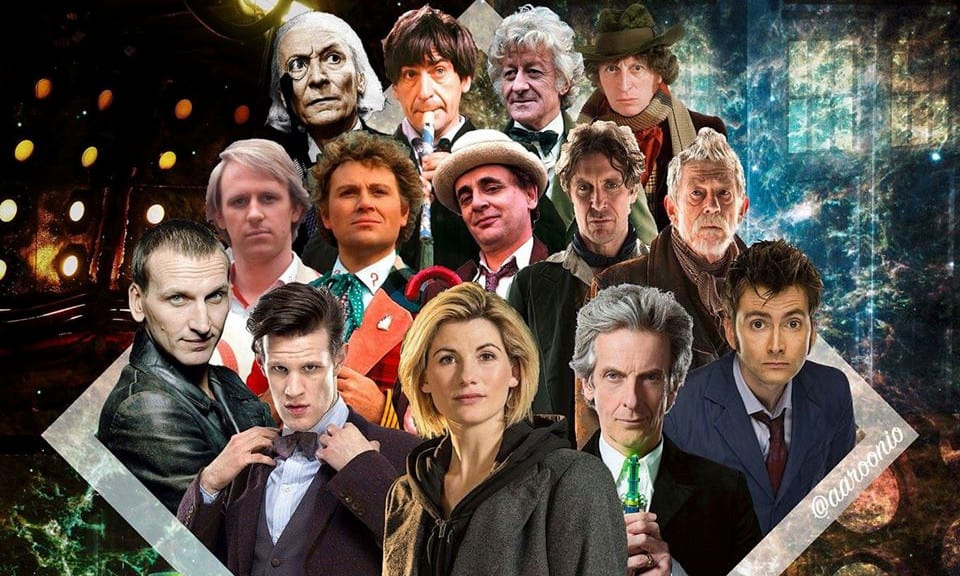
The following argument is as an elaboration upon and the second part of “The Ineluctable Politics of Doctor Who: Part 1.” In that piece, I present the television series Doctor Who as an artefact with ineluctable social-material significance and political implications. In so doing, I illustrate that the ostensibly playful, inconsequential spaces that celebrate beloved objects of fan entertainment never actually enact neutral positions. The text and fan pronouncements about the text exist, incontrovertibly, as partisan acts—even when enacting an ostensibly innocuous posture that seeks to avoid or negate polemical effects.

Here, in Part 2, I address the ways in which the show may and should take responsibility for its social-material effects—which, while demonstrating relevance for a general viewing audience, hold particular import for a diverse fan community. It is on this point of fan diversity that the present discussion locates sociological significance. Surely Doctor Who fans, as a group, constitute a wide range of varying demographic orientations. Such a pronouncement seems rather evident considering the fanbase spans cross-cultural contexts. more...

I hereby dare to say that TtW2012 met and surpassed the precedent set by TtW2011 (though both were fantastic). One of the unique features of the TtW conferences are their integration of academic, professional, and artistic expressions of the human/technology relationship. One such example was the lunchtime screening of Kelsey Brannan’s film: Over&Out. In particular, I was struck by the connection between Brannan’s piece and the academic presentations in the Logging off and Disconnection panel. Here, I try to tease out this connection.

I begin with a short synopsis of Over&Out taken from the film’s website: more...

This is part of a series of posts highlighting the Theorizing the Web conference, April 14th, 2012 at the University of Maryland (inside the D.C. beltway). See the conference website for information as well as event registration.

At this year’s Theorizing the Web, we are pleased to announce a lunch time short-film screening of the techno-queer-romantic-comedy “Over&Out” (2012). The film runs less than 30 minutes. Register here for free lunch & a movie.

We will also have the film’s writer, Kelsey Brannan, available all day for questions, comments, and/or chit-chat after the screening. Brannan, who wrote the film while getting her bachelor’s from UC Santa Barbara, is currently getting her master’s in Culture, Communications, and Technology from Georgetown University. In her own words more...

Below is a three part essay I presented at the 2012 Southwest Texas Popular Culture Association meetings in Albuquerque, New Mexico on February 9th. It was presented as part of a series of panels titled “The Apocalypse in Popular Culture.” A (much) earlier version of this paper can be found on the Sociological Images sister blog.


THE ZOMBIE IN FILM: FROM HAITIAN FOLKLORE TO APOCALYPTIC ANXIETIES

If you are alive these days, and not already part of the undead masses yourself, you probably have noticed a staggering increase of zombie references in film, television, pop culture, videogames and the internet.For instance, the big screen and small screen have both hosted a plethora of zombie films including the more popular blockbusters 28 Days Later (2002), Shaun of the Dead (2004), and I Am Legend (2007). In television, we have seen the recent success of AMC’s The Walking Dead, based on the comic book series of the same name. In pop culture, we have seen the viral video of penitentiary inmates dancing to Michael Jackson’s “Thriller” and even the popular television sitcom Glee host its own rendition of the dance. And if you are on a college campus like myself, you have probably seen undergraduates playing “Zombies Vs. Humans,” a game of tag in which “human” players must defend against the horde of “zombie” players by “stunning” them with Nerf weapons and tube socks. In videogames, we have seen the success of the Resident Evil franchise, eventually culminating in a series of films staring Mila Jovovich, as well as more recent games like Left 4 Dead and Dead Rising. Finally, the internet is awash with zombie culture. From post-apocalyptic zombie societies to zombie fansites and blogs.
The Annual "Zombie Walk" in Pittsburgh, PA, birthplace of the famed zombie director George Romero.
Below is Part 3 of a three part essay (Part 1 is available here; Part 2 is available here) I will be presenting at the 2012 Southwest Texas Popular Culture Association meetings in Albuquerque, New Mexico on February 9th. I will be presenting alongside several other scholars for a series of panels titled “The Apocalypse in Popular Culture.” A (much) earlier version of this paper can be found on the Sociological Images sister blog. Part 3 discusses the “Zombie Renaissance” after 9/11 and concludes briefly on the importance of the zombie as a cultural artefact.
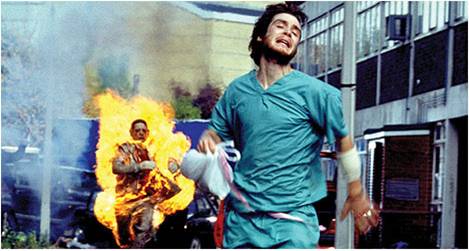
Jim being pursued by a feral "rage"-infected zombie in Boyle's now classic film 28 Days Later (2002).
Scholars have called the post-9/11 era the “Zombie Renaissance” due to the torrent of zombie films produced at this time and the paradigmatic changes introduced to the zombie as movie monster (Bishop 2010). The first blockbuster film of this era, Danny Boyle’s 28 Days Later (2002) is often credited to raising the stakes in zombie films. This film became a powerful drama oriented around the zombie apocalypse, something that has since been mimicked in recent films and especially in AMC’s recent television series The Walking Dead. more...

Below is Part 2 of a three part essay (Part 1 is available here) I will be presenting at the 2012 Southwest Texas Popular Culture Association meetings in Albuquerque, New Mexico on February 9th. I will be presenting alongside several other scholars for a series of panels titled “The Apocalypse in Popular Culture.” A (much) earlier version of this paper can be found on the Sociological Images sister blog. Part 2 discusses the role of George Romero’s “flesh eaters” and the use of zombie films for social and political criticism between the late 60s and the mid 90s.
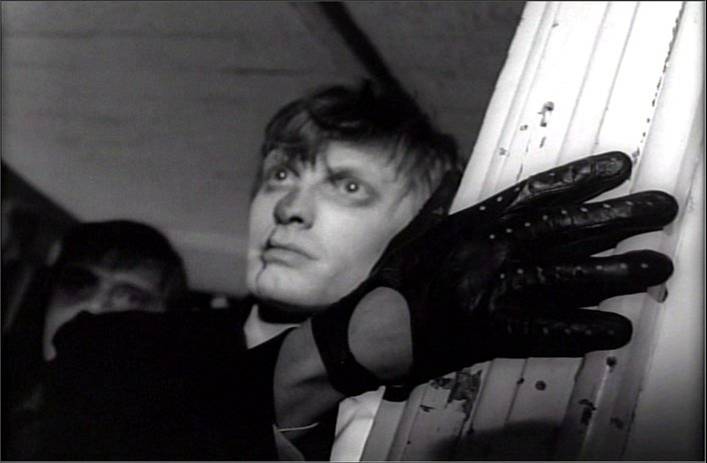
Johnny, the zombified brother of Barbra, is back from the grave and "coming to get you" in Romero's Night of the Living Dead (1968).
Romero’s 1968 classic, Night of the Living Dead, revolutionized the zombie metaphor. His “flesh eaters” have since become a staple of the genre and the social criticism laced within his early films have become a tradition in subsequent zombie films. Prior to Romero’s take on the zombie genre, zombies  largely reflected the spirit of the times in which these films were made. Hence, the fears of racial miscegenation found in White Zombie (1932) and the fears of mind control found in Invisible Invaders (1952). However, Romero changed these trends when he made the zombie into something more than simply an automaton of mind control or voodoo mysticism; Romero introduced the “flesh-eater” into the zombie lexicon, pushing the genre further into the macabre and raising the possibility of a politicized zombie figure.
In fact Night of the Living Dead was created as a critique of the violence and devastation of Vietnam, with the dead returning to life as a result of radiation emitted from a government “Venus probe” sent to space. In addition, Romero made his zombies into a form of contagion: A single bite from a zombie will similarly kill and turn one into a zombie, thereby playing into fears of loved ones and strangers turning on one another. Since Romero’s film, the zombie has usually been associated with cannibal corpses that have risen from the grave to devour the living. more...

Below is Part 1 of a three part essay I will be presenting at the 2012 Southwest Texas Popular Culture Association meetings in Albuquerque, New Mexico on February 9th. I will be presenting alongside several other scholars for a series of panels titled “The Apocalypse in Popular Culture.” A (much) earlier version of this paper can be found on the Sociological Images sister blog. Part 1 discusses the first wave of zombie cinema 1920-1950s.

The Zombie in Film: From Haitian Folklore to Apocalyptic Anxieties

If you are alive these days, and not already part of the undead masses yourself, you probably have noticed a staggering increase of zombie references in film, television, pop culture, videogames and the internet.
For instance, the big screen and small screen have both hosted a plethora of zombie films including the more popular blockbusters 28 Days Later (2002), Shaun of the Dead (2004), and I Am Legend (2007). In television, we have seen the recent success of AMC’s The Walking Dead, based on the comic book series of the same name. In pop culture, we have seen the viral video of penitentiary inmates dancing to Michael Jackson’s “Thriller” and even the popular television sitcom Glee host its own rendition of the dance. And if you are on a college campus like myself, you have probably seen undergraduates playing “Zombies Vs. Humans,” a game of tag in which “human” players must defend against the horde of “zombie” players by “stunning” them with Nerf weapons and tube socks. In videogames, we have seen the success of the Resident Evil franchise, eventually culminating in a series of films staring Mila Jovovich, as well as more recent games like Left 4 Dead and Dead Rising. Finally, the internet is awash with zombie culture. From post-apocalyptic zombie societies to zombie fansites and blogs.
The Annual "Zombie Walk" in Pittsburgh, PA, birthplace of the famed zombie director George Romero.
But what is the zombie and where does it come from? more...

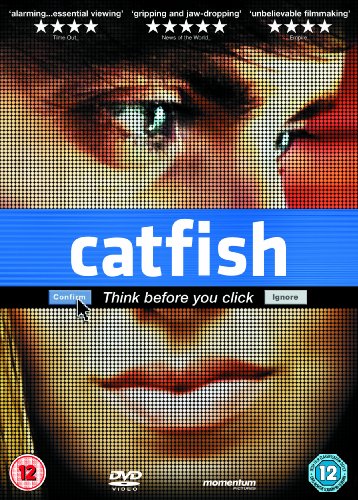
A “catfish” is someone who misrepresents themselves online. This is all you really need to know about the movie catfish. The rest is kind of hard to describe, like trying to explain the movie Inception after you just watched it one time. I don’t want to debate the authenticity of the film, because it doesn’t really matter to this discussion (read about it on the wiki). I want to talk about the film’s noteworthy use of social media and the probing questions that it raises for scholars of new technology and Web 2.0.

The film incorporates social media in a very integral and experiential way. The producers take a pretty postmodern approach to depict the characters and draw out the narrative of the film. Mirroring some of the techniques seen Cloverfield or the Blair Witch Project, similar pseudo-documentary mystery narratives, hand-held cameras and panning screenshots allow us to experience the characters, to develop the plot arc, and to eventually come to the realization that all is not what it seems. We experience the characters through social media, as the protagonist Nev is gradually introduced to the family of a young girl Abby.  The camera pans across grainy computer screens, as Nev clicks through the Facebook profiles of the films characters and we, by proxy “get to know” these characters. The point of this exercise is for the viewer to gradually build trust for the characters alongside the central character Nev. So in effect, the film takes the technique of Takashi Miike in Audition The film builds this trust and then quickly shatters it, at which point the trust we had for the characters is broken. more...

Just came across the personal blog of Nick Pearce, a scholar at Durham University’s Foundation Centre, who is doing some very interesting research on higher education, technology, and zombies. I discovered his website while researching existing work on zombies and higher education, and I discovered that he is one of the scholars putting together the much-awaited anthology “Zombies in the Academy: Living Death in Higher Education” (to be published in 2012).

I was particularly drawn to an old post on “Zombies, Technology, and Capitalism,” because of Pearce’s use of the zombie metaphor in depicting some of the recent trends in higher education. He states rather eloquently:

The very general thrust is that VLEs (such as Black(magic)board, and VOODLE) replace face-to-face ‘human’ learning with undead digital teaching. These VLEs have rapidly spread across the sector (virally?) without being explicitly demanded by either teachers or students. The embedded pedagogy of these VLEs is restrictive and they offer a level of social control and conformity not possible with more traditional teaching practices.

In Pearce’s words, the Virtual Learning Environments (VLEs) of today’s academy sap the human element out of the classroom (or computer screen in this case). more...

Last week, I posted a review of the film Tron: Legacy (2010) on this blog. This week I have a review of Ondi Timoner‘s wonderful 2009 documentary We Live in Public. This review is found in the latest issue of one of my favorite journals, Surveillance and Society.

The issue is here. Free .pdf download of the review here.

I explore theoretical connections between the movie and the rise of social network sites such as Facebook. I look at privacy, publicity, surveillance and our increasingly augmented reality. Many of the points are elaborations of topics posted by myself and others on this blog. It is particularly exciting to see these theoretical ideas travel so smoothly across mediums such as film, radio, the blogosphere and academic journals.