Last week, I introduced some characters to my argument: Orphan Black and its writing and consulting staff, Mr. Robot and its creators, the Cybernetic Culture Research Unit and Nick Land, accelerationism, and hyperstition. Need a refresher? Find it here. Now, I’d like to take a brief detour in order to introduce another important character here: speculative design. more...
At what point does a fictional tale of a present day technocapitalist advancement and the characters embroiled in its aftermath turn into a dystopia? Is there ever a clear threshold between the plausible and the absurd? And what responsibility does the artist or author have towards their audience to make clear the realism of the piece?
Spoiler Warning: you may want to tread lightly if you haven’t yet but still plan on watching through season 2 of Mr. Robot and season 5 of Orphan Black.more...
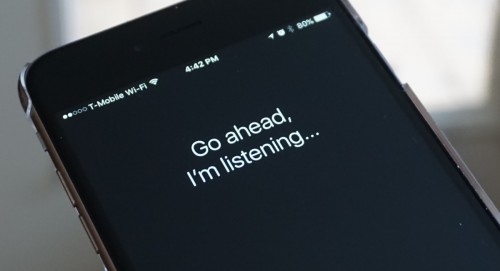
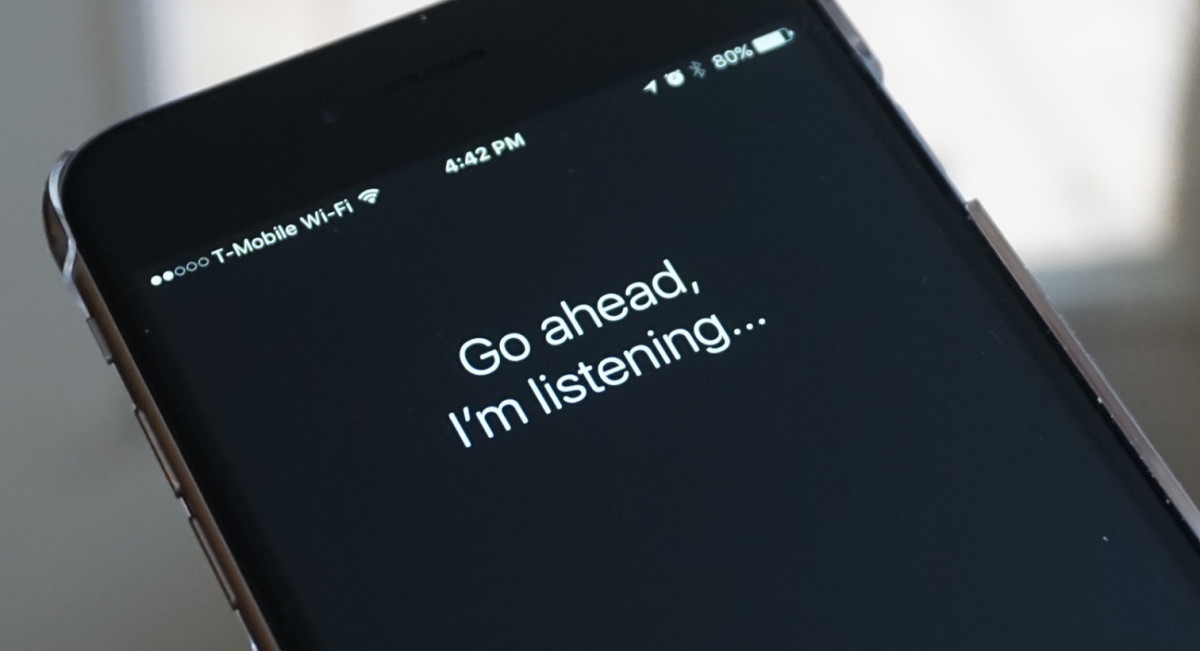
I recently updated my mac’s operating system. The new OS, named Sierra, has a few new features that I was excited to try but the biggest one was the ability to use Siri to search my files and launch applications. Sierra was bringing me one step closer to the human-computer interaction fantasy that was set up for me at an early age when I watched Picard, La Forge, and Data solve a complicated problem with the ship’s computer. In those scenes they’d ask fairly complicated questions, ask follow-up questions with pronouns and prepositions that referenced the first question, and finish their 24th century Googling session with some plain language query like “anything else?” Judging by the demo I had seen on the Apple website it seemed like I could have just that conversation. I clicked the waveform icon, saw the window pop up indicating that my very own ship’s computer was listening and… nothing.
The problem wasn’t with Siri, it was with me. I had frozen. It was as if a rainbow spinning beach ball was stuck in my mouth. I was unable to complete a simple sentence. I closed the window and tried again:
Show me files that I created on… Damnit
Sorry I did not get that.
Show me files from… That I made on Friday.
Here are some of the files you created on Friday.
In all honesty, I should have seen this coming. I frequently use Siri to set reminders or to put things in my calendar but I always use my digital assistant in secret: the moment between getting in the car and starting the engine, alone at my desk, or (sorry) while I am using the bathroom. It works almost every time but when something goes wrong, it is my commands not Siri’s execution, that is left wanting. I pause because I forget the name of the place I need directions to or I stumble when it comes to saying exactly what reminder I want to set. There are several Siri-dictated reminders sitting in my phone right now that don’t want me to forget to “bring it back with you before you go” or “to write email in the morning.” I clam up when I know my devices are listening.
It gets worse when other humans are listening to my awkward commands. The thought of talking to an algorithm in the presence of fellow humans is about as enticing to me as reciting a poem I wrote in high school or explaining a joke that just fell flat. Here I was thinking it was the technology that had to catch up to my cyborg dreams but now it seems that the flesh is the half not willing. more...
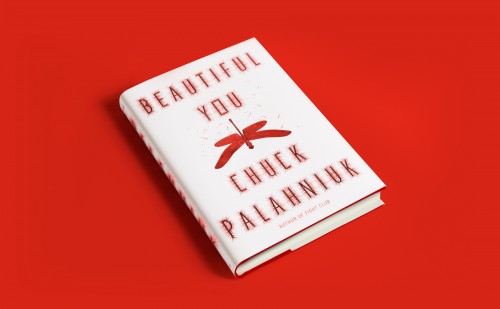
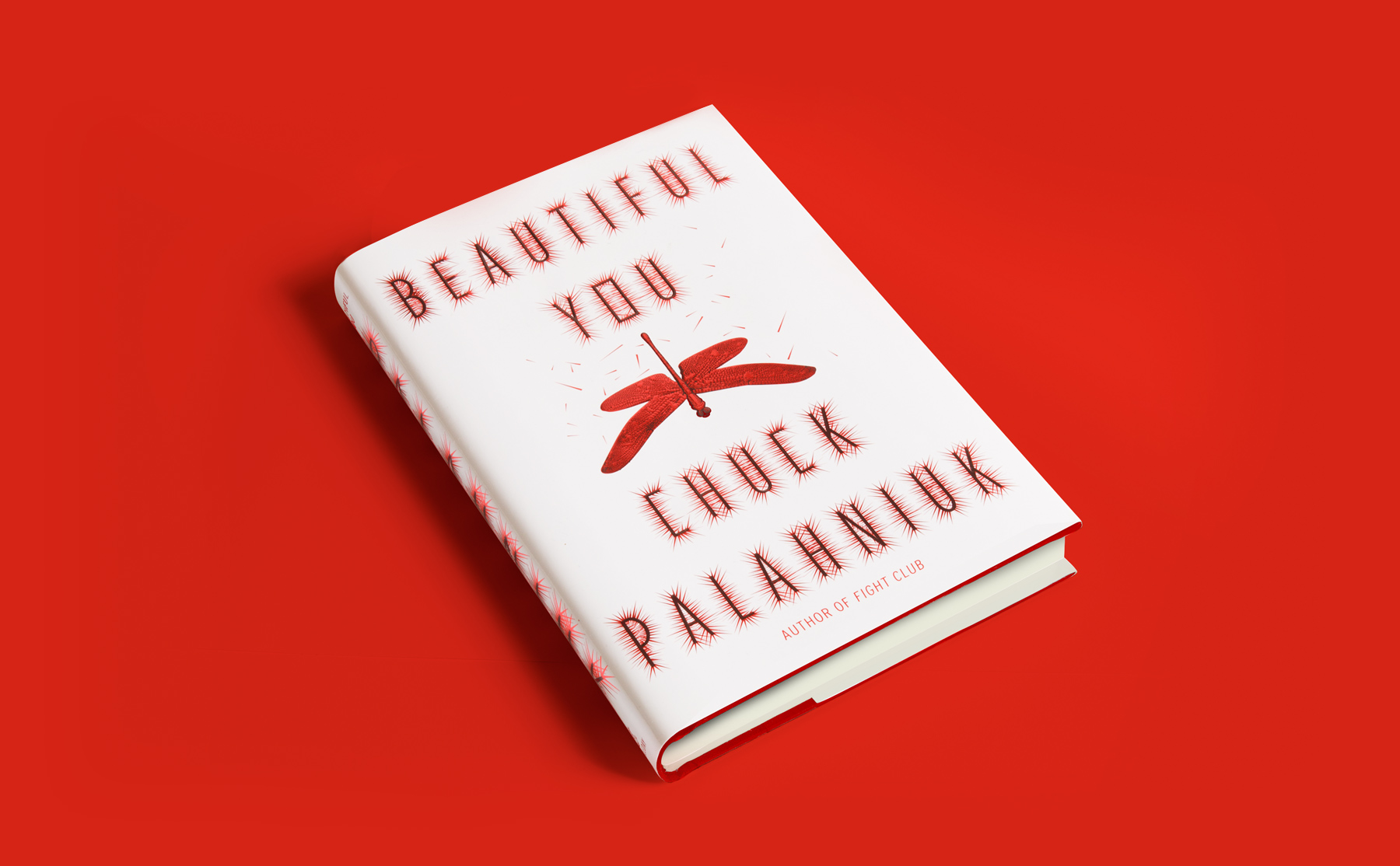
Penny Harrigan is perfectly average and she’s never had an orgasm. She is the leading lady in Chuck Palahniuk’s latest book Beautiful You, in which C. Linus Maxwell, CEO of MicroDataCom releases a line of sex toys so potent that women literally recede from society, preferring to stay home to masturbate incessantly. Remember the 1998 episode of “Sex and the City” in which Charlotte became addicted to her rabbit vibrator? It’s like that, but global. The book is a quirky cross between a motivational anecdote about a woman’s journey to sexual empowerment, and a grim critique of dystopian industrialized society, just with painful details and boring writing.
“Turnkey? Who the hell came up with that?” Raymond knew The Agency was running out of codenames, but this was ridiculous. As a top official, he had enough on his mind; how was he supposed to keep track of this shit?
“Well, I think it’s because—”
“So does that mean we’re moving ahead?” Isobel interjected.
“The data is there,” said Michael. “We’re positive she has one of the stronger connections to Wedge that we’ve been able to identify. The frequency of their SMS communication alone—plus the fact that they so often text late at night—indicates that this is clearly more than a working relationship.”
“Not to mention,” Patricia added, “that Occupy essay they wrote came out almost a year ago. If it was purely a working relationship, they’d have no reason to still be in contact.”
“So you think they’re lovers?”
“Well, we’re not certain yet,” Michael replied. “I’ve got Steve filing for a warrant to go through the SMS content, and her email content as well. We’re hoping she’ll turn out to be less opaque than Wedge—” more...
In a recent post about communal storytelling via ICTs, Sarah Wanencheck highlights how digital media is breaking down the old narratological dualism of fiction and non-fiction. She argues non-fictional identities on social networks are communally constructed, in ways akin to the collaborative storytelling practices on fanfiction sites. Here I’ll look at how narrative roleplaying on the instant messaging service Omegle shapes new subjectivities on the social networks its roleplayers use to sustain and develop their fiction.
We perform identities on social networks, using filters and images, and timelines, and real-time updates – but those identities are never too far removed from those we perform in real-world frames. Roleplaying on Omegle offers a way of getting closer to other writers’ characters in ways which are paradoxically more personal and more immersed in the author’s creation than ever before. While fans wait for their favourite TV series or book series to start up again, they create narratives in collaboration with others which run parallel to their ‘real’ lives. What happens to the division between the fiction and nonfiction when we can experience being someone entirely different every day, within the frames of social networks like Tumblr and Facebook? more...
“The future is there,” Cayce hears herself say, “looking back at us. Trying to make sense of the fiction we will have become. And from where they are, the past behind us will look nothing at all like the past we imagine behind us now.”
–William Gibson, Pattern Recognition
“This is a kind of writing which simply makes you feel very strange; the way that living in the late twentieth century makes you feel, if you are a person of a certain sensibility.”
–Bruce Sterling, “Slipstream”, SF Eye #5, July 1989
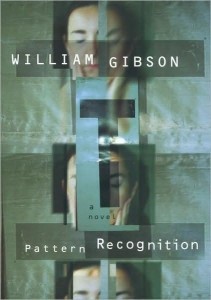
I first read William Gibson’s Pattern Recognition almost a year ago, after a long hiatus from his work. I’ve long loved his books, but went through the kind of distance that time and life just sometimes put between a reader and an author. Pattern Recognition was the return, and I went into it cold, knowing nothing about it except for the author–an experience that I always find somewhat refreshingly like exploring a dark, richly appointed room with a small flashlight.
And then something rather interesting happened. The book contains a description of the memories that the protagonist retains of the events of September 11, 2001, and as I read, I experienced a curious kind of vertigo–something that I have since come to understand as the mirror-hallway perception of reading a fictionalized account of a real event in my own memory, remembered as past in a near-future context. In that moment, what I experienced as vertigo was the collapsing of a number of categories–past, present, and future, fiction and non-fiction, myself and other.
Vertigo, a really common illness seen in many of us may be a sort of dizziness that makes balance disorder. Vertigo gives one a sense of swaying while the body is stationary with reference to the world or its surroundings. Vertigo is commonest when an individual goes up some height. it’s going to produce to a false sensation of movement. Vertigo often results in nausea and vomiting.
Vertigo is said to the internal ear balance mechanism that relates to the brain or the nerves connecting the ear and therefore the brain. The disease creates a loss in equilibrium and wooziness. However, vertigo and dizziness aren’t synonymous. While dizziness is one symptom of Vertigo, not all dizziness are often termed as Vertigo. Vertigo is commonest in elderly people, but can affect both sexes at any age.
Vertigo is a treatable disease and handled through medicines, but only if treated from well qualified doctors like vertigo la. As vertigo is more a symbol of other diseases, it are often treated by treating the particular disease that causes this. If Vertigo has been caused by a tympanic cavity infection, then it requires antibiotic treatment. Home remedy is additionally an option for vertigo.
Lately I have been trying to list all of the spaces, places, moments in time, story telling techniques, life courses, and jobs that are not popularly considered “the real world.” Here is the not-so-comprehensive list I came up wtih:
The Internet
Video Games
Books
Graphic novels
Reality television
Movies
School
College
“Theory”
Fiction
A note about number 3 (and 4). I say “books” as a whole, to capture two sentiments. The first, is an aversion to the nerdy bookworm that is exemplified in The Twilight Zone’s “Time Enough At Last” (SPOILER). The second is a sort of anti-intellectualism more...
[…] an argument about the definition of Augmented Reality and the definition of Cyborgs, until you can get ‘em to click together like puzzle pieces. But so much debris is left on the floor when they’re done with the theory tin-shears, that the debris looks more interesting than the remainder.
Though it may appear quite critical, I actually agree with Sterling on this point—authors on this blog have rendered augmented reality (and the cyborgs that inhabit it) quite banal. Or, rather, the techno-saturated world that has emerged in the 21st Century appears to us far more mundane than the exotic dystopian imagery that enveloped the famous cyberpunk novels of yesteryear. The fantasy of ocular implants and digital immersion have given way to the seemingly unremarkable reality of smartphones and Facebook. Through the “theory tin-shears” futurist art of the past becomes the sociology of the present. But, the study of present realities will never be as exciting as the imagining of future possibilities. more...
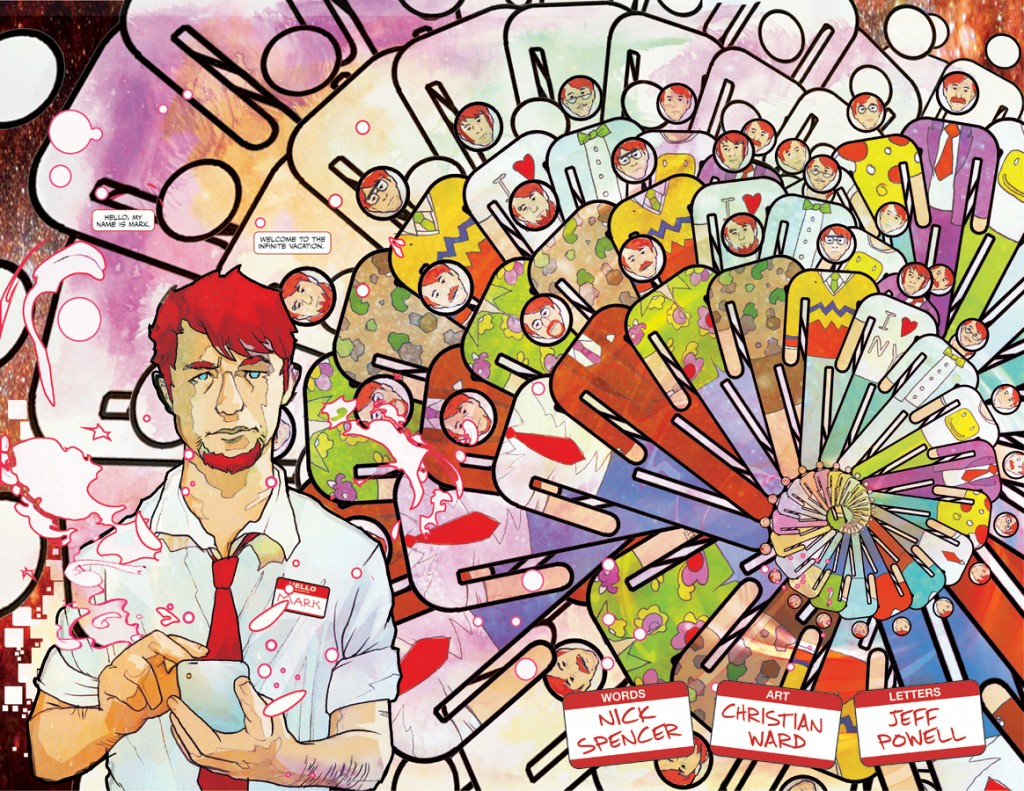
While the tide is turning, comics are still an under-appreciated medium in 2011. This despite increased interest in superheroes given the Hollywood treatment and critical attention to thoughtful indie pieces like Fun Home and Love and Rockets. It’s a shame because comics’ juxtaposed panels, their special way of framing time in terms of space, are well equipped to address those intersections of identity, technology, and visual representation that get so much play in mainstream and academic press. Image Comics’ Infinite Vacation is one new ongoing title that tackles those ideas head on.
Writer Nick Spencer is a rising star whose big hit, Morning Glories, blends teenage drama with the surreal paranoia of 60s TV thriller The Prisoner. In Infinite Vacation, Spencer teams with artist Christian Ward to tell the story of Mark, daily user of a ubiquitous, near-future technology which allows anyone to buy or sell their existence in parallel universes through a smartphone app; for $25,000 Mark can become the hero cop version of himself, and it’ll cost at least $3000 for him to become a Mark who did not just get walked out on by that mystery girl in the coffee shop.
Mark is a cyborg less like Robocop and more like the average Facebook user who presents their preferred self to the world via an array of edited images, clicked “likes”, and comments with friends (i.e., exactly how Cyborgology editors define the cyborg in their inaugural post). Identity definition and presentation through web spaces and consumer devices is a major theme in Infinite Vacation, whether it’s the RSS feed of your alternate selves’ lives and deaths or that mystery girl saying, “That thing in your hand isn’t worth shit to me…” when Mark tries to prove his seriousness by showing how expensive his app-assisted reality purchase would have been. A gorgeous opening spread (below) has infinite Marks fitted into generic male outlines, reminiscent of your chosen profile picture replacing the pale blue Facebook default. more...
About Cyborgology
We live in a cyborg society. Technology has infiltrated the most fundamental aspects of our lives: social organization, the body, even our self-concepts. This blog chronicles our new, augmented reality.




 experience that I always find somewhat refreshingly like exploring a dark, richly appointed room with a small flashlight.
 In his Beyond the Beyond blog (hosted by WIRED magazine), cyberpunk author Bruce Sterling recently made some comments on my post, “Cyborgs and the Augmented Reality they Inhabit.”
 While the tide is turning, comics are still an under-appreciated medium in 2011. This despite increased interest in superheroes given the Hollywood treatment and critical attention to thoughtful indie pieces like Fun Home and Love and Rockets. It’s a shame because comics’ juxtaposed panels, their special way of framing time in terms of space, are well equipped to address those intersections of identity, technology, and visual representation that get so much play in mainstream and academic press. Image Comics’ Infinite Vacation is one new ongoing title that tackles those ideas head on.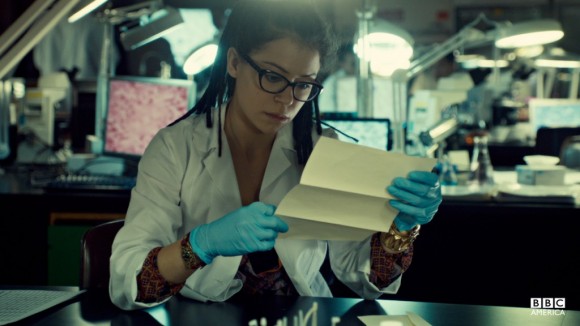
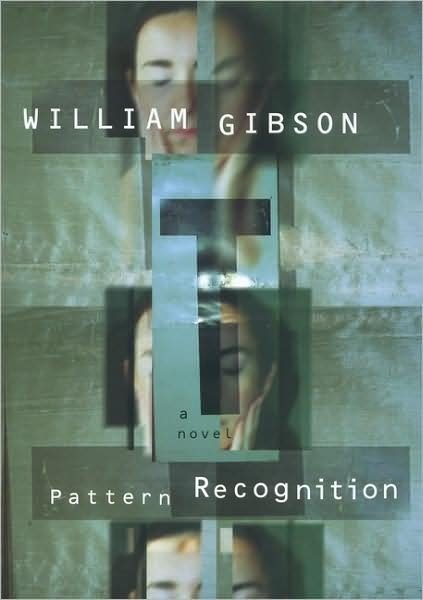 experience that I always find somewhat refreshingly like exploring a dark, richly appointed room with a small flashlight.