Presidential debates might be the single political event where Marshall McLuhan’s infamous phrase “the medium is the message” rings most true. Candidates know well that content takes the back seat, perhaps even stuffed in the trunk, during these hyper-performative news events. The video above of McLuhan on the Today show analyzing a Ford-Carter debate from 1976 is well worth a watch. The professor’s points still ring provocative this morning after the first Obama-Romney debate of 2012; a debate that treated the Twitter-prosumer as a television-consumer and thoroughly failed the social medium. more...
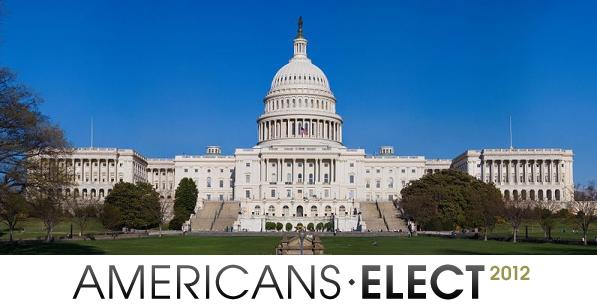
Last week Nathan and PJ introduced us to Americans Elect 2012 by asking the question: “Can we elect a ‘wikipedia’ president?” The idea is seemingly straightforward- define the broad categories you find most important (your “colors”), answer questions to determine the popular positions of most Americans, and find candidates that most closely resemble your opinions on the issues. The result is a “third party” candidate on the ballot in all 50 states with a platform that most people agree with.
I have reservations about this process, and they fall into three categories. 1)Poorly designed questions. These questions are confusing and might not elicit the responses people intend to give. 2) Leading questions. To be fair, the language that Americans use to talk about politics is full of pre-defined frames and evocative images that push people in certain directions. It is virtually impossible to create a set of questions that extracts the thoughts of individuals with total neutrality. Our thoughts are like electrons- the act of observation changes their behavior. 3) The reinforcement of ineffective partisan thinking. From the Americans Elect website: more...
On June 17th, an Obama 2012 campaign staffer made a post explaining that Obama’s Twitter and Facebook presence would be handled differently going forward. As fellow Cyborgology editor Nathan Jurgenson recently discussed, Obama’s posts and updates have, up until now, been ghostwritten—leading Jurgenson to conclude that “Obama-as-president has thus far been a Web 1.0 leader” and, thus, to ask “when will we see a Web 2.0, social media president?” Obama’s use of social media has been in sharp contrast to other nationally-recognized politicians, including former vice-presidential candidate Sarah Palin, whose tweets appear to be individually-authored, spontaneous, and personal, making them appear more authentic and more consistent with the norms of other Twitter users (spelling errors and all). The president is now getting into the game by authoring his own tweets.
Obama for America staff will now be managing both accounts, posting daily updates from the campaign trail, from Washington, and everywhere in between. You’ll be hearing from President Obama regularly, too; on Twitter, tweets from the President will be signed “-BO.”
Thought to be the domain of the political left by some, social media has come to be nearly ubiquitous for both parties. One may even argue that the political right in the U.S. has passed the left. While not a perfect measure, one can look at the number of tweets sent by members of congress. From May 8th to June 8th, 2011, members of congress sent 15,383 tweets. The 232 Republicans sent 10,846 tweets (that’s about 47 tweets per member for this month). The 168 Democrats sent just 4,537 tweets (27 tweets per member). Republicans are tweeting almost twice as much.
What other measures can we look at to compare/contrast the right and left’s usage of social media? Does social media inherently tend to the left or right?
We live in a cyborg society. Technology has infiltrated the most fundamental aspects of our lives: social organization, the body, even our self-concepts. This blog chronicles our new, augmented reality.