election

Polling

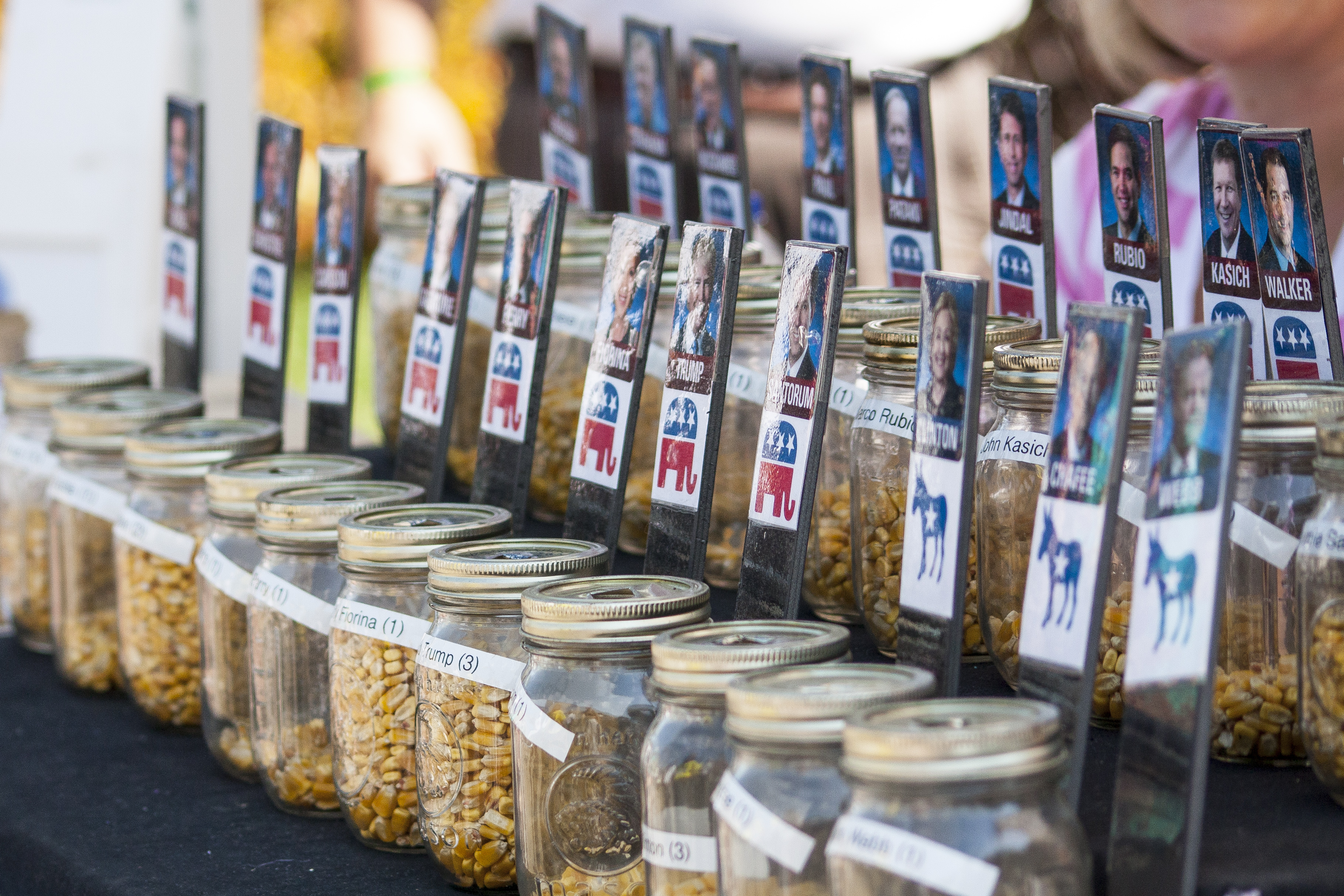
Horse-race style political opinion polling is an integral a part of western democratic elections, with a history dating back to the 1800’s. Political opinion polling originally took hold in the first quarter of the 19th century, when a Pennsylvania straw poll predicted Andrew Jackson’s victory over John Quincey Adams in the bid for President of the United States. The weekly magazine Literary Digest then began conducting national opinion polls in the early 1900s, followed finally by the representative sampling introduced the George Gallup in 1936. Gallup’s polling method is the foundation of political opinion polls to this day (even though the Gallup poll itself recently retired from presidential election predictions).

While polling has been around a long time, new technological developments let pollsters gather data more frequently, analyze and broadcast it more quickly, and project the data to wider audiences. Through these developments, polling data have moved to the center of election coverage. Major news outlets report on the polls as a compulsory part of political segments, candidates cite poll numbers in their speeches and interviews, and tickers scroll poll numbers across both social media feeds and the bottom of television screens. So central has polling become that in-the-moment polling data superimpose candidates as they participate in televised debates, creating media events in which performance and analysis converge in real time. So integral has polling become to the election process that it may be difficult to imagine what coverage would look in the absence of these widely projected metrics. more...
Screen Shot 2015-07-29 at 8.52.55 PM
“Politicians are all talk” -Trump, in the nytimes

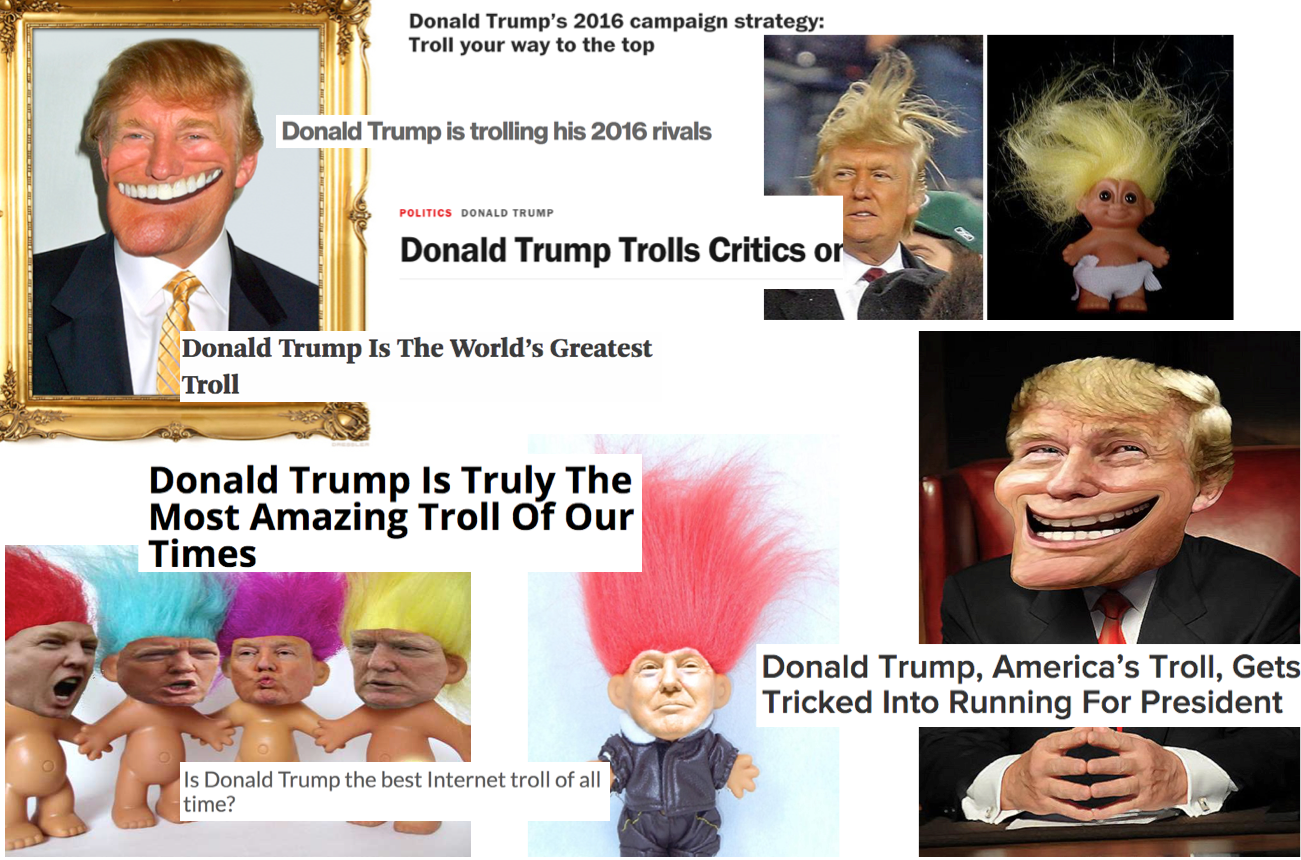
Buzzfeed asked Donald Trump if he knew what trolling is. Trump didn’t know the term, so Buzzfeed explained it,

“It’s basically saying or doing things just to provoke people,” I said, explaining that there were many who considered him a troll because “provocation is your ultimate goal.” Trump bristled at the characterization. “That’s not my ultimate goal,” he protested. “My ultimate goal is to make this country great again!” But then, he thought about it for a moment. “I do love provoking people,” he conceded. “There is truth to that.”

The news media –especially those who report on, rely on, presidential electoral politics– are quick to call Donald Trump a “troll.” In this exchange, look at the word “just” in the definition, “saying or doing things just to provoke people”, that Trump isn’t really a candidate running a real election, he’s not politics as normal, but just going for attention. In the current media feeding frenzy over Trump, from Time, The Washington Post, MSNBC, and so many others, there is an emerging and necessary narrative that he’s a “troll.”

Classifying Trump as a “troll” is centrally about saving the rest of the election coverage as real and authentic. The narrative that Trump is trolling assumes and reinforces the notion that the rest of the coverage is in good faith, something news organizations desperately need to sell. more...

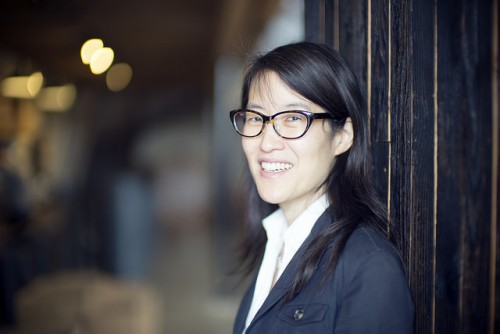
Ellen Pao, CEO of Reddit. image credit: Christopher Michel

An unfortunately predictable thing happened on Reddit last week. Reddit’s corporate administrators announced that they would be shutting down “five subreddits that break our reddit rules based on their harassment of individuals.” These were fairly small subreddits, except for r/fatpeoplehate which had 150,000 subscribers at time of banning. The primary mission of r/fatpeoplehate was to find pictures of fat people, make fun of them in the comments and –if at all possible—find these people and harass them for being fat. [If you’re unfamiliar with the structure and vocabulary of Reddit I’ve provided a primer at the bottom of this page.]

The administrators were careful to point that they were “banning behavior, not ideas.” That is, while they know that there are dozens of subreddits devoted to white supremacy, tactics for violent raping women, and doxxing young women for espousing feminist beliefs on Tumblr, (yes, all of those exist and they are a lot bigger than you or I want to believe) those communities should rest assured that they will be safe so long as moderators make overtures to discouraging collective behavior that goes beyond reaffirming each other’s dangerous and hateful thoughts.

One could be forgiven for thinking that banning such disgusting behavior from a small minority of people would be met with some “that makes sense” head nods and any sort of outrage would be directed at the failure to ban more subreddits, not less. What in fact happened was quite the opposite: within the day there were dozens of new subreddits playing host to the kind of content and behavior that characterized r/fatpeoplehate. What’s more disturbing though, is that the content from these new subreddits were making it to the frontpage with thousands of votes. There were also countless posts calling for Reddit’s CEO Ellen Pao to do everything from resign to defile herself. As of writing, a full four days after the announcement, there’s an “Ellen Pao Must Resign” subreddit with over seven thousand subscribers that are still able to get links to the front page. more...

via durdom.in.ua

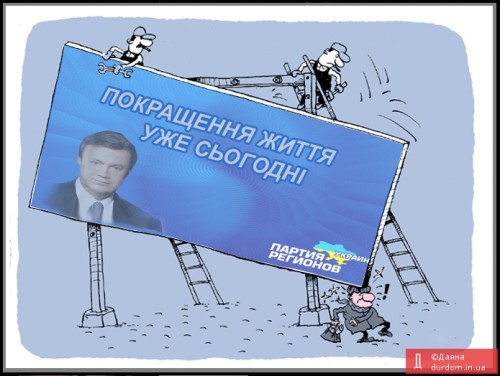
The past U.S. elections season was exciting for social scientists for many reasons, but none so much for the web theorist crowd as the amazing proliferation of election memes. In his essay “Speaking in Memes”, Nathan Jurgenson aptly dissects the phenomenon and its various facets: why and how election memes become viral, whether this virality is subject to campaign control, and how audiences and media conjure meaning by rebroadcasting and reporting these memes. There are many things I would love to further discuss in Jurgenson’s essay, but I will latch on to the issue of meme longevity and the possible reasons for some memes surviving far longer than most. I will also attempt to speculate about factors that afford memes the power to shift shape and adapt to new contexts, and about how and why their meaning might be transformed by the public in the process. more...

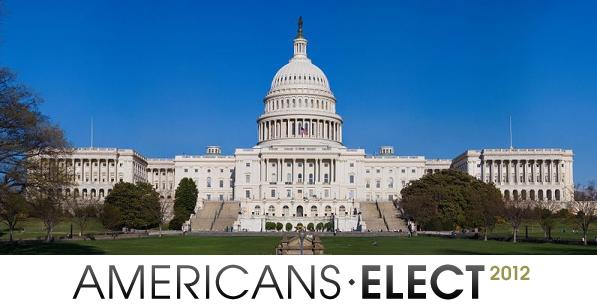
Last week Nathan and PJ introduced us to Americans Elect 2012 by asking the question: “Can we elect a ‘wikipedia’ president?” The idea is seemingly straightforward- define the broad categories you find most important (your “colors”), answer questions to determine the popular positions of most Americans, and find candidates that most closely resemble your opinions on the issues. The result is a “third party” candidate on the ballot in all 50 states with a platform that most people agree with.

I have reservations about this process, and they fall into three categories. 1)Poorly designed questions. These questions are confusing and might not elicit the responses people intend to give. 2) Leading questions. To be fair, the language that Americans use to talk about politics is full of pre-defined frames and evocative images that push people in certain directions. It is virtually impossible to create a set of questions that extracts the thoughts of individuals with total neutrality. Our thoughts are like electrons- the act of observation changes their behavior. 3) The reinforcement of ineffective partisan thinking. From the Americans Elect website: more...

As the 2012 presidential race ever so slowly gains momentum it remains clear that social media will be influencing elections for a long time to come. In the long run, does the shift towards social media campaigning change who is perceived to be a legitimate candidate? If so, social media might change who wins elections and therefore changes how we are governed. Avoiding [for now] the issue of whether social media has inherent tendencies towards the left or right, what I want to ask is: opposed to old media, does new media benefit political underdogs and outsiders?

As Republicans announce presidential bids on Twitter and Obama gets friendly with Zuckerberg and Facebook, it seems that the presidential campaign has found itself augmented by and reliant upon social media tools; some of the very same tools many of us use, like Facebook, Twitter, YouTube and so on. Part of their popularity is that one can view and be viewed by people from all over the world in an instant and for no cost. It does not cost money to publish this post or to tweet about it later on. Social media campaigning is also relatively cheap; indeed, often times free. Alternatively, print advertising is expensive because space is scarce and the scarcity of broadcast time makes television and radio too costly for underdogs and outsiders to fairly compete. However, when we exchange atoms for bits we enter into a world of abundance, a world where broadcasting a message quickly and globally becomes cheap and easy.

This cheaper social-media campaign style may remove or at least lesson more...