drones

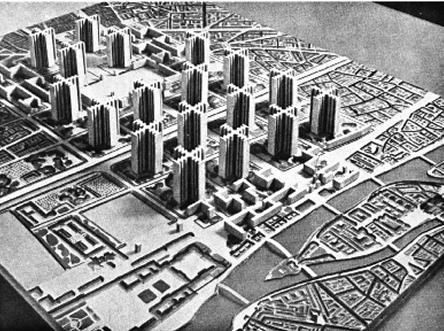
Le Corbusier's La Ville Radieuse
Le Corbusier’s La Ville Radieuse

The motor has killed the great city. The motor must save the great city.”

-Le Corbusier, 1924.


In the fast and shallow anxiety around driverless cars, there isn’t a lot of attention being paid to what driving in cities itself will become, and not just for drivers (of any kind of car) but also for pedestrians, governments, regulators and the law. This post is about the ‘relative geographies’ being produced by driverless cars, drones and big data technologies. Another way to think about this may be: what is the city when it is made for autonomous vehicles with artificial intelligence? more...
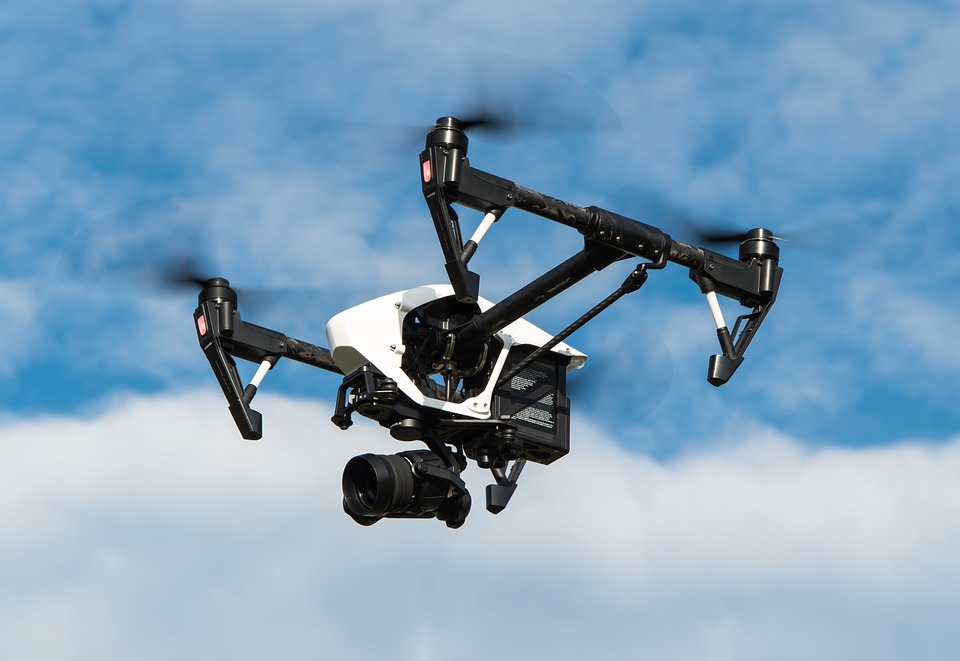

DroneNick Bilton’s neighbor flew a drone outside the window of Bilton’s home office. It skeeved him out for a minute, but he got over it. His wife was more skeeved out. She may or may not have gotten over it (but probably not). Bilton wrote about the incident for The New York Times, where he works as a columnist. Ultimately, Bilton’s story concludes that drone watching is no big deal, analogous to peeping-via-binoculars, and that the best response is to simply ignore drone-watchers until they fly their devices away. With all of this, I disagree.

Drone privacy is a fraught issue, one of the many in which slow legislative processes have been outpaced by technological developments. While there remains a paucity of personal-drone laws, the case precedent trends towards punishing those who damage other people’s drones, while protecting the drone owners who fly their devices into airspace around private homes. Through legal precedent, then, privacy takes a backseat to property.

Bilton spends the majority of his article parsing this legal landscape, and tying the extant legal battles to his own experience of being watched. He begins with an account of looking out his window to see a buzzing drone hovering outside. He is both amused and disturbed, as the drone intrusion took place while he was already writing an article about drones. He reports feeling first violated and intruded upon, but this feeling quickly fades, morphing into quite the opposite. He says:   more...

thank you Ian Bogost for making this image for me
thank you for this, Ian Bogost

Sometimes it feels that to be a good surveillance theorist you are also required to be a good storyteller. Understanding surveillance seems to uniquely rely on metaphor and fiction, like we need to first see another possible world to best grasp how watching is happening here. Perhaps the appeal to metaphor is evidence of how quickly watching and being watched is changing – as a feature of modernity itself in general and our current technological moment in particular. The history of surveillance is one of radical change, and, as ever, it is fluctuating and rearranging itself with the new, digital, technologies of information production and consumption. Here, I’d like to offer a brief comment not so much on these new forms of self, interpersonal, cultural, corporate, and governmental surveillance as much as on the metaphors we use to understand them.

more...

Three articles came out this week that help me develop my concept of droning as a general type of surveilance that differs in important ways from the more traditional concept of “the gaze” or, more academically, “panopticism.” There’s Molly Crabapple’s post on Rizome, the NYTimes article about consumer surveillance, and my colleague Gordon Hull’s post about the recent NSA legal rulings over on NewAPPS. Thinking with and through these three articles helps me clarify a few things about the difference between droning and gazing: (1) droning is more like visualization than like “the gaze”–that is, droning “watches” patterns and relationships among individual “gazes,” patterns that are emergent properties of algorithmic number-crunching; and (2) though the metaphor of “the gaze” works because the micro- and macro-levels are parallel/homologous, droning exists only at the macro-level; individual people can run droning processes, but only if they’re plugged into crowds (data streams or sets aggregating multiple micro- or individual perspectives).

more...

If drone sexuality means machines telling us who we are and what we want, then dating site algorithms are drone sexuality, right?

As I said last week, I’m responding to Sarah’s recent series of posts on drone sexuality. In this post, I want to follow through/push one of Sarah’s concerns about the way her account relied on binaries–both gender binaries (masculine/feminine) and subject/object binaries. I don’t know if Sarah would want to follow my argument all the way, but, that’s one thing that’s great about thinking with someone–you can develop different but related versions of a theory, and more fully explore the intellectual territory around an issue, topic, or question.

What if droning isn’t something “masculine” phenomena do to “feminine” ones, but a process that everyone/everything undergoes, and, in sifting out the erstwhile winners from losers, distributes gender privilege? In other words, droning is a set of processes that dole out benefits to “normally” gendered/sexually oriented phenomena (masculine, cis-gendered, homo- and hetero-normative, white, bourgeois ones), and that subject “abnormally” gendered/sexually oriented phenomena (feminine, trans*, queer, non-white, working class) to increased vulnerability and death?

more...

Alert to fanpeople: The film version of Ender’s Game is not the sprawling political epic Orson Scott Card created in the Ender series. Alert to those unfamiliar with the story: The film is, however, a lean and contemporary plunge into questions of morality mediated by technology, and in order to tease out various issues, I’m gonna spoil the heck out of both book and film.

If you’re watching hoping to have your heart yanked out and shaken, you’ll probably be disappointed. Asa Butterfield’s guileless face makes a plausible approximation of the story’s world-weary protagonist, Ender, but he struggles to bring emotion to an over-trimmed, manically paced story. Minor conflicts are presented in expository dialogue and resolved before we have a chance to parse Harrison Ford’s (aka Colonel Graff’s) cranky barks. Minor characters are sketched in a single phrase, and the world appears divided into cute children who drift inevitably into Ender’s circle, and less typically-bodied children whose essential malice leaves them beyond redemption. Hood does a decent job of not Hollywood-izing the story beyond recognition: Here is Ender, cerebral, tormented, pubescent strategic genius in a world where children’s minds are employed as the best military defense against an alien enemy. Ender is taken from his home to Battle School in space, subjected to increasingly grueling battle simulations, and, in his final moment of victory is devastated to learn that the simulations were actually the real war. Without realizing, he has annihilated the aliens’ home planet. more...

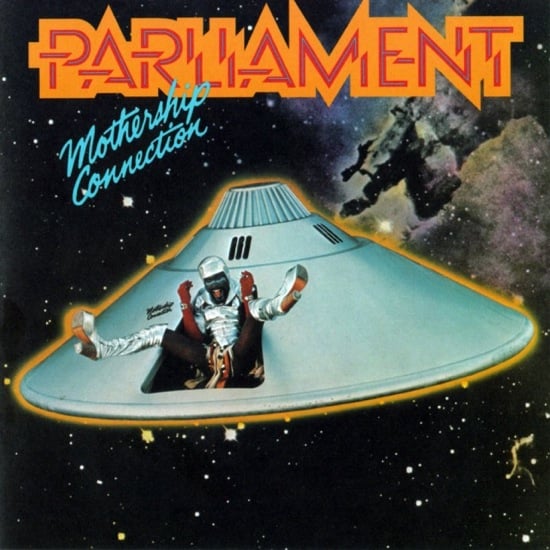
A classic Afrofuturist image and album.

This post is basically speculative. It’s a question, or rather, a hypothesis. I’m not citing empirical evidence so much as suggesting a line of inquiry, which then needs some grounding in empirical evidence. The question is this: If Afrofuturism uses UFO/alien spaceship imagery to describe slavery and middle passage,* can, and if so where, do drones fit in Afrofuturist mythology?

more...


In last week’s excellent post on drones, Sarah argues that surveillance is what makes an remotely controlled, semi-autonomous robot a drone. As Sarah puts it, “a drone is what a drone does: it watches.” Or, more precisely, it “gazes,” or watches with the eyes/from the perspective of hegemony, and for the purposes of surveillance, normalization, and discipline. In this post, I want to both agree and disagree with Sarah’s definition. I agree on the fundamental premise, that a drone is what a drones does–surveil/normalize/discipline. I disagree, however, that this “doing” is primarily watching, a manifestation of the phenomenon we both call “the Gaze.” Droning, at least as I want to define it here, is a practice of surveillance distinct from Gazing.

more...

red lines

On August 21st, thousands of Syrians suffered the effects of an alleged chemical attack by contested Syrian ruler Bashar al-Assad and his regime.  According to U.S. reports, 1,400 people died, and many more were injured. Many of those killed and injured were not part of the Free Syrian Army, but innocent citizens, including children. Investigations indicate that the weapon of choice was Sarin, a liquid-to-vapor nerve agent that can cause an array of symptoms, up to and including death. The Obama administration is now pushing for a U.S. military response. The president will hold a vote today (Tuesday) in an attempt to get congressional backing for targeted missile strikes against the Assad regime.

Importantly, this is an openly symbolic act. Obama and his supporters—along with British PM David Cameron , whose Syria plan was recently voted down—explicitly state that they do not intend to change the tide of the ongoing civil war. Rather, military action against the Assad regime acts as a public punishment for the use of chemical weapons, a violation of the Geneva Protocols of 1925 and the Chemical Weapons Convention of 1993.  Below are some excerpts from Obama’s remarks a few days ago (here is the full transcript): more...

play

As Edward Snowden settles into his new life in Russia, and Facebook inc. faces accusations of providing information to government officials about protesters in Turkey, issues of privacy are on the lips, minds, and newsfeeds of many global citizens.

Citizens sit with the uncomfortable and now undeniable reality that we are being watched. That our own governments, in many cases, are doing the watching. And that the economic, social, and interactive structures makes this kind of surveillance largely impossible to avoid.

I have noticed an interesting trend as people work through what many view as an unfortunate inevitability of pervasive surveillance: the use of play as a form of resistance. To be sure, PJ Rey (@pjrey) is our resident Play Theory expert here at Cyborgology. I am an admitted novice to this line of theory. As such, I hope that those with greater expertise than I will supplement my wide-eyed sociological noticings with established or developing social theorists and their theories. more...