currency

File this one under “what is at stake” when we talk about the digital dualist critique. Bitcoin, the Internet’s favorite way to buy pot and donate to Ron Paul, hit an all-time high this week of around $900 to one Bitcoin (BTC). The news coverage of Bitcoin and the burgeoning array of crypto-currencies (according to the Wall Street Journal there’s also litecoin, bbqcoin, peercoin, namecoin, and feathercoin) has largely focused on the unstable valuation of the currencies and all of the terrible things people could do with their untraceable Internet money. What hasn’t been investigated however, is the idea that crypto-currencies are somehow inherently more “virtual” and thereby less susceptible to centralized control the way US dollars, Euros, or Dave & Buster’s Powercards are. Both assumptions are wrong and are undergirded by the digital dualist fallacymore...

People coming out of their homes and into the streets to particpate in #duranadam or #standingman. Photo by @myriamonde and h/t to @zeynep

In Taksim Square, at around 8PM local time, a man started standing near Gezi park facing the Atatürk Cultural Center. According to CNN –and more importantly Andy Carvin (@acarvin) and Zeynep Tufekci (@zeynep) — the man is believed to be Erdem Gündüz, a well known Turkish performance artist who has inspired a performative internet meme that has already made it around the globe. (There’s a nice Storify here. Thanks to @samar_ismail for putting it on my radar.) Gündüz and his supporters were removed by police after an 8 hour stand-off (in multiple senses of the term) but now that small act has gone viral and spread well beyond Taksim Square. The idea is simple: a photo, usually taken from behind demonstrates that person’s solidarity with those hurt or killed by Turkish police actions in the past month, and the increasingly repressive policies of that country’s government in the last few years. On twitter, the hashtag #duranadam (“duran adam” is “the standing man” in Turkish) quickly spilled over the borders of Turkey and has been translated to #standingman as more people in North America and Western Europe start to stand in solidarity with those in Taksim. #standingman is an overtly political meme because, unlike other performative memes like #planking, #owing, or even #eastwooding, it is meant to demonstrate a belonging to a cause. more...

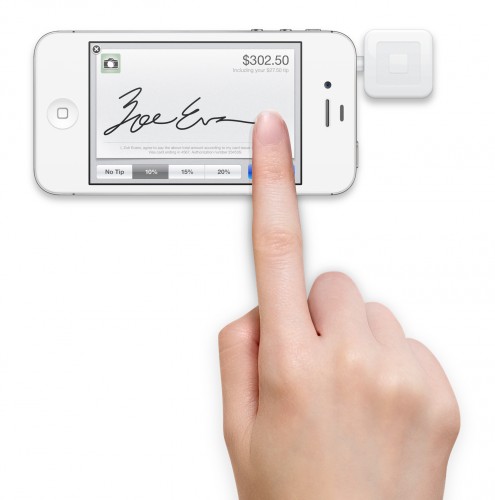
The Pew Internet and American Life Project and researchers from Elon University asked over a thousand “experts” about the future of money. Specifically, they were interested in the potential replacement of cash and credit/debit cards with smart-device technologies.

The majority of respondents (65%) believe that smartphones will largely replace cash and credit/debit cards by the year 2020. Others, however, believe that our infrastructure is too closely tied with a cash/card based system to be fully replaced. Further, most experts note that not ALL consumers will make the switch, as some will resist over concerns about privacy and anonymity. Finally, many predict that adoption will differ across demographics (with younger consumers replacing cash/credit at a faster rate than older consumers). Read the full report here.

Indeed, it is not difficult to imagine a largely smart-device based currency system—as this is already prevalent in Japan and growing in the U.S..  The next step is to imagine the social implications of such a system. I believe that these implications will be twofold: First, we will become more efficient consumers. Second, identity and practices of consumption will be more explicitly and directly linked—solidifying the connection between self and stuff. more...