conference

Screen Shot 2016-09-26 at 4.58.12 PM

Vilem Flusser’s work is still rather obscure in English language academic circles. Only a handful of major works from the media philosopher have been translated from his native German or adopted Portugese, and even that was only in the past two decades, well after his death in a car accident in 1991. While teaching MFA students, I found Flusser’s The Shape of Things, a collection of essays on design, to be extremely helpful when seeking to define some basic terms (for instance, the word “design” itself). But in my own work considering our technologically mediated world, I found 1983’s Towards of Philosophy of Photography a critical read.
more...

tumblr_nn4kta2uDp1t0j5qro7_1280
Photo By Aaron Thompson

I was happy to see Theorizing the Web go so well for so many people. The committee has been getting a lot of positive and constructive feedback and we’re reading all of it. If you feel so moved to write your own reflections on #TtW15 please send them our way. Last year, my post-conference thoughts were all about labor and the dangers of doing what you love. That’s still a problem ––TtW relies almost completely on volunteer labor–– but this year I’m thinking more about the institutions that prop up the typical Hilton-hosted conference model and make it difficult, if not financially impossible, to have more events like Theorizing the Web.

more...

The words you use to reference that fish matter.

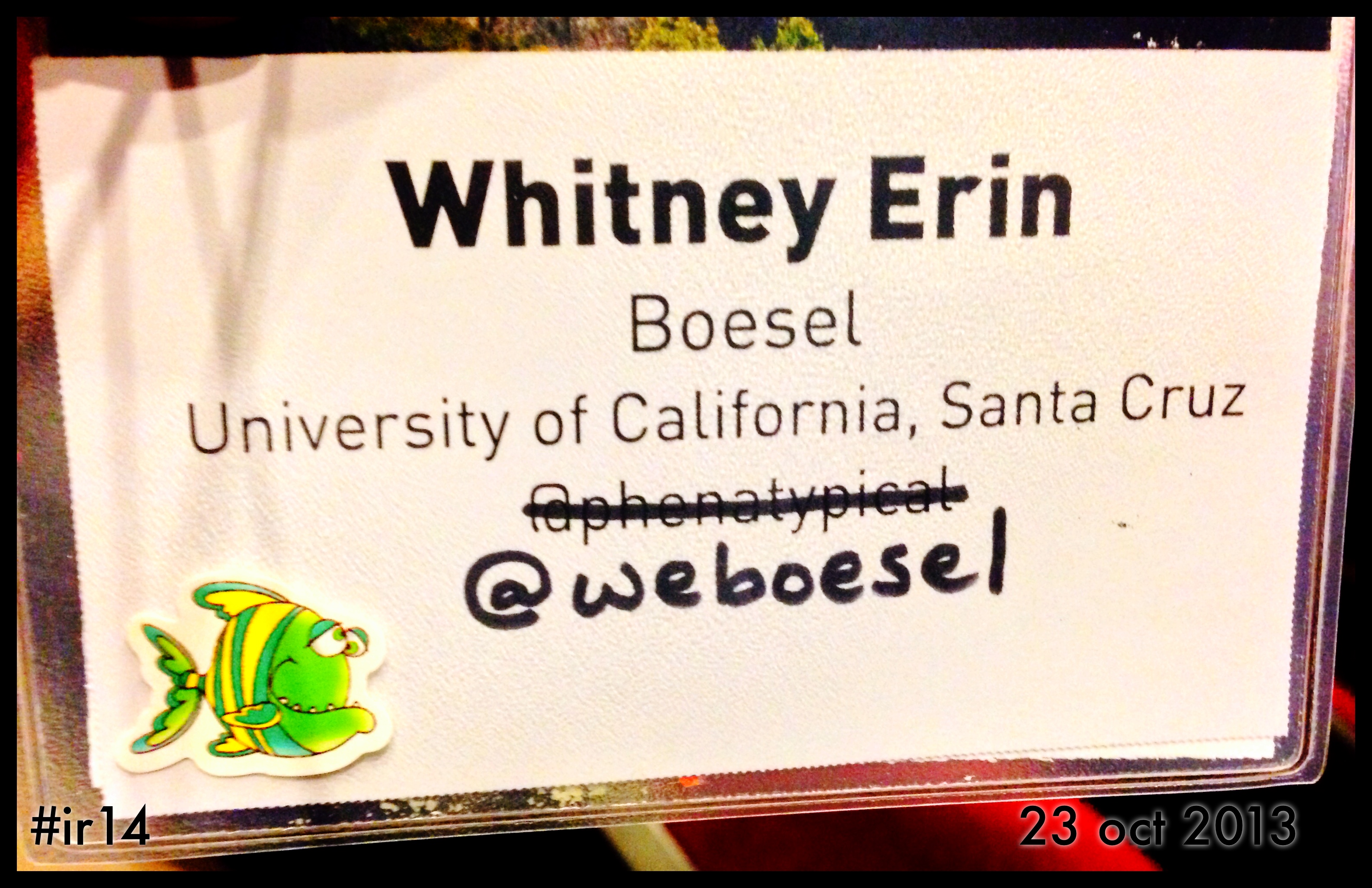
This is just a very, very quick post, as I am presently in the thick of #ir14—the 14th Annual Conference of the Association of Internet Researchers (AoIR). It’s my first time at IR, and so far I’m really enjoying it. The keynote, preconference workshops, plenaries, and sessions I’ve attended have been great, and the hashtag-stream quality is high (there are some talented livetweeters here, and plenty of hashtag socialization too). Since it’s not a disciplinary conference, everyone is here because they really want to be here—which you can feel in the general atmosphere, and which makes such a difference. From my barely-informed new member perspective, it really does seem as though AoIR has managed to roll a thought-provoking academic conference and a fun reunion party into one four-day long event (which, as a Theorizing the Web committee member, is obviously a project near and dear to my heart).

TL;DR: #ir14, I love you. And I’m bringing attention to the following critique not to be a jerk, but because I think you’re great and I know you—we—can do better.  more...

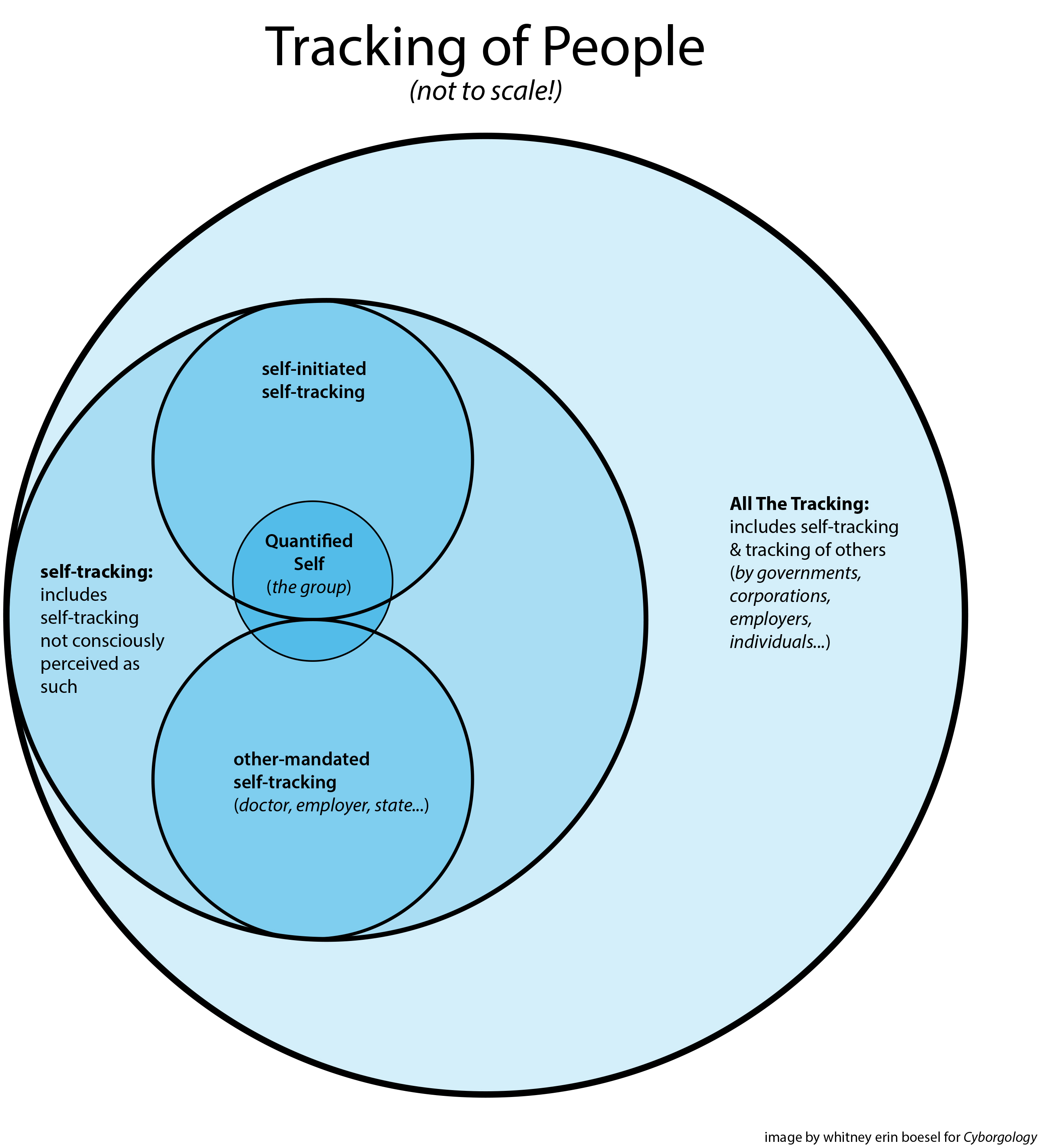
There's A LOT more to (self-)tracking than Quantified Self
There’s A LOT more to (self-)tracking than Quantified Self

When people ask me what it is that I’m studying for my PhD research, my answer usually begins with, “Have you ever heard of the group Quantified Self?” I ask this question because, if the person says yes, it’s a lot easier for me to explain my project (which is looking at different forms of mood tracking, primarily within the context of Quantified Self). But sometimes asking this return question makes my explanation more difficult, too, because a lot of people have heard the word “quantified” cozy up to the word “self” in ways that make them feel angry, uncomfortable, or threatened. They don’t at all like what those four syllables sometimes seem to represent, and with good reason: the idea of a “quantified self” can stir images of big data, data mining, surveillance, loss of privacy, loss of agency, mindless fetishization of technology, even utter dehumanization.

But this is not the Quantified Self that I have come to know. more...

This guest-post and #TtW13 review is cross-posted with permission from Technophilosophy, a French digital theory blog

On Saturday, March 2nd, 2013, I made a presentation in New York as part of the International Conference Theorizing the Web. Organized by Nathan Jurgenson (@nathanjurgenson) and PJ Rey (@pjrey) [Yes, I also wonder what his real name is], both doctoral students in sociology at the University of Maryland (Washington, DC), the event was held in the Graduate Center of the City University of New York (CUNY), on Fifth Avenue in Manhattan. A prestigious and perfectly equipped venue (no Wi-Fi issues), which promoted the sharing of high quality insights. more...

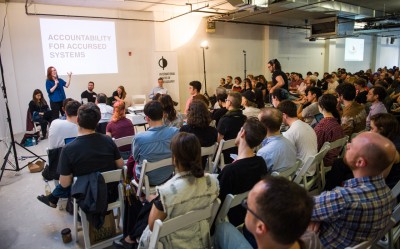
Bodies and screens, voices and tweets, hallways and backchannels, experiencing the American Sociological Association meetings this weekend in Denver means stepping into an atmosphere oversaturated with information. The bombardment can sometimes be overwhelming, with more sessions than you can attend and more tweets than you can read. This isn’t going to be a post on why we should use Twitter at conferences, Whitney Erin Boesel already did that more diplomaticly than I could pull off. Anyways, framing it as ‘why do we continue to meet face-to-face?’ would be more interesting for me. Instead, I simply want to argue that there will not be separate online and offline conferences happening, that Twitter isn’t a backchannel and the session room isn’t the front. The reality of the conference is always both digital and physical for everyone whether their noses are buried in a screen, sheets of paper, or staring unblinkingly at the podium. more...

Academic conferences: the model needs to change.

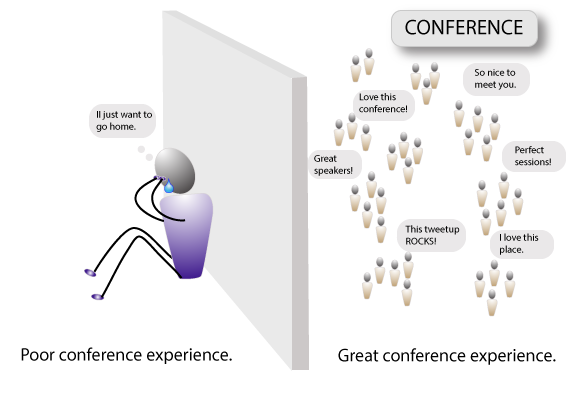
As the 2012 meeting of the American Sociological Association (#ASA2012) kicks into gear, I want to use this post to start a conversation about a somewhat-contentious topic: academics’ use of Twitter, particularly at conferences. I begin by extending some of what’s already been written on Cyborgology about the use of Twitter at conferences, and then consider reasons why some people may find Twitter use off-putting or intimidating at conferences. I close by considering what Twitter users in particular can do to ease the “Twitter tensions” at ASA by being more inclusive. The stakes here include far more than just “niceness”; they include as well an opportunity to shape the shifting landscape of scholarly knowledge production.

more...

This is part of a series of posts highlighting the Theorizing the Web conference, April 14th, 2012 at the University of Maryland (inside the D.C. beltway). It was originally posted on 4.11.12 and was updated to include video on 6.5.12. See the conference website for additional information.

I am very happy to have the opportunity to preside over the panel on technologies of identity. Internet is intimately related to people’s identities; a point that is almost self-evident. People express, reinforce and even sometimes construct new identities via the Internet. But how exactly does this happen? through what mechanisms? How, for example, do people who date online maintain or challenge their identities concerning their sexual preference, class, race, etc. in ways similarly and differently than those who date exclusively offline? Or, how do second-generation immigrants take advantage of the Internet to reshape society’s perceptions of them? How, for instance, do people’s conception of consumption change when faced with the new possibility of shopping online? How does our desire for power and pleasure manifest itself through online social networks? …the questions are endless…

Internet meet identity are both fascinating topics: we expect expect analyses that are both interesting and insightful. And that is the promise our presenters try to fulfill with their intriguing papers.

*Note: Due to an unforeseen scheduling conflict, Nicholas Boston will not be able to attend the conference.

[Paper titles and abstracts after the jump.]

more...

This is part of a series of posts highlighting the Theorizing the Web conference, April 14th, 2012 at the University of Maryland (inside the D.C. beltway). See the conference website for information as well as event registration.

Experiencing global events through social media has become increasingly common. For those in the West, the uprisings over the past few years in the Middle East, North Africa and elsewhere were especially striking because social media filled an information void created by the lack of traditional journalists to cover the dramatic events. By simply following a hashtag on Twitter, we tuned into those on the scene, shouting messages of revolution, hope, despair, carnage, persistence, misinformation, debate, sadness, terror, shock, togetherness; text and photos bring us seemingly closer to the events themselves.

But of course the Twitter medium is not neutral. It has shaped what we see and what we do not. Where is the truth in all of this? The intersection of knowledge, power, struggle and the radically new and transformative power of social media begs for intense theorizing. How we conceptualize, understand, define and talk about this new reality lays the path forward to better utilizing social media for journalistic and political purposes.

This is why the keynote for Theorizing the Web 2012 conference (College Park, MD, April 14th) features Andy Carvin (NPR News) and Zeynep Tufekci (UNC) in conversation. Carvin (@acarvin) has become well known for his innovative use of Twitter as a journalistic tool. Tufekci (@techsoc) has emerged as one of the strongest academic voices on social movements and social media and brings a theoretical lens to help us understand this new reality. Together, insights will be made that have impact beyond just journalism but to all researchers of technology as well as those outside of academic circles.

Who is Andy Carvin; and What Do We Call Him?

Without a deep background in professional journalism, Carvin’s actual title at NPR is “Senior Strategist.” However,  more...

This is the first of a two-part series dedicated to answering the question “Do we need a new World’s Fair?” It is an honest question that I do not have an answer to. What I aim to do here is share my thoughts on the subject and present historical data on what these sorts of events have done in the past. In the first part, I explore what previous World Fairs have accomplished and what we must certainly avoid. The second part will investigate what a new 21st century fair might look like, and how it would help our economy. Part 1 is here.

Our Generation's Only Exposure to the Concept of the World's Fair. (Copyright Paramount Pictures and Marvel)

Yesterday we looked at the last few World Fairs that were held in the United States. Those  20th century fairs demonstrated technologies that today we take for granted as common-place. Everything from Juicy Fruit gum to fluorescent lighting has been introduced to the world through these massive fairs. World Expos still take place, but are now found in China, Japan and South Korea. The 2012 expo will be held in Seoul, South Korea. The latest World’s Fair, Expo 2010, was held in Shanghai, China and set historic records as the largest and most well-attended expo. But the success of the Shanghai Expo doesn’t quite translate to America’s shores. As The Atlantic’s Adam Minter wrote last year:

To American ears, the concept of a World’s Fair sounds archaic, and when applied to Shanghai, a contemporary symbol of all that is new, vibrant, and even threatening, it’s disconcerting. But in Shanghai, where the future is an obsession, this reported $46 billion hat-tip to the past makes perfect sense: just as New York once announced its global pre-eminence via World’s Fairs in 1939 and, again, in 1964, the organizers of Expo 2010 view the six month event as nothing less than Shanghai’s coronation as the next great world city. more...