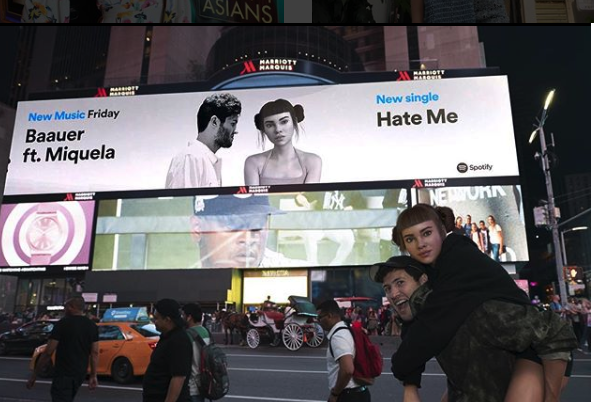
Miquela Sousa is one of the hottest influencers on Instagram. The triple-threat model, actress and singer, better known as “Lil Miquela” to her million-plus followers, has captured the attention of elite fashion labels, lifestyle brands, magazine profiles, and YouTube celebrities. Last year, she sported Prada at New York Fashion Week, and in 2016 she appeared in Vogue as the face of a Louis Vuitton advertising campaign. Her debut single, “Not Mine,” has been streamed over one million times on Spotify and was even treated to an Anamanaguchi remix.
Miquela isn’t human. As The Cut wrote in their Miquela profile this past May, the 19-year-old Brazilian-American influencer is a CGI character created by Brud, “a mysterious L.A.-based start-up of ‘engineers, storytellers, and dreamers’ who claim to specialize in artificial intelligence and robotics,” which has received at least $6 million in funding. Brud call themselves storytellers as well as developers, but their work seems mostly to be marketing. Lil Miquela’s artificiality has made her interesting to elite fashion labels, lifestyle brands, and magazine profiles — she’s appeared on the runway for Prada, and in Vogue as part of a Louis Vuitton advertising campaign; recently, the writer Naomi Fry profiled her for the magazine’s September issue.
Miquela inhabits a Marvel-like universe of other Brud-made avatars orbit, including her Trump-loving frenemy, Bermuda, and Blawko, her brother (whether that’s a term of endearment or a genetic relation, it’s not clear). The three are constantly embroiled in juicy internet drama, and scarcely does one post to their account without tagging, promoting, shouting out or calling out another. In April, when Bermuda allegedly hacked Miquela’s account, deleted all her photos, and demanded Miquela reveal her “true self.” Miquela eventually released a statement: “I am not a human being. . . I’m a robot. It just doesn’t sound right. I feel so human. I cry and I laugh and I dream. I fall in love.” But the character wasn’t revealing anything true: Miquela is a character scripted by humans. The robot ruse only upped her intrigue: not only has it added a new layer to the character’s fiction, it has added a new layer of fictional possibilities. more...