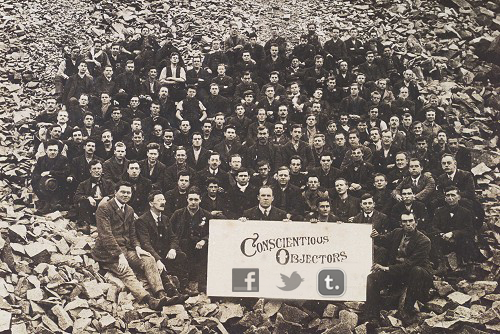
We all know them: the conscientious objectors of the digital age. Social media refusers and rejecters—the folks who take a principled stance against joining particular social media sites and the folks who, with a triumphant air, announce that they have abandoned social media and deactivated their accounts. Given the increasing ubiquity social media and mobile communications technologies, voluntary social media non-users are made increasingly apparent (though, of course, not all non-users are voluntarily disconnected—surely some non-use comes from a lack of skill or resources).
The question of why certain people (let’s call them “Turkle-ites”) are so adverse to new forms of technologically-mediated communication—what Zeynep Tufekci termed “cyberasociality”—still hasn’t been sufficiently addressed by researchers. This is important because abstaining from social media has significant social costs, including not being invited to or being to access to events, loss of cultural capital gained by performing in high-visibility environments, and a sense of feeling disconnected from peers because one is not experiencing the world in the same way (points are elaborated in Jenny Davis’ recent essay). Here, however, what I want to address here isn’t so much what motivates certain people to avoid smartphones, social media, and other new forms of communication; rather, I want to consider the more fundamental question of whether it is actually possible to live separate from these technologies any longer. Is it really possible to opt out of social media? I conclude that social media is a non-optional system that shapes and is shaped by non-users. more...