
violence

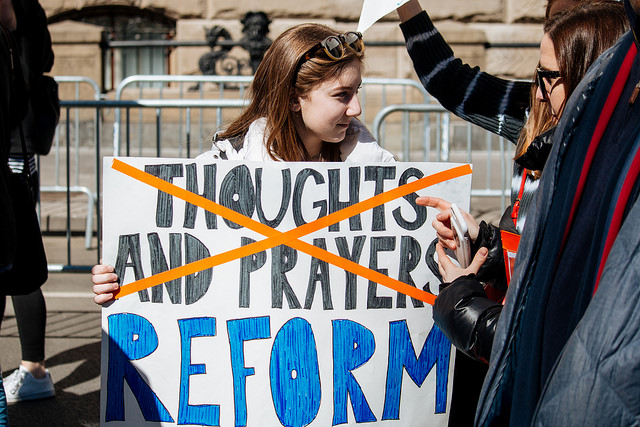
  • Following a school shooting in Winder, GA, the New York Times ran a story on gun laws in Georgia, noting that the state does not have a “red-flag law”–a measure allowing judges to order a temporary confiscation of firearms if there is a credible risk of harm. Jeffrey W. Swanson (Professor in Psychiatry and Behavioral Sciences at Duke University) commented that transitioning between adolescence and young adulthood is “a relatively high-risk time, particularly for young men, for not just mass shootings, but violence and aggression” and that red-flag protection law “is an important policy because it’s nimble, it’s risk-based and focused on individual circumstances.”

  • Scott Thumma (Professor of Sociology of Religion at Hartford International University) appeared on PBS News, discussing megachurches (religious congregations with 2,000+ worshipers) and the recent resignation of several high-profile pastors . Thumma explains that “many people flock to them because they [have] all of the amenities that people were looking for in a congregation. They had robust Sunday school programs, youth programs and exciting worship.” About 40% of megachurches are nondenominational, making them “accountable only to themselves.” Thumma notes that “we don’t have really good data on congregations and the incidence of misconduct across all congregations, but certainly anything that happens in a megachurch…gets amplified because they have such a high profile.”

  • The New York Times ran a story on escalating tensions in many labor unions between union leaders and left-leaning union members calling for the union to take a stance on the war in Gaza and other issues outside the workplace. Ruth Milkman (Professor of Sociology at the City University of New York) commented that “insofar as the new energy [in the labor movement is about young people] — and it mostly is — part of what comes with that is Gaza being a high priority.” Milkman added that union leaders have generally aligned their unions with Democratic politicians and may be reluctant to “take strong stands on anything that might risk political capital” or their access to party leaders.

  • Earlier this summer, a 17-year-old killed three girls and injured ten people in a knife attack at a Taylor Swift-themed dance class in Southport, UK. Following the attack, false rumors spread online that the attacker was an asylum seeker or Muslim immigrant. The misinformation–linked to the far-right movement–prompted a series of violent riots across the UK, in which mosques and a hotel used to house asylum seekers were targeted. Stephanie Alice Baker (Reader in Sociology at City St. George’s, University of London) commented that the UK has “a wide populist movement that is being sowed and cultivated both online and offline.” However, Baker emphasized that “there is never one reason or cause for a riot,” but rather “a complex web of social, political and economic” factors. “There is no doubt that people across the country are experiencing a cost-of-living crisis, mortgage rates and rents have skyrocketed. People are struggling to make ends meet,” Baker explains. “At the same time, there has been a rise in immigration, which many perceived to be the cause, but obviously is a scapegoat.” This story was covered by City University of London.

  • Ruth Horowitz’s (Professor of Sociology at New York University) new book, Passionate Work: Choreographing a Dance Career, studies dancers in the corps de ballet and how they sustain a passion for dance through a profession characterized by uncertainty. In an interview with Pointe Magazine, Horowitz highlights the camaraderie of being in the corps: “Being in the corps brings people together in ways other positions in the company can’t, because you can’t do a triple pirouette if everyone else is doing a double. So while ballet can be very competitive, being in the corps requires a lot of teamwork and a certain amount of cohesiveness that is a building block for some of these deep-seated relationships.”

  • The Minneapolis Reckoning: Race, Violence and the Politics of Policing in America, a new book by Michelle S. Phelps (Associate Professor of Sociology at the University of Minnesota), argues that Minneapolis is a “secret bellwether city for understanding race and policing in America” and “a test case for both the possibilities and limits of liberal police reform.” Phelps appeared on MPR News, discussing the origin of her research, interviews with Minneapolis residents, and the potential impact of court-imposed reform measures. Reason Magazine called the book “a valuable piece of research on how fights for police reform are won and lost, and what reform means to the people who need it most.”
  • The U.S. Department of Justice recently filed an antitrust lawsuit against Live Nation Entertainment (the parent company of Ticketmaster) for monopolization of the concert industry. In an interview with The Conversation, David Arditi (Associate Professor of Sociology at the University of Texas – Arlington) discussed how musicians are now more dependent on tour revenues to make a living and how Live Nation and Ticketmaster changed the ticket purchasing experience for consumers.
  • In a new book, Between Us: Healing Ourselves and Changing the World Through Sociology, forty-five sociologists share personal stories of the impact of sociology. “I’ve always believed that sociology helped save my life and can do the same for others,” said co-editor Elizabeth Anne Wood (Professor of Sociology at Nassau Community College). “Instead of feeling hopeless and helpless, I found strength in understanding the social structures that constrain and hurt us,” co-editor Marika Lindholm (sociologist and founder of Empowering Solo Moms Everywhere) explained. This story was covered by PR Newswire.
  • Benjamin Shestakofsky (Assistant Professor of Sociology at the University of Pennsylvania) wrote an article for Zócalo Public Square describing how venture capital business models “help create products that succeed in short-term disruption—with questionable or even dangerous long-term effects” and the various alternatives to the venture capital model. “By promoting and investing in businesses with alternative ownership structures,” Shestakofsky argues, “consumers, workers, activists, and governments can challenge venture capital’s winner-take-all model, creating ecosystems of smaller, more localized and specialized platforms that are more responsive to the people who use them and to the communities in which they are embedded.”
  • The Telegraph ran a story on the rise of the ‘work from home’ husband, describing the post-pandemic phenomena of U.K. men working from home while their wives return to the office. Heejung Chung (Professor of Sociology and Social Policy at the University of Kent) commented that there is more opportunity to work remotely in male-dominated jobs. “The three big occupations or sectors where remote work is still limited are healthcare, education, not all education but mainly primary and secondary, and then the third is retail. Those are very female-centric occupations, where remote working is not possible,” Chung said.

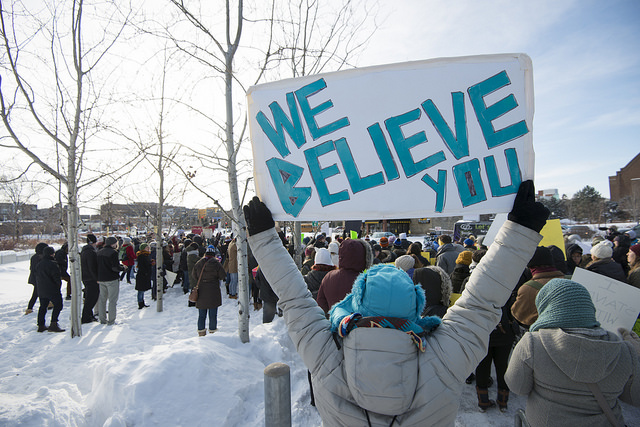
A marcher holding a sign that says, “we believe you.” Photo by Fibonacci Blue, Flickr CC

Since Surviving R. Kelly aired on Lifetime, we’ve seen a rise of activists led by Black women calling for the #MuteRKelly campaign, which dissuades music labels, radio stations, and other music platforms from selling, distributing, and promoting R. Kelly’s music. But despite the recent backlash, fans across the country continue to show their support for the R&B star. While some attempt to separate their feelings about the art from the artist, others dismiss Black women’s claims of R. Kelly’s abusive behaviors altogether. Much of this support comes from other Black R. Kelly fans. The documentary and the subsequent controversy also shed important light on an issue that is often missing from the public sphere: the plight of Black women and girls who experience sexual violence. Saida Grundy’s recent piece in The Atlantic helps us break down how Black support for R. Kelly remains despite the shocking revelations from Black women.

Rape myths have long obscured sexual victimization by suggesting that “real rape” occurs by strangers in a dark alley, women who dress “proactively” and show signs of intoxication “ask for it,” and men are not responsible for assault because they are unable to control their sexual impulses. According to Grundy, Black survivors and victims encounter a distinct set of racialized rape myths both from the broader public and from members of their own racial/ethnic community.

“With racialized rape myths, people compound untrue narratives about sexual assault with their own self-interests. For example, some African Americans might think defending Kelly is a way to push back against the history of false rape allegations from white women against black men — allegations that functioned as assaults on black communities, as they were commonly used by whites to justify the lynching of African American men during the Jim Crow era.”

Grundy echoes work by Black feminist scholars, such as Beth Richie, who argue that Black women and girls experience a “trap of loyalty,” where they are expected to resist racism against Black men by excusing or altogether denying abusive behaviors, even at the risk of concealing and enduring their own abuse. Furthermore, recent reports illustrate how Black girls are viewed as more adult and consequently less innocent than white girls. These myths surrounding innocence create interlocking gendered and racialized messages about Black girls’ and women’s sexuality that suggest they are “fast,” hypersexual, and deserving of men’s and boys’ unwanted advances towards them. In the age of #MeToo, disrupting racialized rape myths and the broader rape culture allows us to understand the race- and gender-specific mechanisms that damage Black girls’ and women’s credibility and impede disclosure and reporting on their experiences with sexual violence.

Photo of a an overturned wheel barrow in front of a solid metal fence. Photo by Michael Coghlan, Flickr CC

Addressing gun violence in the United States is often a heated political issue — polarizing constituents around what solutions are best to address it. Reducing the thousands of firearm homicides and nonfatal shootings that occur each year will require some serious debate and complex solutions. But there is one surprising factor that may reduce gun violence — cleaning up neighborhoods. A recent study featured in Huffington Post shows that this simple strategy of “cleaning and greening” vacant lots may have some far-reaching impacts on reducing crime.

The researchers partnered with the Pennsylvania Horticultural Society’s LandCare program to randomly select lots in Philadelphia for either a full transformation (picking up trash, putting up a fence and grass seed, and maintenance), a partial makeover (trash removal and mowing only), or left untouched.The researchers then measured shootings in the area from 2011 to 2015.

They found that areas that received the full “cleaning and greening” saw a 7% reduction in shootings, and the partially treated areas a 9% reduction, when compared to areas with no cleaning or maintenance. John Macdonald, one of the study authors, notes that this cleaning strategy did not appear to displace shootings to other blocks, and that cleaned up lots could have other health and safety benefits. He also noted that the solution has its limitations and needs more research to understand the impacts of “cleaning and greening”:

“You couldn’t green a city and just eliminate the chronic problems of gun violence that are highly concentrated in city blocks just by doing remediation to places.” 

Sociologist Eric Klinenberg notes “broken windows” theory — the idea that visible signs of crime, like broken windows, creates an environment that encourages further crime —  is the main impetus behind this experiment. However, he also points out that broken windows theory has been used to justify policing of low-level crimes like public drinking — particularly against people of color and homeless people. These policing practices were not only severely misguided, but completely overlooked the environmental aspects of the original theory:

“What’s so striking is that the [original 1982 article The Atlantic] was actually much more about broken windows than it was about bad people…For decades now, we have fought crime by trying to crack down on people.”

Rather than reducing crime “by punishing people,” Klinenberg suggests that we need more resources and social infrastructure in communities that are heavily impacted by crime. As he concludes, “What we have not done is invest in places and rebuild places where crime is concentrated.”

Photo of a gate in front of a synagogue in Poland. Photo by Emmanuel DYAN, Flickr CC

On November 9th, 1938, thousands of Jewish stores, homes, and places of worship across Nazi Germany were destroyed by extremist mobs. During Kristallnacht, or “The Night of Broken Glass,” dozens of Jews were murdered and another 30,000 were sent to concentration camps in this crucial shift from anti-Semitic language to physical violence. This year’s commemoration of Kristallnacht comes in the aftermath of the shooting of 11 Jewish congregants in a Pittsburgh synagogue. In recent years, ideologically motivated violence has been increasing against religious minorities. Jewish and Muslim congregations have heightened their security measures in the face of such threats. In a new article in The Conversation, Christopher Scheitle and Jeffery Ulmer analyze these increased protections and the heightened fear among many religious minorities in their spaces of worship.

Using surveys and interviews, Scheitle and Ulmer conducted a study of over 1,300 congregations to examine crime and security in religious spaces. While many congregations experienced vandalism or theft regardless of religion,  synagogues and mosques experienced threats of violence at much higher rates:

“Crimes, most commonly vandalism and theft, were committed at about 40 percent of congregations in the year prior to the survey. This overall percentage was not significantly different across religious traditions. When we dug deeper, though, we found that synagogues and mosques deal with crime-related problems that are much different than the average church. Our survey found, for instance, that synagogues and mosques were three times more likely than congregations overall to have received an explicit threat in the prior year.”

Many synagogues and mosques have sought to respond to these threats through increased security. In comparison to other religions, Jewish and Muslim congregations have incorporated many more security cameras and guards. However, these implementations are not without cost:

“Our interviews found that most places of worship have a hard time implementing security. Some of this is simply not enough money. Larger and wealthier congregations tend to have more security in place. Beyond resources, our interviews consistently found that places of worship view security measures as a potential threat to their mission of creating a sacred space that is open to their communities.”

Scheitle and Ulmer suggest that congregations can better protect themselves through cost free measures, like limiting entrances to places of worship, and through community partnerships. A knowledge of the legacies of anti-Semitism and other forms of religious discrimination also emphasizes the need for compassion and concern in the wake of such tragedies.

Photo of Star of David on a Jewish Synagogue. Photo by Patrick Lentz, Flickr CC

The mass shooting at the Tree of Life Synagogue has been characterized as the deadliest attack on Jewish people in U.S. history, and mourning services continued last week and over the weekend for the shooting victims. In a recent article for The Conversation, Jeff Gruenewald and William Parkin discuss how the recent rise in violence against religious minority communities is often tied to far-right extremist conspiracies and ideological beliefs.

The authors argue that while violent crimes targeting religious minorities and institutions have been on the rise in recent years, it’s nothing new. Far-right extremism has existed in the United States for more than a century and motivated many of these crimes. Gruenewald and Parkin explain further:

“Unfortunately, it’s not new for far-right extremists to vilify non-white, non-Anglo-Saxon and non-Protestant religions. Judaism has endured most of their ideological rage and conspiratorial paranoia…Their dogma claims, falsely, that globalist Jews have infiltrated the government and other U.S. institutions, and that Jews and non-whites pose an existential threat to the white race.”

Using data from the U.S. Extremist Crime Database, they demonstrate that since 1990, far-right extremists have commited 217 ideologically motivated homicides, nineteen of which targeted religious institutions or individuals. While there are many examples of far-right extremist violence that have not been religiously motivated, such as the Oklahoma City bombing, the authors indicate that far-right extremist violence against religious minorities — especially places of worship — appears to be on the rise since 2010. And beyond these cases,there is evidence of over 100 failed or foiled plots against Jewish institutions or individuals between 1990 and 2014.

While mass shootings and extremist violence are rare events, Gruenewald and Parkin’s research demonstrates that there are some disturbing patterns in far-right extremism and its connections to mass violence. The authors conclude with the need to prevent far-right radicalization,

“We believe countering divisive narratives with different viewpoints informed by evidence on what works to prevent radicalization is more productive than aggravating wounds with politicized rhetoric. As Americans, we must speak openly about the perils of white supremacy, anti-Semitism and both the rhetorical and real dehumanization of those we perceive as unlike us. Those wielding political power and influence need to publicly and clearly condemn acts of violence by extreme far-rightists and the ideologies underpinning this form of domestic terrorism.”

Photo by Steve Rainwater, Flickr CC

Supreme Court nominee — now associate justice — Brett Kavanaugh gave an interview to Fox News where he claimed that he could not have assaulted Dr. Christine Blasey Ford because he did not have sex until many years after high school. In a recent op-ed for Huffington Post, sociologist Sarah Diefendorf argues that this ‘good guys’ defense perpetuates an erroneous belief that rapists are fundamentally bad people who are incapable of becoming successful and accomplished people, like Brett Kavanaugh. Diefendorf explains,

When Kavanaugh or other men respond to allegations of sexual assault by making themselves look like good guys, they’re trying to pin the blame on other “bad” men as failures of masculinity. This good guy defense is brilliant. It allows men to make the problem of sexual assault and rape about being an individual ― the work of bad men, not a bad culture ― when we know that it is actually a widespread cultural problem.

Instead of a binary where there are ‘good’ and ‘bad’ guys, Diefendorf cites social science research about how young men learn that masculinity means exerting dominance. This can mean symbolic domination, like calling another man a ‘fag’ or bragging about sex with women, or physical domination, like sexual assault. Citing her own research, Diefendorf points out that dominance work is a show for other men. She writes,

My research suggests that masculine bonding at the expense of women might be even stronger among men who are virgins. I spoke to men ages 19 to 25 who were virgins to understand how virginity affected how they saw themselves as men. Male virginity is often stigmatized, so the men I spoke to had to find other ways to be accepted as manly. They would talk to other men about sex frequently to show how hard it was to keep themselves from doing it.

Social science can remind us that masculinity carries assumptions of domination and is a powerful cultural force in shaping behavior — a force that can affect even those who present themselves as ‘good guys.’

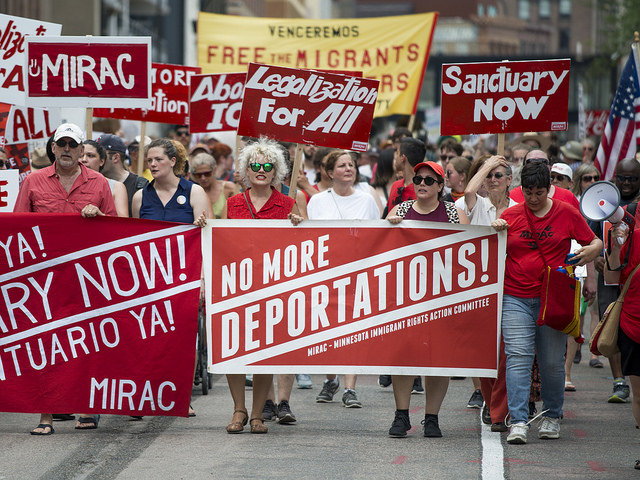
Photo by Fibonacci Blue, Flickr CC

The current immigration policies and practices of the Trump administration have received significant scrutiny. Many detainees are subjected to inhumane treatment in Immigration and Customs Enforcement (ICE) facilities around the nation, demonstrated in recent reports of  sexual assault and the potential death of a migrant child upon release from detention. In a recent article in The Conversation, sociologist Tanya Golash-Boza argues that the criminalization and deportation of immigrants is nothing new, but rather that the Trump administration’s actions are part of a broader pattern of mass deportation.

In 2003, the Department of Homeland Security was created, and upon its inception housed both ICE (which was also formed in 2003) and Customs and Border Protection to enforce immigration laws. According to Golash-Boza, the transferral of immigration law enforcement from the Department of Justice to the Department of Homeland Security served two purposes: changing the tone of immigration enforcement as an issue of national security and a massive cash flow to immigration law enforcement agencies.

Even though immigration is central to Trump’s image and platform, deportations were actually highest under President Obama, with three million people deported during his tenure. Tough immigration enforcement has occurred across party lines and is about more than just ICE. Golash-Boza expands,

“For the past 20 years, aggressive immigration law enforcement has been a constant across Democrat and Republican administrations. Democratic President Bill Clinton signed laws in 1996 that greatly expanded deportations. Republican George Bush created the Department of Homeland Security and, in effect, ICE. The creation of the Department of Homeland Security led to a spike in the number of people deported from the U.S.”

Golash-Boza’s research demonstrates that ending mass deportation in the United States will require more than just standing up to Trump and ICE, but addressing our history of aggressive immigration policies and its connections to the “war on terror.”

Photo by Karim Corban, Flickr CC

 Once released back into their communities, formerly incarcerated people are expected to successfully acclimate back into society, yet they are often barred from the very assistance they need. Researchers are continually learning about what life is like after prison. A recent article in The New York Times details a new study that reveals how childhood trauma and mental illness hinder formerly incarcerated individuals’ ability to reconnect with loved ones, establish housing, and find work in the first year after prison.

The lead investigator of the study, sociologist Bruce Western, followed 122 former inmates in Massachusetts in their first year out of prison. He found that childhood trauma — particularly childhood violence — affected many of the participants in his study. Half of his participants also reported having a chronic condition and nearly two-thirds reported either a physical or mental health concern. In his recent book about the study, Homeward, Western argues that those who go to prison are much more likely to have challenges with addiction, mental illness, and physical disability. Western writes,

“Redressing the historic injustice of mass incarceration must do more that settle accounts with the past. Police, judges, and penal officials who acknowledge historic harms can begin to heal relationships and build trust with disadvantaged communities. But such efforts will feel hollow without real change. Under the harsh conditions of American poverty, the antidote to violence is not more punishment but restoring the institutions, social bonds, and well-being that enable order and predictability in daily life.”

In other words, for true change to occur, we must address the frequent connections between childhood trauma, mental health, and criminal involvement with adequate programming and treatment. At this point, the United States addresses crime with lengthy stints of incarceration, disentangling it from a complicated picture of people’s lived experiences with violence and trauma. As Western strongly asserts in the article,

“The whole ethical foundation of our system of punishment I think is threatened once you take into account the reality of people’s lives.”

Photo by mathiaswasik, Flickr CC

As debates about gun control continue amid mass shootings, compromise continues to be elusive. One step toward compromise is understanding what drives attitudes about gun control. Conventional wisdom suggests attitudes about gun control are closely tied to other political views, party affiliation, or past experiences with using firearms for hunting or personal protection. Sociologists have shown that attitudes about guns are also cultural, tapping into deep assumptions about what it means to protect and provide for loved ones. Now, a new study finds an even more surprising link: attitudes about guns are closely associated with core assumptions about religion in society.

In a recent article for the Washington Post, Andrew Whitehead, Landon Schnabel, and Samuel Perry summarize the findings from their study:

“Americans who subscribe to Christian nationalism believe that America has always been ― and should always be ― distinctively Christian in its national identity, sacred symbols and public policies…the connection between Christian nationalism and gun control attitudes proves stronger than we expected. It turns out that how intensely someone adheres to Christian nationalism is one of the strongest predictors of whether someone supports gun control. One’s political party, religiosity, gender, education or age doesn’t matter.”

These findings highlight how attitudes about guns are connected to some Americans’ core sense of social identity. This makes the policy debate a proxy for arguing about who we are as a country, and such a high stakes argument invites deeply entrenched positions.