
Tag Archives: urban

public (sociological) spaces

F1000011What could decorative rocks and park benches have to do with sociology? The San Francisco Chronicle suggests one possibility:

For Jeffrey Miller, landscape architecture is more than just plants, waterfalls and decorative rocks. For Miller, the founder of San Francisco’s Miller Company Landscape Architects, it’s about uniting living spaces and bringing people together.

“My impetus to be a landscape architect came out of a question – how to design social and public space so that there were better relationships between people,” he said. “It wasn’t a nature-based beginning, it came from more of a sociological perspective.”

Since forming Miller Company in 1980, the former sociology student and filmmaker has been involved with some of the more dramatically landscaped residential communities in the Bay Area.

Miller applies his sociological imagination to landscaping by envisioning public spaces as opportunities for social interaction and connection, especially in big cities.

Ultimately, Miller realizes that the outdoor space of a development is almost always larger than the interior space, and what you do with that is as important as creating comfortable living rooms and spacious kitchens.

“The largest space that we have with these projects is everything that’s outside of the buildings,” he said. “So the care and design of the world outside of buildings is tremendously important to the way we live, especially in urban places. This is kind of our public living room – what we have outside – and the more we can create sociable environments for communities coming together, the better social environment we’re going to have.”

the importance of the immigrant middle class

The Los Angeles Times reports on the importance of the middle class for the city’s future, with special emphasis on middle class Latinos:

With this year’s census likely to show a Latino majority in both the city and county of Los Angeles, it’s obvious that our collective future is linked to the social health of that group of people. And if you think of Latinos only in the dysfunctional terms described in so many media reports, then a Third World L.A. seems like an inevitability.

While the experiences of poor and working-class Latino immigrants are often the focus of scholars and the media, other immigrants may go unnoticed:

You might not think about L.A.’s Latino middle class much. But USC sociologist Jody Agius Vallejo has eschewed more exotic topics to investigate its middling peculiarities.

Agius Vallejo’s research looks at the “pathways to success” that allow even people of humble immigrant origins to reach middle-class status. Her work rebuts the widespread perception that Mexican immigrants and their offspring are following what she calls a “trajectory of downward mobility into a permanent underclass.”

More on Agius Vallejo’s research:

Agius Vallejo interviewed 80 subjects who possessed at least three of these four characteristics: college educations, higher than average income, white-collar jobs and home ownership. Seventy percent of the people in her sample grew up in “disadvantaged” communities. Their parents had, on average, a sixth-grade education.

The members of this arriviste Mexican middle class might look like their white counterparts on paper, Agius Vallejo said. But in other ways they are different. Among other things, they have stronger social ties to poorer relatives.

Another of Agius Vallejo’s subjects is a lawyer who has recently visited jail (to bail out a cousin) and the social-security office (to help an uncle). Relatives turn to the lawyer in times of need because “she’s the one in the family with knowledge,” Agius Vallejo said. “She’s the one who’s made it to the middle class.”

Each person who achieves social mobility improves the overall well-being of the community. Social climbers show others behind them the way forward. “The future of the city really hinges on the mobility of immigrants,” Agius Vallejo told me.

The importance of the immigrant middle class extends beyond the city of Los Angeles, though:

A healthy middle class with Latin American roots is critical to the entire country’s future too. That’s what another USC professor, Dowell Myers, argues in his book “Immigrants and Boomers: Forging a New Social Contract for the Future of America.”

Myers, a demographer, says our aging country needs to invest in its younger, immigrant communities as an act of self-preservation. Immigrants’ incomes and rates of homeownership rise the longer they stay in this country, he writes, and provide potential members of the taxpaying middle class that will fund the retirement of the boomer generation.

more hbo sociology

HBO’s “The Wire” continues to inspire sociological inquiry. According to the Times Higher Education,

Drugs, guns and institutional corruption may be standard fare on the streets of Baltimore, the setting of the cult television show The Wire, but they are surely far removed from most academics’ working lives.

This week, however, scholars are convening at Leeds Town Hall to analyse the HBO show, broadcast in the UK on FX and BBC Two, as an example of “social science fiction”.

The conference has attracted almost 50 papers and an international audience of more than 100, with sessions such as “It ain’t about right, it’s about money” by Peter Moskos, assistant professor at the John Jay College of Criminal Justice, City University of New York, and “A man must have a code: the masculine ethics of snitching and not-snitching”, by Thomas Ugelvik, from the University of Oslo’s department of criminology and sociology of law.

Why does the show garner so much interest among social scientists?

The conference was organised, Professor Burrows said, to take advantage of this interest at a time when academics in the field were being urged to do more to develop “public sociology”.

“We were spending more time talking about the show than we were about work, so we thought we’d try to combine the two,” he said.

“We spend hours and hours (as academic sociologists) writing papers that not many people read, but actually many of the issues that we try to write about – particularly people who work in urban or political studies – can be dealt with more analytically in entertainment.”

The show’s broad public appeal does seem to get people outside of academia excited about social science:

“The show appeals to academics, people in the media and politicians because it talks to many of their concerns, but actually it’s far more ubiquitous than that,” he explained.

“I’ve been struck by how many young kids have got into it, usually because they think it’s about bad language, drugs and violence, but actually – and I’ve spoken to my own teenage children and their friends about this – it gets them thinking seriously about politics, culture, race. Then, suddenly, sociology, economics and political science are a little bit more sexy than perhaps they thought they were.”

banking on crime

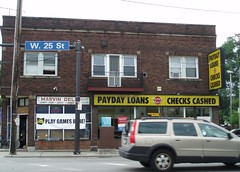
Ohio Lottery and PayDay LoansSociologists have found that it’s not just individuals who pay a high price for payday lending practices. Whole neighborhoods pay, too, in more than just monetary ways.

As reported by Reuters:

As Congress debates financial regulatory reform and the Obama Administration advocates for greater consumer financial protection, a new study finds a need for Congressional action on fringe banking practices used heavily by financially vulnerable families. The study released today details the toll on communities with a high concentration of payday lending business and finds a clear association between the presence of payday lenders and neighborhood crime rates. The study recommends that Congress take action to cap payday lender interest rates at 36 percent, enacting for the entire country protections Congress put in place for U.S. military families.  The new study, entitled “Does Fringe Banking ExacerbateNeighborhood Crime Rates? Social Disorganization and the Ecology of PaydayLending,” was conducted by The George Washington University professors Charis E. Kubrin and Gregory D. Squires, along with Dr. Steven M. Graves of California State University, Northridge.

Further…

These broader community costs include higher rates of violent crime.  The study found that the association between payday lending and violent crime remains statistically significant even after a range of factors traditionally associated with crime are controlled for statistically.

The sociological commentary…

“As a criminologist, I can attest to the fact that there is woefully limited research on the impact of the behavior of financial institutions on neighborhood crime.  As our research demonstrates, these connections can no longer be ignored by criminologists and law enforcement officials across the country,” said Charis Kubrin.

hbo sociology

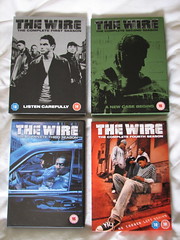
Paste MagazineThe Wire DVDs reports that students at Harvard will soon be able to register for a class based on the HBO series, “The Wire”.

The class will be taught by sociology professor William J. Wilson, an outspoken, long-time fan of the show. “It has done more to enhance our understanding of the challenges of urban life and the problems of urban inequality, more than any other media event or scholarly publication,” Wilson told the audience at a panel discussion on campus.

That’s high praise from a renowned sociologist, who is not alone in his enthusiasm for the show as a vehicle for teaching.

Harvard is not the only university to offer a course about The Wire. UC-Berkeley teaches a film studies course about it, and so does Middlebury College. Duke offers a literature course that uses it to examine phenomenology and 21st century visual media.

bike-sharing is too bourgeois

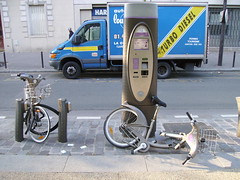
In 2007, Paris initiated a bike-sharing program to  provide “an inexpensive, healthy and low-carbon alternative to hopping in a car or bus”. The program purchased 20,600 specially-made bicycles, 80 percent of which have now been vandalized or stolen. The New York Times reports: Freeride

“The symbol of a fixed-up, eco-friendly city has become a new source for criminality,” Le Monde mourned in an editorial over the summer. “The Vélib’ was aimed at civilizing city travel. It has increased incivilities.”

The heavy, sandy-bronze Vélib’ bicycles are seen as an accoutrement of the “bobos,” or “bourgeois-bohèmes,” the trendy urban middle class, and they stir resentment and covetousness. They are often being vandalized in a socially divided Paris by resentful, angry or anarchic youth, the police and sociologists say.

A sociologist comments:

Bruno Marzloff, a sociologist who specializes in transportation, said, “One must relate this to other incivilities, and especially the burning of cars,” referring to gangs of immigrant youths burning cars during riots in the suburbs in 2005.

He said he believed there was social revolt behind Vélib’ vandalism, especially for suburban residents, many of them poor immigrants who feel excluded from the glamorous side of Paris.

“It is an outcry, a form of rebellion; this violence is not gratuitous,” Mr. Marzloff said. “There is an element of negligence that means, ‘We don’t have the right to mobility like other people, to get to Paris it’s a huge pain, we don’t have cars, and when we do, it’s too expensive and too far.’ ”

Despite these setbacks, the bike-sharing will continue:

Still, with more than 63 million rentals since the program was begun in mid-2007, the Vélib’ is an established part of Parisian life, and the program has been extended to provide 4,000 Vélib’s in 29 towns on the city’s edges.

census preparations

View of Philadelphia from the Museum of Art #1The Philadelphia Inquirer reports this week on a new study from the Pew Charitable Trusts regarding census preparations in a number of large US cities.

The study compared Philadelphia’s census preparation efforts with those of five larger cities – New York, Los Angeles, Chicago, Houston and Phoenix – and five cities similar to Philadelphia and its history with the census: Pittsburgh, Baltimore, Boston, Detroit and Atlanta.

Although the census is done by the federal government, ensuring the local count is complete and accurate has become a municipal self-promotion campaign.

“Census preparation really matters,” said [Thomas] Ginsberg, [the project manager of Pew's Philadelphia Research Initiative,] and the census has become a hard sell.

Why is it a ‘hard sell?’

Immigrants, especially those here illegally, are suspicious of the count despite the promise of anonymity. They fear the count could lead to discovery and deportation of them or relatives.

Anti-government campaigns involving the Obama Administration’s proposal for universal health insurance coverage also appear to be affecting the census.

And the economic recession has dramatically reduced local tax revenue, meaning there is much less to spend on municipal census promotion efforts.

And the sociological commentary…

“Nobody is expecting a good census in 2010. I’m not optimistic,” said Joseph J. Salvo, New York City’s population division chief and a sociologist, quoted in the Pew study.

Salvo, who advises and critiques the Census Bureau, noted that “since the last census we had 9/11, privacy issues, trust of government issues. And there’s been no public declaration that we’re going to suspend immigration raids like in 2000.”

Read more.

Black Church Participation on the Rise in Urban Areas

A little smashed, otherwise fineNewswise, a press release service, brought to my attention interesting new research out of Vanderbilt University by Sandra Barnes suggesting that, “churches with predominantly black congregations are thriving in urban and suburban areas, and the most successful churches employ a variety of sophisticated marketing and programming strategies to draw members.”

The research offers insights into what successful black churches have in common today, when parishioners have more choices and expect more from their churches than they have in the past.

“Contrary to expectations, I found that the black church is still a very important part of the lives of many African Americans,” Barnes said. “Those churches that market themselves, make sophisticated use of technology, offer practical sermons and programs for families and children over and above typical Bible studies are most likely to draw and keep new parishioners.”

People are expecting more from their churches…

Barnes found that today’s parishioners are “religiously savvy” and expect more from their church service, such as sermons and Bible studies relevant to everyday life, activities for individuals and families, and innovative worship services that incorporate dance and music.

“The broader societal change we have seen in consumerism is also manifesting in the religious arena. We expect more, bigger and better,” Barnes said. “As in the retail environment, today’s church goers are savvy shoppers. They are looking for a worship experience that meets their needs and programs that meet their needs and they’re willing to shop around to find it.”

This consumerism has led churches to use sophisticated marketing tools, specifically the Internet.

“Successful churches are very savvy when it comes to marketing. Word of mouth continues to be an important tool, but it is no longer the primary mechanism,” Barnes said. “Web sites, television ads and prime time exposure all play a role. Churches are using very intentional marketing strategies and much of it relies on technology.”

Read more.

‘more than just race’ from william julius wilson

This past weekend, the New York Times Book Review highlighted a compelling new book from sociologist William Julius Wilson entitled, ‘More Than Just Race: Being Black and Poor in the Inner City.’ 

The Times writes:

In “More Than Just Race,” the Harvard sociologist William Julius Wilson recaps his own important research over the past 20 years as well as some of the best urban sociology of his peers to make a convincing case that both institutional and systemic impediments and cultural deficiencies keep poor blacks from escaping poverty and the ghetto.

The systemic impediments include both the legacy of racism and dramatic economic changes that have fallen with disproportionate severity on poor blacks. State-enforced racial discrimination created the ghetto: in the early 20th century local governments separated the races into segregated neighborhoods by force of law, and later, whites used private agreements and violent intimidation to keep blacks out of white neighborhoods. Worst, and most surprising of all, the federal government played a major role in encouraging the racism of private actors and state governments. Until the 1960s, federal housing agencies engaged in racial red lining, refusing to guarantee mortgages in inner-city neighborhoods; private lenders quickly followed suit.

Meanwhile, economic and demographic changes that had nothing to do with race aggravated the problems of the ghetto. Encouraged by recently built highways and inexpensive real estate, middle-class residents and industry left the inner city to relocate to roomier and less costly digs in the suburbs during the ’60s and ’70s. Those jobs that remained available to urban blacks further dwindled as companies replaced well-paid and unionized American workers with automation and cheaper overseas labor. The new economy produced most of its jobs at the two poles of the wage scale: high-paying jobs for the well educated and acculturated (lawyers, bankers, management consultants) and low-paying jobs for those with little education or skills (fast food, telemarketing, janitorial services).

And today…

Today many ghetto residents have almost no contact with mainstream American society or the normal job market. As a result, they have developed distinctive and often dysfunctional social norms. The work ethic, investment in the future and deferred gratification make no sense in an environment in which legitimate employment at a living wage is impossible to find and crime is an everyday hazard (and temptation). Men, unable to support their families, abandon them; women become resigned to single motherhood; children suffer from broken homes and from the bad examples set by both peers and adults. And this dysfunctional behavior reinforces negative racial stereotypes, making it all the harder for poor blacks to find decent jobs.

Read more.

the writing on the wall… a sociologist on graffiti

Repaze Rocky 777The New York Times blog City Room, ran a story this week about a sociologist’s new book about graffiti…

Gregory J. Snyder, a Baruch College sociologist, spent years hanging out with graffiti writers, earning their trust and conducting scores of interviews. The new book based on his studies, “Graffiti Lives: Beyond the Tag in New York’s Urban Underground,” reveals that he became more than an observer in that decade and a half: On very few occasions he wrote graffiti himself, scrawling his tag perhaps seven times.

The books discusses the origin of graffiti culture as well as the diversity amongst those who engage in in…

Professor Snyder, 40, argues that while graffiti culture emerged around the same time as hip-hop, in the early 1970s, graffiti in fact comes from a variety of cultural sources:

Whatever their class, race, ethnicity, religion, or age, writers define themselves not by what they look like, or what language they speak, or what clothes they wear, but by what they do. Their identities are as writers first, and as members of ethnic, religious, and other subgroups second.

He adds, “In its purest form, graffiti is a democratic art form that revels in the American Dream.”

The book, just published by New York University Press, argues that graffiti culture has, in some ways, been uniquely democratic. “What is lost sometimes in the cacophony of the debate over whether graffiti is art or vandalism is that when it’s art, it is free art,” he writes. “You don’t need money, or special knowledge, or the right outfit, or a car, or an ID to see it. This is why the graffiti subculture has inspired such a diversity of young people.”

Snyder addresses the where and why…

A provocative map in the book points out that unlike other “quality of life” crimes, graffiti does not tend to be focused in poor neighborhoods with high rates of violent crime. Professor Snyder writes:

Graffiti writers write in order to get fame and respect for their deeds, and therefore they write in places where their work is more likely to be seen by their intended demographic. It is not the amount of disorder that determines a good spot to write graffiti, but the number of potential viewers and the unlikelihood that the graffiti will be painted over. These spots tends to be where young people from all over the city are likely to congregate, and thus the East Village, the Lower East Side, and SoHo are the places where most of the illegal New York City graffiti can be found. These are not poor, crime-ridden neighborhoods.

Indeed, he adds, “Despite all of the negativity associated with graffiti, it remains one of SoHo’s selling points, literally.”

Read more.