
time

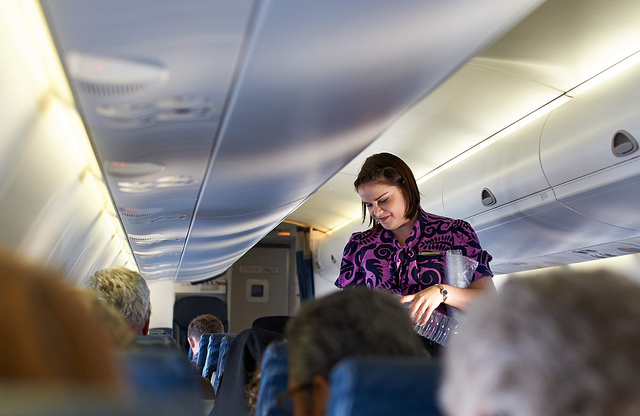
Photo of flight attendant inside a plane. Photo by peter burge, Flickr CC

For many people, coining a term and having it become part of common conversations would be a huge achievement. But such popularity sometimes means that these terms lose their original meanings. This is what happened to Arlie Hochschild’s term, “emotional labor.” Initially coined to identify what is so exhausting about jobs such as flight attendants, nursing home attendants, and child-care workers, emotional labor is increasingly used as a catch-all term for mental work, care work, or any burdens that disproportionately fall on women.  

In a recent interview with The Atlantic, Arlie Hochschild reminds us of the core definition of emotional labor:

“Emotional labor, as I introduced the term in The Managed Heart, is the work, for which you’re paid, which centrally involves trying to feel the right feeling for the job. This involves evoking and suppressing feelings . . . The point is that while you may also be doing physical labor and mental labor, you are crucially being hired and monitored for your capacity to manage and produce a feeling.”

In addition to a lack of a social-class perspective in the recent usage of the concept — in one example, emotional labor was used to describe calling the maid — Hochschild contends that emotional labor may be overextended in ways that are unproductive, particularly during important conversations about alienated labor and household responsibilities. Some of her other books, including The Second Shift and The Time Bind, are more relevant to the uses of emotional labor that are fundamentally talking about household responsibilities and family dynamics. While Hochschild appreciates the attention to her work, she also believes maintaining analytic precision is essential — especially in mobilizing the concept of emotional labor to recognize inequality and alienation in the workplace.

“We’re trying to have an important conversation but having it in a very hazy way, working with [a] blunt concept. I think the answer is to be more precise and careful in our ideas and to bring this conversation into families and to the office in a helpful way…If you have an important conversation using muddy ideas, you cannot accomplish your purpose. You won’t be understood by others. And you won’t be clear to yourself.”
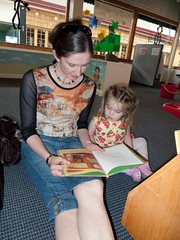
The Washington PostP1010741 recently ran a column written by Middlebury sociologist Margaret K. Nelson. Nelson reports on potential implications of “helicopter parenting” (the constantly hovering style of super-involved middle class parents) in the lives of the parents themselves, especially mothers.

Helicopter parenting is, to put it mildly, more time-consuming and more emotionally demanding than other parenting styles. And much of its work falls (as the work of parenting always has) on women. Since 1965, the amount of time mothers spend on all child-care activities has risen, even though the majority of mothers are now in the labor force; the increase has been particularly sharp among highly educated mothers.

So it’s not just that today’s professional mothers are holding down what would, in the 1960s, have been two separate jobs — one inside the home, the other outside it. It’s that the first of those jobs is a lot more taxing than it used to be. Mothers who try to live up to the new parenting standards of the professional middle class seem to have few options: They can overwork themselves, or they can leave the workforce.

While some mothers do leave the workforce, many do not. Their intense devotion to building a relationship with their kids and working outside the home can be understandably taxing on their other relationships, such as friendships, marriages, and community involvement.

For those helicopter mothers who don’t leave the workplace, personal relationships seem to be the first thing to go. Working a demanding job while paying painstaking attention to one’s children leaves little time for maintaining a marriage…

[A]ccording to sociologists Suzanne Bianchi, John Robinson and Melissa Milkie, adults in 2000 spent less time with their spouses than adults did in 1975, as they spent more time at work and more time with their children. The higher divorce rate among women with high-pressure careers could therefore be both a cause and a consequence of intense devotion to one’s children: These mothers may find that the only reliable, and persistent, relationships are those with their kids.

When people turn inward to their families, their communities also pay a high price. In a series of studies, sociologists Naomi Gerstel, Sally Gallagher and Natalia Sarkisian have shown that, parenting practices notwithstanding, marriage is a greedy institution. Compared with singles, married people are less likely to visit relatives, less likely to take care of elderly parents and less involved with neighbors and friends.

I suspect that the tendency to turn inward must be even more intense among hyper-vigilant parents. And this withdrawal may extend to parents’ broader social and civic engagement…

And to friendship. The time married parents spend visiting with friends and relatives outside the nuclear family has declined dramatically: Married fathers spent almost 40 percent less time and married mothers spent almost a third less time socializing in 2000 than they did in 1965, according to Bianchi, Robinson and Milkie. I can’t help but think that the new intensity of daily life is part of the problem. Parents seem to have few opportunities to pursue friendships unless they are friendships that take little extra time (as with co-workers or other parents on the sideline of a child’s sporting event).

Many of the helicopter mothers I’ve spoken to have told me, often with pride in their voices, that their daughters are their best friends. At first, I wondered why these women — some of them in their late 40s or 50s — wouldn’t prefer to spend their free time with people their own age. But as I looked more closely at the way they are tackling parenthood, I understood: They have no free time.

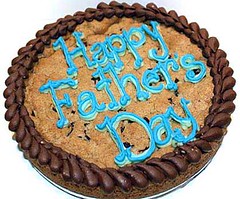
Sweet Flour Father's Day CookiegramSociologists have found good news just in time for Fathers Day: nonresident fathers are spending more time with their kids in recent years. According to the New York Daily News:

Deadbeat dads are scarcer than ever these days, which is good news for the 50% of American kids who won’t live with their father for part of their childhood.

“There are fathers that are very involved,” Pennsylvania State University sociologist and demographer Valarie King told USA Today. “There are some that are not. We have this image of the nonresident dad, and for some, that’s the deadbeat dad.”

The amount of time nonresident dads spend with their children has increased over the past several decades.

When Penn State sociologist and demographer Paul Amato researched changes in nonresident father-child contact over the past 30 years, he found substantial increases in the amount of contact. The percentage of fathers who reported no contact with their children went from 37% in 1976 to 29% in 2002.

Amato, whose work was published in the journal Demography, learned that nonresident dads’ involvement in their kids’ lives varied. Some 38% were highly involved, but 32% were rarely involved. The highly involved dads tended to have kids who were older at the time of the breakup. They were likely to have been married at one time and to have paid child support.

How well fathers and mothers get along can be a significant factor in the level of nonresident father involvement.

Perhaps the best predictor of whether a dad will stay involved, according to Philip Cowan, professor emeritus of psychology at the University of California Berkeley, is if he gets along with the mother.

“They don’t have to love each other or like each other,” Cowan told USA Today. “But they do need to co-parent and collaborate.”

The Bakersfield Californian welcomes 2010 by reflecting on the past decade:

Naming this decade — and we must, because we are Americans, and we name things — isn’t going be so easy. Some decades, at least in retrospect, are easy calls. The Gay Nineties. The Roaring Twenties. The Psychedelic Sixties. But naming the ’00s is a challenge best postponed, because nothing we’ve considered rings with authenticity.

So,

All we can do is look at the evidence that historians and sociologists not yet born will consider. And one thing, beyond the bookend disasters of 9/11 and the Great Recession, stands out: Technology reshaped who we are and how we interact. Social media took hold of America in the last few years of the ’00s, with 350 million users on Facebook, 100 million on MySpace, and 18 million using Twitter.

Sociologist Rhonda Dugan weighs in:

“I’d call it the Decade of Self-Importance,” she said. “Everyone is networking online, but they’re not doing it just to find jobs. They’re doing it to talk about themselves. The ‘Me Decade’ was all about me. Now it’s about me and telling everyone about it. I use Facebook myself. And now I’m asking myself, ‘Why am I posting that I ran a half-marathon?’ We’ve become more narcissistic, and social media has helped push it along.”

Retired sociologist Russell Travis also comments:

“I’d call it the PTSD — the Post-Traumatic Stress Decade,” he said. That name “reflects the cumulative stress from the aftermath of two ongoing wars and the many coming home afflicted with (real) PTSD; the aftermath of a seriously tanked economy; … and the aftermath of the 2001 bombing of the Twin Towers.”

Maybe this is how we’ve come to deal with events just too big and too profound to process — by blocking out the wider world and turning inward, going to our own, personal safe place where the mundane trumps the abstract, the ordinary blocks out the incomprehensible, and 140 characters (or less) just about covers it.

The Philadelphia Inquirer ran a story about how kids these days aren’t into planning in advance – attributing this ‘new’ phenomenon to the rise of mobile communications via text messaging and web-based chat. The Inquirer reports:

The ubiquity of cell phones and text messaging, especially among young people, has changed the whole idea of the word plans – most significantly, it allows people not to make any.

“One of the consequences of the mobile phone is that you can postpone any decision until the last minute,” said James E. Katz, chair of the Rutgers University communications department, where he directs the Center for Mobile Communications Studies. “Since you have up to that last minute to obtain information for the decision, cell phones can give you the opportunity to delay it. What do you want for dinner? Hmmm, I’ll tell you when I am really hungry.”

But a sociologist isn’t so sure that this is a new trend…

Ted Goertzel, a professor of sociology at Rutgers-Camden, is not nearly as worried, saying that the late-planning habit, especially for young people, started at least a generation ago, or even before, with the countercultural 1960s and ’70s.

“There was a value of being spontaneous and free of entanglements,” said Goertzel, 66, whose own children, now 43 and 39, weren’t big on making long-term plans when they were younger. In comparison, when he and his wife were younger, she had to know Tuesday what they were doing Saturday.

“Even with wired telephones, there was a lot of last-minute communication,” he said. “It might also be cyclical, a matter of generational culture, an ‘uptight’ generation followed by a ‘laid-back’ one.”

Read more.

Time Magazine recently reviewed Dalton Conley’s new book entitled, ‘Elsewhere, U.S.A.: How We Got From the Company Man, Family Dinners, and the Affluent Society to the Home Office, Blackberry Moms, and Economic Anxiety.’ As for the book’s content? As Time reports, “It’s pretty much all there in the subtitle.”

Conley, a New York University sociologist, asks why middle- to upper-class professionals who were once able to put in a full day’s work at the office, enjoy their leisure time, save up for a house and retire well now find themselves working more for seemingly less. There’s a new class of Americans in town, says Conley. “Changes in three areas — the economy, the family and technology — have combined to alter the social world and give birth to this new type of American professional. This new breed — the intravidual — has multiple selves competing for attention within his/her own mind, just as, externally, she or he is bombarded by multiple stimuli simultaneously.”

Although Time ultimately rated the book a ‘Read,’ they offered some critique of Conley’s work…

Conley’s a sociologist, and at times he writes as if he’s submitting a paper for review rather than penning a book for mass-market consumption. Still, Conley’s concept of intravidualism — “an ethic of managing the myriad data streams, impulses, and even consciousnesses that we experience in our heads as we navigate multiple worlds” — is fascinating. So is another useful but slightly silly neologism: “weisure,” Conley’s term for our increasing tendency to work during leisure time, thanks to advances in portable personal technology. As Conley writes, there are fewer and fewer boundaries in the world of the middle- to upper-class professional. “Investment v. consumption; private sphere v. public space; price v. value; home v. office; leisure v. work; boss v. employee” — the walls between them all are increasingly blurring or falling altogether. We seem to work all the time because technology now makes it possible to do so. Constant motion — between jobs, between relationships, between multiple selves, even — is Conley’s all-too-familiar “Elsewhere Society.”

Read the full review.