Tag Archives: sports

female athletes

Anna KournikovaThe Vancouver Sun ran a story yesterday about a new study by sociologist Laurel Davis-Delano of Springfield College, which suggests that “female athletes are still apologizing for smashing stereotypes while they pursue their sports.”

The Sun reports:

A newly published study that included college basketball, soccer and softball players found nearly three-quarters of them engage in “apologetic behaviours” — stereotypically feminine conduct such as cultivating a girlie appearance, apologizing for being aggressive and hanging out with men to emphasize their heterosexuality — to deflect prejudice.

“If you break a norm, you apologize. If I burp out loud, I know this offended other people, so I apologize,” says Laurel Davis-Delano, a professor of sociology at Springfield College in Massachusetts, explaining why researchers label these behaviours apologetic. “If you are offending people’s sense of gender ideals . . . people don’t necessarily realize they’re apologizing, but you are catering to other people’s sense of what’s proper.”

Most sports are still associated with masculinity in Western cultures, so female athletes are challenging gender expectations by their very participation, she says.

So what makes this different from female athletes looking pretty just because they want to?

Apologetic behaviours are different from female athletes having long hair or wearing makeup simply because they like to, Davis-Delano says, because they’re performed specifically in response to this gender tension.

While 73 per cent of the study participants said they engaged in at least one apologetic behaviour, from criticizing unfeminine athletes to being seen with a boyfriend, no one shied away from aggression or competing hard against male athletes.

On one hand, apologetic behaviours may help female athletes gain acceptance and be rewarded in their sport, Davis-Delano says. But they do little to challenge gender stereotypes, she says, and Russian tennis player Anna Kournikova is a “classic example” of the result: a female athlete of lesser talent who gets attention and endorsements for her ultrafeminine looks.

Read more.

a sociology degree for Troy Aikman

Cowboys footage 2: 3rd and LongFamous Dallas Cowboys quarterback Troy Aikman made headlines recently for his academic pursuits. A sociology degree of all things! And according to the Dallas Morning News, one of his remaining courses at UCLA was on race and ethnicity…

The Associated Press reports:

The Hall of Fame quarterback says he’s passed his two final college courses and will graduate in June from UCLA — 20 years after he left for the NFL. The Dallas Morning News reported Tuesday that Aikman is getting a bachelor’s degree in sociology and will participate in UCLA’s graduation ceremonies. The 42-year-old Fox Sports broadcaster says he’s “finally taking care of unfinished business.”

The Dalls Morning News noted:

Aikman had planned to make the walk two decades earlier. But the matter of the April 1989 NFL draft came along. The Cowboys insisted that the first player selected get to Dallas as soon as possible to help rejuvenate their floundering franchise. The two sociology classes he was going to take that spring quarter would have to wait. Aikman never dreamt graduation would be delayed 20 years.

“Finally taking care of unfinished business,” Aikman said Monday, explaining why he took the necessary courses to secure his degree. “It was important to me.”

For this famous sociology major, I can’t help but wonder… why sociology?

michael phelps and the doobie debacle

IMG_4022Chicago-Tribune reporter Rick Morrissey presented a theory about Michael Phelps’ documented experimentation with marijuana – he did it because he actually wanted to get caught…

In order to see whether or not this theory had any validity, he consulted a sociologist, and writes,

I brought [my theory] to sociologist Jay Coakley, a professor emeritus at the University of Colorado at Colorado Springs who has spent much of his career studying the sociology of sport. He agreed Phelps could be trying to escape something but wouldn’t go so far as to say the swimming star might have been making a conscious or subconscious effort to get caught partaking of the pot.

“I would say there was a desperate desire on his part to get out of this tunnel in which he has been living,” he said.

That tunnel is chlorinated. Phelps spends a good number of his waking hours underwater, and he has been doing it for a long, long time. Swimming is not generally a social sport. It’s hard to grow as a person when you’re basically in an isolation tank.

“After living in this training tunnel for eight to 10 years, he would have to at least fantasize about being outside of it,” Coakley said. “I don’t know whether this is a cry for help, ‘Please stop this train, get me out of this tunnel, I never want to go back,’ or whether it’s, ‘Hey, I’ve got to get out of this tunnel for my own sanity for at least awhile before I go back in.’ ”

But you can understand why Phelps might crave some modicum of normalcy. Most 23-year-olds don’t spend a large part of their free time in watery solitude. So as stunning as that photo of Phelps in a British tabloid was, maybe the idea of him partying hearty at the University of South Carolina isn’t.

“You really don’t have time to be normal with the kind of training he did,” Coakley said. “In terms of development, I’d say he’s probably developmentally delayed. He hasn’t had a chance to have the kinds of experiences that lead to normal adulthood.

“We just assume that, if you win a medal for some reason, it builds your character. That’s a crock. So he actually is facing this as a 23-year-old who is probably less mature than any average 23-year-old on the street.”

Read more.

a new study finds that football groupies are ‘more than skin deep’

Marco in Motion

The online edition of Australia’s paper, The Age, reports on research inspired by Australian sociologist R. W. Connell, examining why some women are drawn to ‘footballers’ — otherwise known as soccer players to those of us stateside. The article proposes that women’s attraction to footballers is “far deeper than the mere lure of sinew and tiny shorts” suggesting a link to the Freudian concept of cathexis. Freud’s idea was adapted to explain gender order by Connell and has inspired another Australian researcher, Nikki Wedgewood, to investigate this concept in her work on sports. This recent research from Wedgewood, who works as a research fellow in the University of Syney’s health sciences program, will be published in the upcoming issue of the Journal of Sport & Social Issues. In this article, Wedgewood argues that “it is the embodiment of male power and ‘hegemonic masculinity’ that sexually attracts some women to elite footballers.”

The Age reports

It’s not accidental who we fall in love with and who we’re attracted to, and especially where you’re talking about elite athletes,” [Wedgewood] said. “It’s not as simple as women wanting to be associated with glamour and money and get that vicarious fame, although that can play a role as well, but there’s something even deeper than that.”

Read more. 


Dave Zirin’s Ask a Sports Sociologist

Sports journalist Dave Zirin has a weekly radio show on XM Channel 167 every Saturday at noon (Eastern time). Zirin has started a regular segment called “Ask A Sports Sociologist.” So far he’s had two sociologists as guests:

You can hear Zirin’s show online here.

Note for Non-Windows users: the files are in WMA format. If you’re on a Mac, just download and install either Perian or Flip4Mac (both are free) and you’ll be able to use QuickTime to hear them. If you’re on Linux, you’ll have to install your distribution’s restricted format packages. For example, instructions for Ubuntu users.

Is the NBA an “Urban” League?

After reviewing an ESPN report on the hometowns of professional basketball players, demographer William Frey of the Brookings Institution concluded that the “NBA is much more of a suburban population than most would have thought.” The average player hails from a city that is 59% white, which is significantly lower than the nation as a whole. On other dimensions, however, NBA players’ hometowns are quite comparable to U.S. averages: their average population is 112,017, 79% of their adult residents have a high school degree, and their average income is $38,127. Professor Frey concludes, ”there’s a broad spectrum of areas the players come from, and a significant number come from white, middle class suburbs.”

Baseball, Masculinity, and Friendship

226688412_370502e748_m.jpg

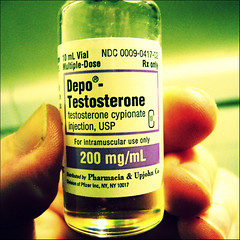
A New York Times article on the recent steroid scandals among professional baseball players seeks explanations from sociologists as to the nature of male friendships and the implications for those bonds when trainers testifying against players. Evoking Butch Cassidy and the Sundance Kid, this depiction of male friendship benefits from a sociological perspective.

“‘These are moments when there’s a clash between two conflicting values connected to masculinity,’ said Michael S. Kimmel, a sociologist at State University of New York at Stony Brook and author of ‘The Gendered Society.’ ‘No. 1, you always do the right thing. And the second is, you never betray your friends.’”

“’There’s a tendency to protect a teammate or the organization, even at the expense of higher moral principles,’ said Faye L. Wachs, a professor at California State Polytechnic University, Pomona who specializes in sports sociology.”